
Judges 4:1-4 is about the Israelites doing evil in the sight of the Lord, leading to oppression by King Jabin of Canaan, and the prophetess Deborah being raised up by God to deliver them.
1 And the people of Israel again did what was evil in the sight of the Lord after Ehud died.
2 And the Lord sold them into the hand of Jabin king of Canaan, who reigned in Hazor.
3 Then the people of Israel cried out to the Lord for help, for he had 900 chariots of iron and he oppressed the people of Israel cruelly for twenty years.
4 Now Deborah, a prophetess, the wife of Lappidoth, was judging Israel at that time.
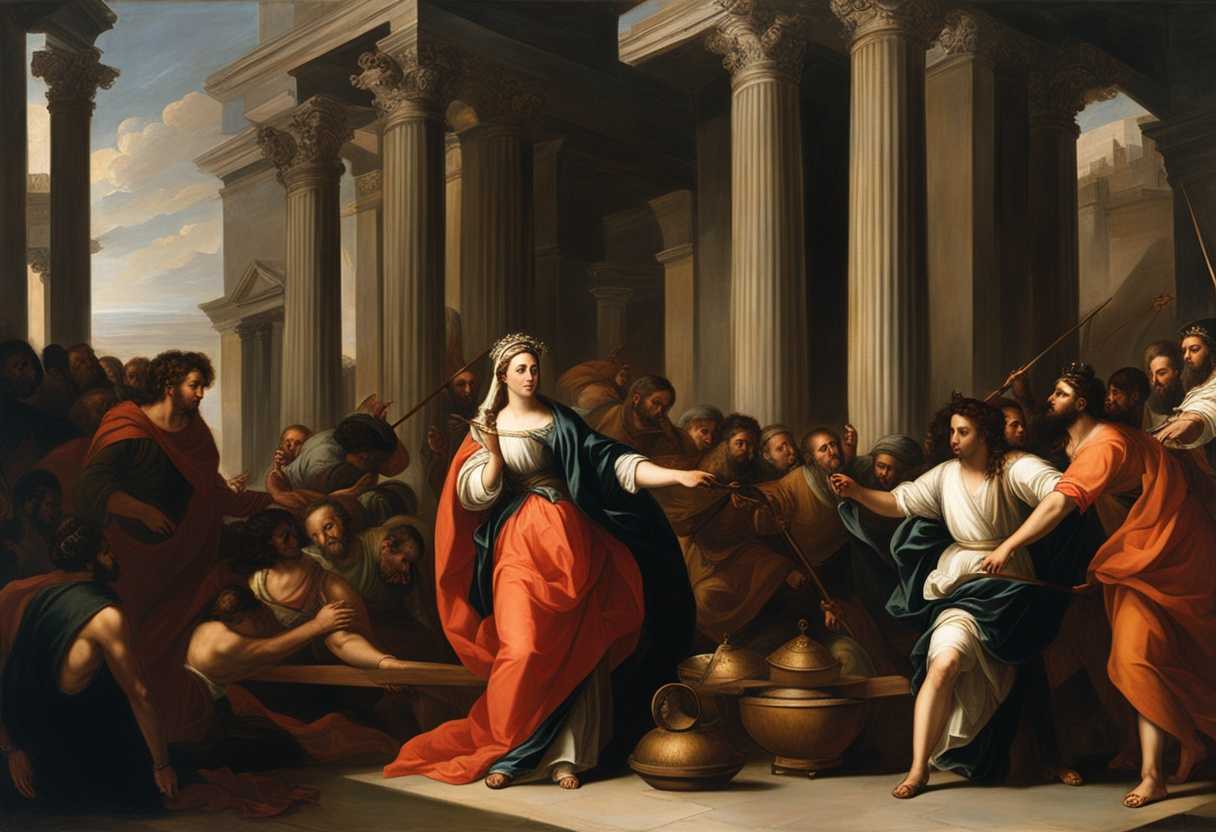
Setting the Scene for Judges 4:1-4
The scene in Judges chapter 4 opens with the Israelites once again doing evil in the eyes of the Lord, and as a result, they are oppressed by King Jabin of Canaan for twenty years. Deborah, a prophetess and the wife of Lappidoth, is serving as a judge over Israel at this time. She is a strong and wise leader, known for her faithfulness to God and her ability to hear His voice.
Deborah summons Barak, a military commander from the tribe of Naphtali, and instructs him to gather ten thousand men from the tribes of Naphtali and Zebulun to confront Sisera, the commander of King Jabin’s army. The meeting between Deborah and Barak takes place under a large oak tree in the hill country of Ephraim, a location known for its strategic significance and natural beauty. The atmosphere is tense as Deborah delivers God’s command to Barak, urging him to trust in the Lord’s promise of victory over their enemies.
As Deborah and Barak discuss the upcoming battle, the wind rustles through the leaves of the oak tree, casting dappled shadows on the ground below. The sun begins to set, painting the sky in hues of orange and pink, signaling the end of one chapter and the beginning of a new era for the Israelites. With faith in God and determination in their hearts, Deborah and Barak prepare to lead their people into battle against the forces of oppression and injustice.
What is Judges 4:1-4 about?
Deborah’s leadership as a prophetess and judge in Israel showcases her strong connection with God and her steadfast commitment to promoting justice and guidance among her people. She serves as a messenger of God, receiving divine revelations and sharing them with the community. Her role as a judge signifies her responsibility to administer fair and righteous judgments, ensuring that the people of Israel are governed justly according to God’s laws.
Have you ever thought about the power of combining spirituality with leadership? Deborah’s story teaches us the importance of seeking guidance from a higher power in our decision-making processes, and how this can lead to more just and righteous outcomes. Her example challenges us to reflect on how we can incorporate our faith into positions of leadership and use it to inspire positive change and bring about justice in our communities.
Understanding what Judges 4:1-4 really means
The Book of Judges provides a historical narrative of Israel’s recurring cycle of sin, oppression, repentance, and deliverance. In Judges 4:1-4, we are introduced to Deborah, a prophetess and judge, who emerges as a key figure during a time of oppression by the Canaanite king Jabin and his commander Sisera. This passage not only sets the stage for a significant moment of deliverance but also sheds light on the pivotal role of women in fulfilling God’s plan.
The phrase “Again did evil in the sight of the Lord” signifies the repetitive disobedience of the Israelites, leading to their suffering and the subsequent need for divine intervention. “The Lord sold them into the hand of Jabin king of Canaan” underscores God’s justice and sovereignty, allowing the Israelites to face the consequences of their actions. Deborah’s introduction as “a prophetess, the wife of Lapidoth, [who] was judging Israel at that time” highlights her unique position as a female leader and prophetess, showcasing God’s diverse selection of individuals to carry out His will.
Drawing parallels with other biblical passages, Exodus 15:20-21 portrays Miriam, another prophetess, leading Israel in worship after their deliverance from Egypt, emphasizing God’s historical use of women in significant roles. Isaiah 3:12 mentions women ruling over Israel, serving as both a critique and recognition of women’s leadership during times of crisis. Galatians 3:28 reinforces the equality and value of all individuals in God’s eyes, irrespective of gender, highlighting the inclusivity of God’s kingdom.
The story of Deborah serves as a poignant reminder that God can use anyone, regardless of gender, to accomplish His purposes. It challenges societal gender norms and advocates for the acknowledgment and support of women’s leadership in various spheres, including spiritual and communal roles. The cyclical pattern of disobedience and deliverance in Israel’s history warns against the repercussions of straying from God and underscores the significance of repentance and steadfast faith.
In contemporary contexts, unexpected leaders often emerge during crises, exemplifying qualities of wisdom, courage, and resilience. Just as Deborah led Israel with strength and discernment, modern-day women have stepped up in times of calamity to provide guidance, support, and hope to their communities. This narrative underscores God’s ability to empower individuals from diverse backgrounds to lead and effect positive change, defying societal expectations.
Judges 4:1-4 stands as a testament to God’s capacity to raise leaders from unexpected places and backgrounds, urging us to heed His call, support women in leadership, and remain faithful in the knowledge of His justice and mercy. It inspires us to trust in God’s plan, be prepared to embrace roles of leadership and service when summoned, and emulate Deborah’s unwavering commitment to God’s mission.
How can we align our actions with God’s will?
To align our actions with God’s will, we can look to the example of Deborah in the Book of Judges. Deborah was a prophetess and a judge in Israel, who listened to God’s direction and acted accordingly. She was a strong and courageous leader whom God used to deliver His people from oppression. Like Deborah, we can seek God’s guidance through prayer, meditation on His Word, and listening for His voice. We can align our actions with His will by staying connected to God and following His lead.
Another way to align our actions with God’s will is to trust in Him completely. Deborah’s confidence in God gave her the strength to lead fearlessly. When we have faith in God’s power and sovereignty, we can step out in obedience, knowing that He will guide and support us. We allow Him to work through us for His purposes by surrendering our own plans and desires to God and seeking His will above our own.
Additionally, we can align our actions with God’s will by showing compassion and justice towards others. Deborah’s leadership was characterized by a concern for the well-being of her people and a commitment to upholding justice. We should prioritize love, mercy, and fairness in our interactions with others as we follow God’s will. We can bring glory to His name and fulfill His purposes for our lives by reflecting God’s love and character in all that we do.
Application
Harness the power of leadership and obedience like Deborah did. God can work wonders through anyone, irrespective of gender or status. Be open to God’s call, stepping out in faith with bold courage. Will you answer God’s call and lead with determination just like Deborah?

Reverend Michael Johnson is an experienced Church Minister with a profound expertise in spirituality and guidance. With a serene presence and a compassionate heart, he has faithfully served his congregation for over 20 years, leading them on a spiritual journey towards inner peace and enlightenment. Reverend Johnson’s extensive knowledge of religious philosophies and profound understanding of human nature have made him a trusted confidant and mentor to many, as he seamlessly weaves his profound wisdom into life teachings. Reverend Johnson’s calming demeanor and empathetic nature continue to uplift and heal souls, nurturing a sense of unity and tranquility within his community.