
Judges 4:19 is about Jael’s cunning and decisive action to fulfill God’s plan by killing Sisera, the enemy general, despite his seeking refuge with her, ultimately aiding in the Israelites’ victory.
19 But Sisera fled away on foot to the tent of Jael, the wife of Heber the Kenite, for there was peace between Jabin the king of Hazor and the house of Heber the Kenite.
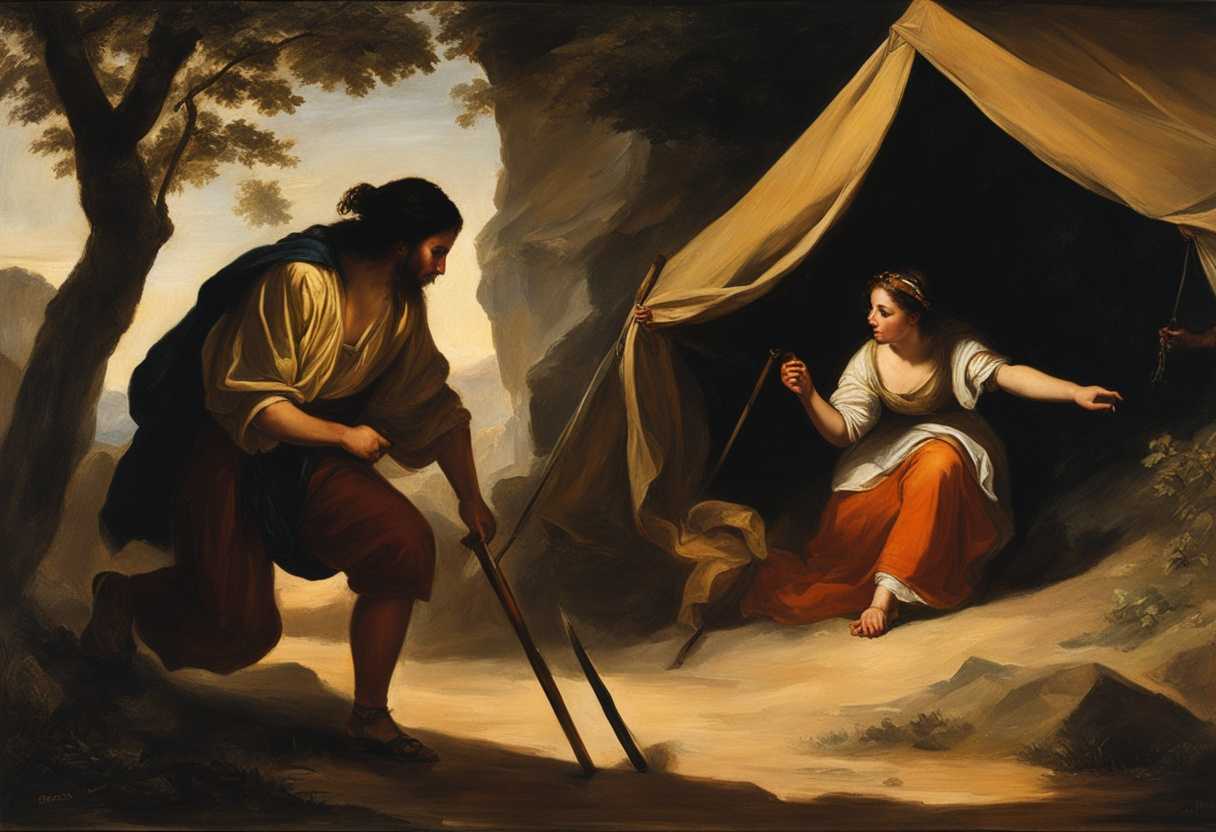
Setting the Scene for Judges 4:19
In Judges chapter 4, we find the scene where the prophetess Deborah summons Barak, the son of Abinoam, to lead the Israelite army against the oppressive Canaanite king, Jabin. The setting is a war camp situated in the hilly region of Mount Tabor in ancient Israel. The camp is bustling with activity as soldiers prepare for battle, sharpening their weapons and strategizing for the impending conflict.
Deborah, a respected judge and prophetess in Israel, is seated under a large oak tree, serving as a spiritual and strategic leader for the Israelites. Barak, a valiant warrior chosen by Deborah to lead the army, stands before her, receiving instructions and encouragement for the upcoming battle. The atmosphere is tense yet determined, as the Israelites rally together under Deborah’s guidance to confront their oppressors.
As the sun begins to set over the horizon, the camp is filled with a sense of anticipation and resolve. Barak and his troops are ready to face the Canaanite forces led by Sisera, Jabin’s commander, in a decisive showdown that will test their faith and courage. Deborah’s presence provides a sense of divine assurance and guidance, as the Israelites prepare to fight for their freedom and the fulfillment of God’s promises.
What is Judges 4:19 about?
This verse from the Book of Judges in the Bible describes a particularly graphic and brutal moment in the story of Jael and Sisera. Jael is a woman who plays a pivotal role in the defeat of the enemy commander, Sisera, by luring him into her tent and then killing him with a tent peg. This act reflects not only the intense violence of the time but also Jael’s cunning and bravery in taking matters into her own hands to protect her people. This verse raises important questions about power, agency, and the lengths to which people will go to secure victory and safety as we reflect on it. What does this act of violence reveal about the complex dynamics of warfare and survival in ancient times? How does Jael’s actions challenge traditional gender roles and expectations, showing that women can also be agents of change and protectors of their communities? We can gain a deeper understanding of the complexities of human nature and the ways in which individuals navigate difficult and dangerous situations by delving into the nuances of this story.
Understanding what Judges 4:19 really means
In the Book of Judges, we encounter the intriguing story of Jael and Sisera, a tale that unfolds with unexpected twists and turns. Sisera, a commander in the Canaanite army, finds himself seeking refuge in Jael’s tent after fleeing from battle. The historical and cultural context of hospitality in ancient times sheds light on the significance of Jael’s actions. In those times, offering food and drink symbolized peace and protection, setting the stage for the dramatic events that follow.
The key phrases in Judges 4:19 offer profound insights into the characters’ vulnerabilities and intentions. When Sisera pleads, “Give me, I pray thee, a little water to drink; for I am thirsty,” we witness his desperation and human frailty after the turmoil of battle. Jael’s response, opening a bottle of milk instead of water, goes beyond mere sustenance. This act of kindness and care not only provides nourishment but also serves to make Sisera more at ease, ultimately rendering him more vulnerable in the unfolding narrative.
Drawing parallels with other biblical passages enriches our understanding of the themes at play. Proverbs 25:21-22 advocates for showing kindness to enemies, hinting at the potential for transformation or downfall. In contrast, Matthew 5:44 presents Jesus’ radical teaching on loving enemies, challenging us to embrace a higher moral standard. The juxtaposition of these teachings with Jael’s strategic kindness invites reflection on the complexities of human relationships and moral choices.
The relevance of Jael and Sisera’s story resonates in contemporary contexts, where trust and betrayal remain prevalent. It serves as a poignant reminder to exercise discernment in our interactions, recognizing that actions can carry multifaceted meanings and consequences. Consider a scenario in a competitive work environment where aiding a rival in need not only demonstrates kindness but also unveils vulnerabilities, potentially reshaping the dynamics of the relationship and leading to unforeseen outcomes.
In conclusion, Judges 4:19 unveils profound lessons on hospitality, discernment, and the intricate nature of human connections. It prompts us to delve beneath the surface of our actions, discerning the deeper implications they hold. Just as Jael’s seemingly benevolent gestures concealed strategic motives, we are encouraged to navigate the complexities of human interactions with wisdom and insight, mindful of the transformative power of our choices.
How can we trust in God’s plan when facing danger?
God’s plan unfolded through unexpected means in the story of Judges 4:19. Despite the danger facing the Israelites, they trusted in God’s guidance and followed through with courage. They were able to overcome the threats they faced by relying on God’s wisdom and protection. This passage serves as a reminder that even in moments of danger or uncertainty, we can trust that God has a plan for us and will guide us through difficult times.
When confronted with danger, it is essential to lean on our faith and trust in God’s greater purpose for our lives. We too can find strength in knowing that God is in control, just as Deborah and Barak trusted in God’s plan to deliver them from their enemies. We can have faith that He will protect us and lead us to safety, even in the most perilous situations, by surrendering our fears and anxieties to Him. We can face dangers with a sense of peace and assurance by ultimately holding onto our unwavering trust in God’s plan. God is always working for our good, even when the path ahead seems uncertain, as we look to the example set in Judges 4:19. Trusting in His plan allows us to move forward with courage, knowing that He will always be by our side, guiding us through any trials we may encounter.
Application
Take inspiration from Deborah’s courage in Judges 4:19. Embrace your challenges with bravery and faith, just as she did. Step out boldly, knowing that you are capable with the strength of God behind you. Do not let fear hold you back – confront your obstacles head-on. How will you choose to stand strong in the face of your fears today?

Reverend Michael Johnson is an experienced Church Minister with a profound expertise in spirituality and guidance. With a serene presence and a compassionate heart, he has faithfully served his congregation for over 20 years, leading them on a spiritual journey towards inner peace and enlightenment. Reverend Johnson’s extensive knowledge of religious philosophies and profound understanding of human nature have made him a trusted confidant and mentor to many, as he seamlessly weaves his profound wisdom into life teachings. Reverend Johnson’s calming demeanor and empathetic nature continue to uplift and heal souls, nurturing a sense of unity and tranquility within his community.