
Judges 4:31 is about the victorious celebration of Deborah and Barak after defeating the Canaanite army, symbolizing the triumph of faith and courage over oppression and fear.
31 So God subdued on that day Jabin the king of Canaan before the people of Israel.
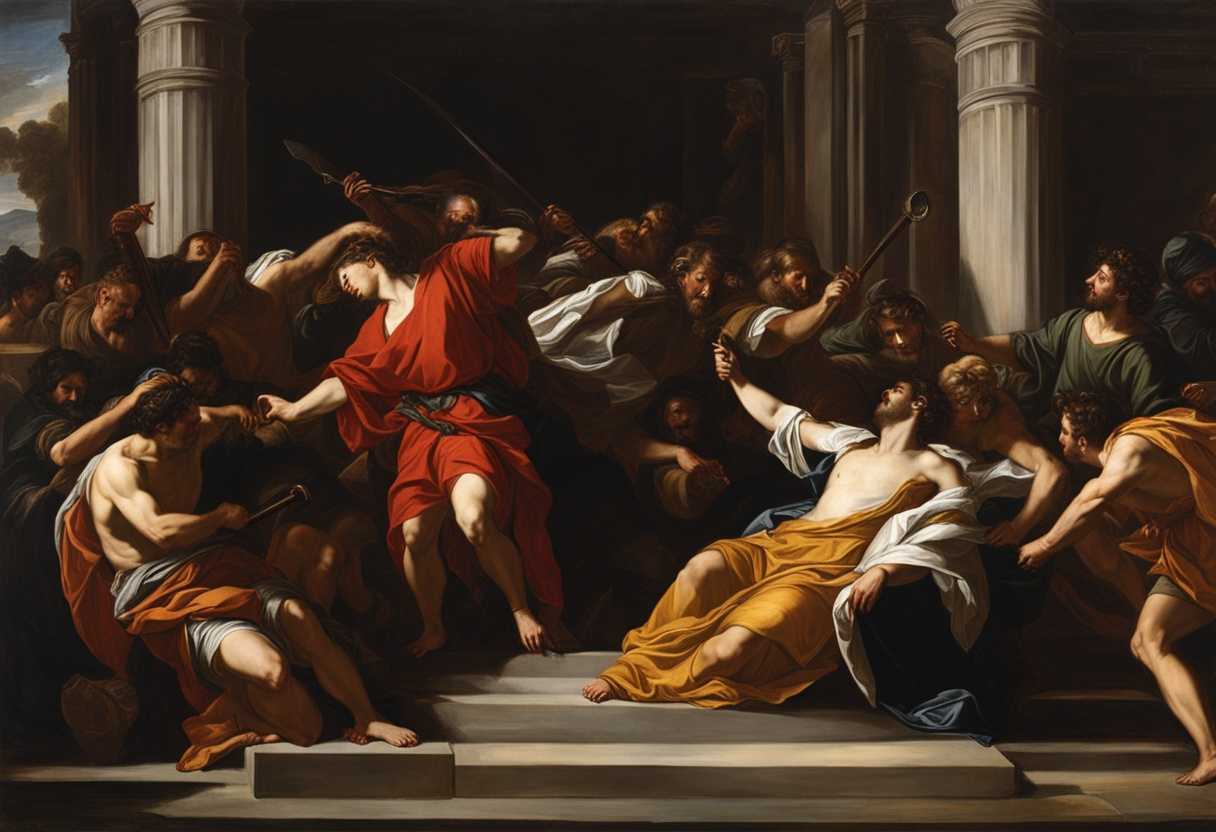
Setting the Scene for Judges 4:31
The scene in Judges 4:31 takes place in the aftermath of a great victory for the Israelites. Deborah, a prophetess and judge in Israel, had summoned Barak, a military commander, to lead the Israelite army against the oppressive Canaanite king, Jabin. With the help of another woman named Jael, who bravely killed the Canaanite general Sisera, the Israelites emerged victorious in battle.
As the dust settles from the fierce conflict, the Israelite camp is filled with a mix of emotions – relief, gratitude, and awe at the miraculous turn of events. Deborah’s leadership and Barak’s courage have inspired the people, and they gather together to celebrate their deliverance from the hands of their enemies. The air is filled with songs of praise and thanksgiving, as the Israelites recount the mighty deeds of their God who fought for them and granted them victory.
In the midst of the jubilant crowd, Deborah stands as a beacon of faith and strength, her words of wisdom and guidance having led the Israelites to this moment of triumph. Barak, now hailed as a hero, is surrounded by his fellow warriors, their faces marked with the scars of battle but also shining with the joy of liberation. The scene is one of unity and solidarity, as the Israelites come together to give thanks for their deliverance and to honor the leaders who led them to this glorious day.
What is Judges 4:31 about?
Deborah, a prophetess and judge in the Old Testament, praises God for the victory He has granted to His people in this verse. The song highlights the importance of faith and obedience to God, emphasizing that true power and success come not from human strength, but from divine intervention. Deborah and the Israelites are showcasing their unwavering belief in His sovereignty and their dependence on His guidance by acknowledging God’s role in their triumph. We reflect on this verse, reminding us of the significance of recognizing and honoring God’s role in our lives. Just like Deborah, we are called to trust in God’s power and to remain steadfast in our faith, even in the face of challenges or battles. The victory song serves as a source of inspiration and encouragement, reminding us that when we align ourselves with God’s will and seek His guidance, we can find strength, courage, and ultimate triumph in His grace. So, let us take heart from Deborah’s example and give thanks for the victories that God grants us, acknowledging that our successes are ultimately a reflection of His power and glory.
Understanding what Judges 4:31 really means
In the narrative of Deborah and Barak in the book of Judges, we encounter a pivotal moment in the history of Israel’s deliverance from the oppressive rule of King Jabin of Canaan. Judges 4:31 specifically shines a light on the triumph over Sisera, the formidable commander of Jabin’s army, and the crucial role played by Jael in securing this victory. This verse serves as a testament to the unexpected ways in which God works through ordinary individuals to bring about extraordinary outcomes.
Deborah’s prophecy in Judges 4:9 foretelling that a woman would be the instrument of Israel’s deliverance finds its fulfillment in the courageous actions of Jael. The subsequent Song of Deborah in Judges 5:24-27 further extols Jael’s bravery and resourcefulness in decisively dealing with the enemy. This theme of unexpected heroism resonates with other biblical accounts, such as the Song of Moses and Miriam in Exodus 15:1-21, where divine intervention leads to triumphant deliverance.
The enduring relevance of this passage lies in its profound messages for contemporary audiences. It underscores the empowerment of individuals, irrespective of their background or gender, to be agents of God’s purposes in the world. By showcasing Jael’s boldness and initiative, the verse encourages us to confront challenges with courage and take decisive action in the face of adversity. Moreover, it serves as a reminder of God’s unwavering commitment to justice and His promise to deliver His people from oppression.
Consider a scenario where a community grapples with a significant crisis, like a natural disaster. In this modern-day parallel to Jael’s story, an unassuming individual emerges as a beacon of hope, rallying support and leading the community towards recovery. This anecdote illustrates the timeless truth that God can work through anyone, no matter how ordinary they may seem, to bring about transformation and deliverance.
Delving into the details of Judges 4:31, we encounter phrases that speak volumes about God’s sovereignty and the unwavering resolve of His people. The verse’s depiction of God subduing King Jabin of Canaan underscores divine intervention in human affairs, emphasizing that victory ultimately belongs to the Lord. The imagery of the Israelites pressing harder and harder against their oppressor symbolizes the relentless determination fueled by faith and supported by God’s guiding hand.
As we ponder upon this verse, we are prompted to reflect on the power of faith, the significance of courage in the face of adversity, and the comforting truth that God works through unexpected avenues to bring about His purposes. Judges 4:31 serves as a beacon of hope, reminding us that in our own lives, God can use even the most unlikely individuals and circumstances to manifest His deliverance and justice.
What are we willing to sacrifice for victory?
We may find ourselves in situations where we are called upon to make sacrifices in our pursuit of victory. These sacrifices could range from personal comforts to risking our safety or giving up our own desires. The verse suggests that in times of war or conflict, we may need to let go of something valuable to achieve success.
The willingness to sacrifice for victory could come in the form of perseverance, dedication, or even putting the needs of the greater good above our own. It may require us to endure hardships, make tough decisions, or face challenges head-on without giving up. Sacrifices in the name of victory might mean stepping out of our comfort zones and pushing ourselves beyond our limits to reach our goals. The verse ultimately reminds us that we often have to pay a price for victory, and we must decide what we are willing to sacrifice to achieve our objectives. We can better prepare ourselves mentally and emotionally for the challenges that may lie ahead on the path to success by understanding the significance of sacrifice in the pursuit of victory.
Application
Consider the heroic Jael from Judges 4:31. Let her story ignite your own courage and faith. Embrace opportunities with boldness and step out in obedience when called. Trust in God’s strength to guide you through any challenges. Will you rise up like Jael did, answering God’s call with bold faith in your heart?

Reverend Michael Johnson is an experienced Church Minister with a profound expertise in spirituality and guidance. With a serene presence and a compassionate heart, he has faithfully served his congregation for over 20 years, leading them on a spiritual journey towards inner peace and enlightenment. Reverend Johnson’s extensive knowledge of religious philosophies and profound understanding of human nature have made him a trusted confidant and mentor to many, as he seamlessly weaves his profound wisdom into life teachings. Reverend Johnson’s calming demeanor and empathetic nature continue to uplift and heal souls, nurturing a sense of unity and tranquility within his community.