
Judges 4:4-7 is about the leadership and wisdom of Deborah, a prophetess and judge, who fearlessly led the Israelites to victory against the Canaanites with the guidance of God.
4 Now Deborah, a prophetess, the wife of Lappidoth, was judging Israel at that time.
5 Now she used to sit under the palm of Deborah between Ramah and Bethel in the hill country of Ephraim, and the people of Israel came up to her for judgment.
6 She sent and summoned Barak the son of Abinoam from Kedesh-naphtali and said to him, “Has not the Lord, the God of Israel, commanded you, ‘Go, gather your men at Mount Tabor, taking 10,000 from the people of Naphtali and the people of Zebulun.
7 And I will draw out Sisera, the general of Jabin’s army, to meet you by the river Kishon with his chariots and his troops, and I will give him into your hand.’”
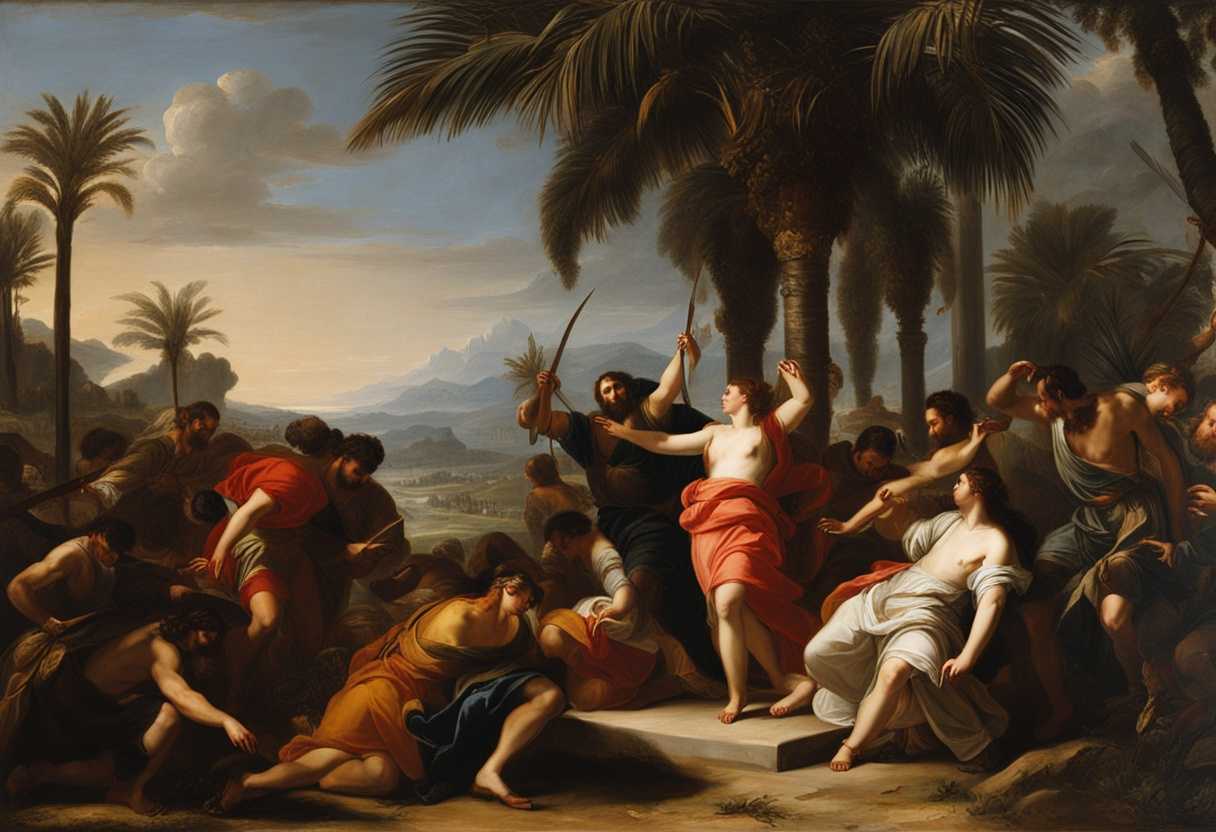
Setting the Scene for Judges 4:4-7
In the scene described in Judges 4:4-7, we find Deborah, a prophetess and judge in Israel, sitting under a palm tree known as the Palm of Deborah. She is accompanied by Barak, a military commander chosen by God to lead the Israelite army against their oppressors, the Canaanites. The setting is in the hill country of Ephraim, a region in ancient Israel known for its rugged terrain and strategic importance.
Deborah and Barak have come together to discuss the dire situation facing the Israelites, who have been oppressed by the Canaanite king Jabin for twenty years. Deborah, as a wise and respected leader, is providing guidance and encouragement to Barak, urging him to gather an army and prepare for battle against the Canaanites. Barak, though hesitant at first, ultimately agrees to lead the Israelite forces into battle with Deborah’s assurance that God will deliver their enemies into their hands.
As they sit under the shade of the palm tree, the conversation between Deborah and Barak is filled with a sense of urgency and determination. The scene is set against the backdrop of a nation longing for deliverance and a courageous duo willing to step up and lead their people to victory.
What is Judges 4:4-7 about?
How amazing is it that a woman, Deborah, rose as a leader and prophetess in a time when women were often overlooked in leadership roles? Not only did she provide guidance and wisdom to the people of Israel, but she also played a pivotal role in leading them to victory alongside Barak against the Canaanites. This verse not only showcases Deborah’s strength and leadership but also challenges the traditional gender roles of the time.
Imagine the courage and faith it must have taken for Deborah to step into a position of authority in a society where men typically held power. Her story reminds us of the importance of recognizing and honoring the leadership and contributions of all individuals, regardless of gender. They achieved great success and triumphed over their enemies by working together with Barak. Deborah’s story serves as a powerful example of perseverance, faith, and the potential for women to lead with strength and wisdom.
Understanding what Judges 4:4-7 really means
The Book of Judges provides a glimpse into a tumultuous period in Israel’s history, marked by a cycle of faithfulness, sin, oppression, repentance, and deliverance. In this context, we encounter key figures like Deborah, a prophetess and judge, and Barak, a military leader. Deborah’s dual role as a prophetess and judge is significant, highlighting the presence of female leadership and divine guidance in Israel’s narrative. Her position under the palm tree symbolizes a place of wisdom and judgment, where people sought her counsel, showcasing her respected leadership.
The trust and respect the Israelites had for Deborah’s judgment is evident as they came to her seeking guidance. When the Lord commands Barak to lead an army against Sisera, the divine inspiration behind the battle plan is clear, emphasizing God’s direct involvement in Israel’s deliverance. The assurance of victory given by God further solidifies the belief in divine support for Barak and the Israelites.
The passage resonates with other biblical accounts, such as Miriam’s leadership in Exodus and the reminder in Isaiah that God’s ways surpass human understanding. Barak’s inclusion in the heroes of faith in Hebrews underscores the importance of faith and obedience in fulfilling God’s plan. Deborah and Barak’s story challenges us to recognize and honor the leadership and wisdom of women, emphasizing the value of diverse leadership in our communities and churches.
Barak’s initial hesitation and eventual obedience to God’s command serve as a lesson in faith and trust in God’s plan. Just as God guided Deborah and Barak, He continues to lead and direct us today through His Word and the Holy Spirit. Their story prompts us to reflect on our own faith and obedience to God’s guidance in our lives.
In a modern context, envision a community facing a crisis where a woman known for her wisdom and faith steps up to lead the recovery efforts. Despite initial doubts, her reliance on God’s guidance leads to the community’s restoration, mirroring Deborah’s story. This anecdote illustrates how God can use anyone, regardless of background, to accomplish His purposes and bring about positive change.
In conclusion, the narrative of Deborah and Barak in Judges 4:4-7 serves as a poignant reminder of God’s sovereignty, the significance of faith and obedience, and the value of diverse leadership. It urges us to trust in God’s plan, acknowledge the unique gifts and callings He has bestowed upon each individual, and embrace the contributions of all, irrespective of gender or background.
How can we discern and follow God’s guidance?
Deborah, a prophetess, was leading the people of Israel at that time in these verses. She summoned Barak and gave him guidance from God about leading an army against their enemy Sisera. Deborah’s role as a prophetess shows us that God can use various means to communicate His guidance to us, such as through wise and discerning individuals, prayer, or through the Scripture.
To discern and follow God’s guidance, it is essential to cultivate a close relationship with Him through prayer, meditation on His Word, and seeking wisdom from trusted spiritual mentors. When faced with decisions or uncertainties, we must be attentive to God’s voice, which can be heard through the Scriptures, a still small voice, circumstances, or inner conviction. Additionally, we should be sensitive to the leading of the Holy Spirit, who guides us in line with God’s will.
Following God’s guidance often requires faith, stepping out in obedience even when the path may seem uncertain or difficult. Like Barak, we must be willing to trust in the wisdom and direction that God provides through various means. Staying attuned to God’s guidance ultimately involves surrendering our will to His, being open to His leading, and relying on His wisdom and strength to navigate life’s challenges.
Application
Embrace Deborah’s bravery, seek God’s guidance, and stand against injustice. Step boldly into the plans God has for you, trusting in His strength and wisdom. Will you rise up and make a difference today?

Reverend Michael Johnson is an experienced Church Minister with a profound expertise in spirituality and guidance. With a serene presence and a compassionate heart, he has faithfully served his congregation for over 20 years, leading them on a spiritual journey towards inner peace and enlightenment. Reverend Johnson’s extensive knowledge of religious philosophies and profound understanding of human nature have made him a trusted confidant and mentor to many, as he seamlessly weaves his profound wisdom into life teachings. Reverend Johnson’s calming demeanor and empathetic nature continue to uplift and heal souls, nurturing a sense of unity and tranquility within his community.