
Judges 5:6 is about the call to action and mobilization of the people to rise up against oppressive forces and fight for liberation and freedom.
6 “In the days of Shamgar, son of Anath,
in the days of Jael, the highways were abandoned,
and travelers kept to the byways.
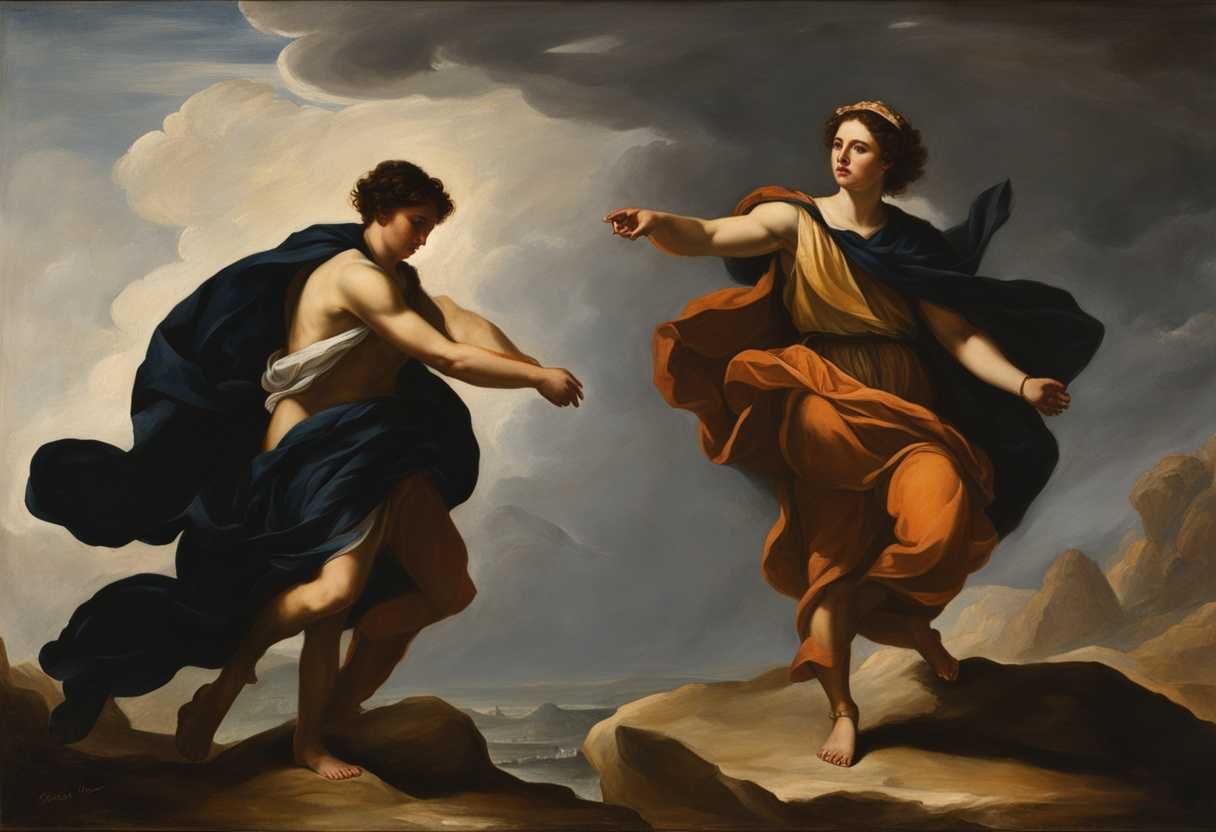
Setting the Scene for Judges 5:6
The scene in Judges 5:6 takes place in ancient Israel during a time of great turmoil. The Israelites had been oppressed by the Canaanites for years, and the people cried out to God for deliverance. Deborah, a prophetess and judge in Israel, called upon Barak, a military commander, to lead the Israelite army against their oppressors. Barak agreed to go into battle, but only if Deborah accompanied him.
The setting is a camp in the hills of Ephraim, where Deborah and Barak have gathered together an army of Israelites to confront the Canaanite forces led by Sisera. The camp is filled with men and women from various tribes who have come together in unity to fight for their freedom. Tents are scattered across the hillside, and the sound of blacksmiths forging weapons can be heard in the distance as the Israelites prepare for battle.
As Deborah and Barak stand at the center of the camp, they inspire the people with their faith and courage. Deborah’s words of prophecy and Barak’s leadership have brought hope to the Israelites, and they are ready to face the mighty Canaanite army. The atmosphere is tense yet determined, as the Israelites steel themselves for the upcoming battle that will determine the fate of their nation.
What is Judges 5:6 about?
Deborah and Barak lead Israel to victory in this verse, showcasing a powerful story. Their leadership and faith in God’s guidance ultimately resulted in the triumph over their enemies. Through their courage and reliance on God, they were able to achieve success in the face of adversity. Their story serves as a reminder of the importance of staying steadfast in one’s beliefs and trusting in a higher power to overcome challenges. Teamwork and collaboration in achieving success are significant reminders as we reflect on this verse. Deborah and Barak’s partnership exemplifies the power of working together towards a common goal, with each individual bringing their own strengths to the table. Through their unity and shared faith, they were able to rally the people of Israel and achieve a great victory. This verse encourages us to consider how we can support and uplift one another in our own journeys, recognizing that through collective effort and faith, we can overcome obstacles and emerge victorious.
Deborah and Barak’s story is an inspiring example of the power of faith, leadership, and unity in the face of adversity. Their call for praise to God at the moment of victory serves as a reminder of the importance of gratitude and acknowledging the divine guidance that leads us to success. We can reflect on their story and consider how to apply these lessons in our own lives by trusting in our abilities, working together with others, and giving thanks for the blessings that come our way.
Understanding what Judges 5:6 really means
The verse Judges 5:6, nestled within the Song of Deborah in the book of Judges, paints a vivid picture of a tumultuous time in Israel’s history. It speaks of days past, invoking the names of Shamgar and Jael, hinting at the struggles and victories that shaped the nation. “In the days of Shamgar son of Anath,” a phrase that sets the stage for a period of uncertainty and danger, reminding us of the ebb and flow of Israel’s fortunes under various leaders. The mention of Jael, a woman who played a pivotal role in the defeat of Sisera, adds a layer of unexpected heroism to the narrative, showing that deliverance can come from the most unlikely sources.
The imagery of abandoned highways and travelers opting for winding paths evokes a sense of fear and caution, painting a picture of a society gripped by insecurity and oppression. It’s a stark reminder of the harsh realities faced by the Israelites before divine intervention turned the tide in their favor. This depiction of perilous times resonates with the experiences of many today, who navigate their own treacherous paths amidst personal, societal, or global challenges. The verse serves as a poignant reminder that fear and uncertainty are not new phenomena but have been constants throughout history.
Drawing parallels to contemporary struggles, the verse offers a glimmer of hope amidst the darkness. Just as the Israelites found deliverance through unexpected means, so too can individuals today find solace in the idea that help and salvation can emerge from the most unlikely quarters. It underscores the importance of remaining open to unforeseen sources of aid and trusting in divine providence during times of adversity. The narrative of Jael’s bravery serves as a beacon of courage, urging readers to look beyond conventional expectations for sources of assistance and inspiration.
Imagine a community grappling with a natural disaster, forced to forge new paths to safety as traditional routes are blocked. This scenario mirrors the challenges faced by the Israelites, where danger lurked at every turn, necessitating unconventional solutions for survival. Just as the community might find unexpected allies in their hour of need, the Israelites discovered a savior in Jael, showcasing the power of resilience and resourcefulness in times of crisis. This tale serves as a testament to the enduring human spirit and the capacity for deliverance even in the bleakest of circumstances.
In conclusion, Judges 5:6 stands as a testament to the enduring themes of faith, resilience, and divine intervention that resonate across time and culture. It calls on readers to trust in the unseen hand that guides us through life’s trials and tribulations, reminding us that salvation can emerge from the most unexpected quarters. By reflecting on this verse, we are encouraged to face modern-day challenges with hope and courage, knowing that just as the Israelites found deliverance in their darkest hour, so too can we find light in the midst of our struggles.
What causes the paths of life to deviate?
The paths of life can deviate due to a lack of leadership or guidance. When there is a vacuum of both literal and metaphorical leaders, the people can find themselves wandering aimlessly or being led astray. This lack of direction can cause individuals to deviate from their intended path and hinder their progress towards their goals.
Additionally, external factors such as conflict or turmoil can also disrupt the paths of life. When faced with challenges or adversity, individuals may be forced to take detours or make compromises that lead them away from their original plans. These unexpected obstacles can cause deviations in one’s journey and require them to navigate new routes towards their destination. Internal and external factors can ultimately deviate the paths of life. Whether it be a lack of guidance, unforeseen challenges, or personal choices, individuals must adapt and navigate these deviations in order to continue moving forward towards their ultimate purpose and destination.
Application
Warrior of faith, the battle is upon us, and our resolve must be unwavering. Let’s not merely watch from the sidelines – let’s be fearless fighters, armed with the armor of God, protecting our beliefs. Stand strong, for the Lord’s power is our shield. Will you heed the call to arms and courageously defend His kingdom?

Reverend Michael Johnson is an experienced Church Minister with a profound expertise in spirituality and guidance. With a serene presence and a compassionate heart, he has faithfully served his congregation for over 20 years, leading them on a spiritual journey towards inner peace and enlightenment. Reverend Johnson’s extensive knowledge of religious philosophies and profound understanding of human nature have made him a trusted confidant and mentor to many, as he seamlessly weaves his profound wisdom into life teachings. Reverend Johnson’s calming demeanor and empathetic nature continue to uplift and heal souls, nurturing a sense of unity and tranquility within his community.