
Judges 7:18 is about Gideon leading his small army to victory against the Midianites with the help of God, emphasizing that faith and obedience can overcome overwhelming odds.
18 When I blow the trumpet, I and all who are with me, then blow the trumpets also on every side of all the camp and shout, ‘For the Lord and for Gideon.’”
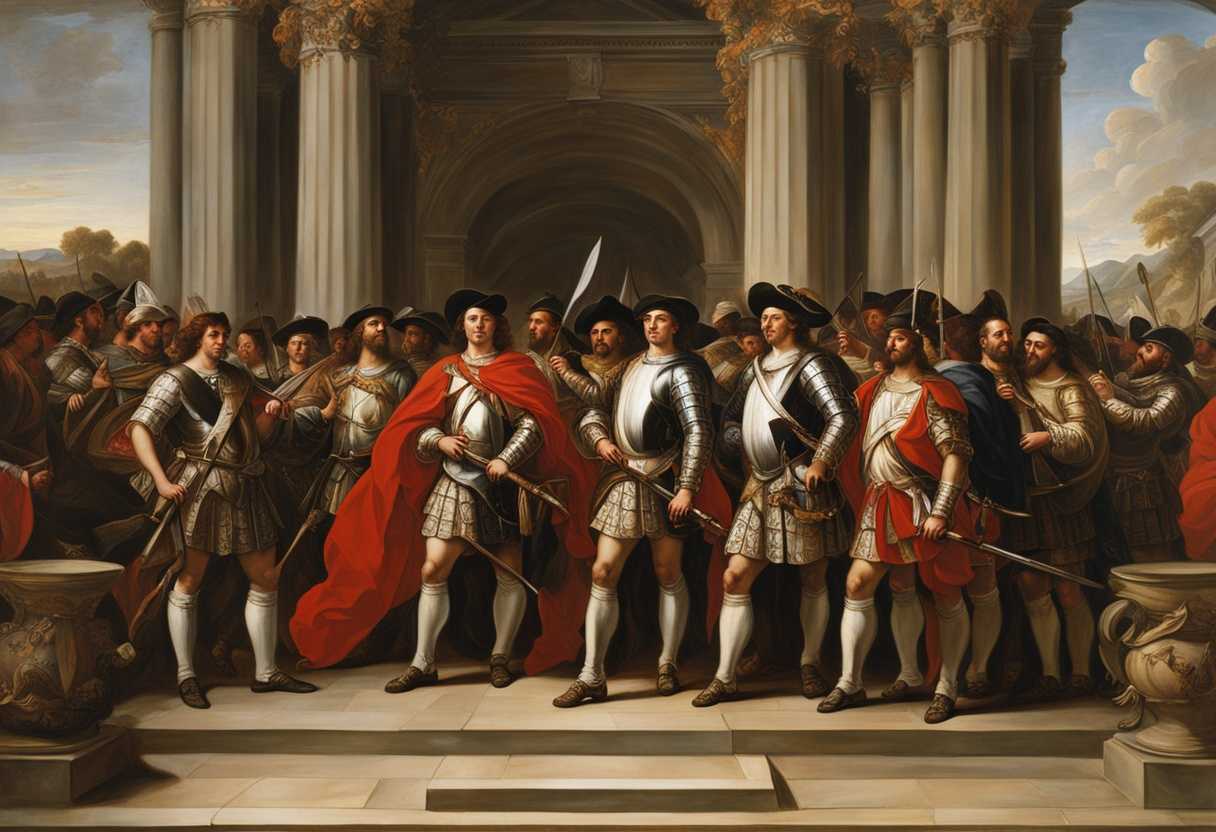
Setting the Scene for Judges 7:18
In Judges chapter 7, we find Gideon, a judge of Israel, preparing to lead his small army against the Midianites. Gideon had started with a large army of 32,000 men, but God instructed him to reduce the number to just 300 soldiers. Gideon obeyed, and now he and his men find themselves on the outskirts of the Midianite camp in the valley of Jezreel.
As night falls, Gideon divides his 300 men into three groups, each carrying a trumpet and a clay jar with a torch inside. The scene is tense as they wait for the signal to attack. Gideon, filled with faith in God’s plan, stands with his men, ready to carry out the unconventional battle strategy that God has given him.
The Midianite camp is shrouded in darkness, unaware of the impending attack. The only sound is the rustling of the wind through the valley. Gideon gives the signal, and his men blow their trumpets, smash their jars, and shout, “A sword for the Lord and for Gideon!” The sudden noise and the sight of hundreds of torches descending upon them cause confusion and fear among the Midianites, leading to their defeat.
What is Judges 7:18 about?
A powerful message about the concept of strength in weakness is seen in this verse. Through the story of Gideon and his small army, God demonstrates His ability to achieve victory regardless of the odds stacked against them. The seemingly meager size of Gideon’s army compared to the enemy forces serves as a reminder that God’s power transcends human limitations. It conveys the notion that God can work miracles through those who may appear weak or inadequate by worldly standards.
Reflecting on this verse prompts us to consider the ways in which we may underestimate ourselves or others based on external appearances or circumstances. It challenges us to trust in God’s strength and guidance, even when our own abilities or resources seem insufficient. The verse inspires us to have faith in God’s plans and to recognize that true power comes not from our own might, but from aligning ourselves with the divine by highlighting the triumph of Gideon’s army. Let this verse serve as a reminder of the limitless potential that exists when we place our trust in God’s sovereignty as we navigate our own challenges and obstacles.
Understanding what Judges 7:18 really means
In the narrative of Gideon found in Judges 7:18, we witness a pivotal moment where Gideon and his small army are preparing for battle against the Midianites. The context reveals that Gideon, chosen by God to lead the Israelites, faced overwhelming odds in terms of sheer numbers. However, instead of relying on conventional military might, God instructed Gideon to reduce his forces to a mere 300 men. This strategic reduction was a demonstration that victory would not be achieved through human strength alone but through divine intervention.
The key phrases in this verse hold significant meanings that resonate beyond the historical account. When Gideon instructs his men to blow their trumpets in unison, it symbolizes the power of collective faith and obedience. The unity displayed through this coordinated effort highlights the strength found in coming together under a common purpose, echoing the importance of harmony and solidarity in facing challenges. Additionally, the command for the men to shout from all around the camp underscores the potency of vocal proclamation in expressing faith and following divine instructions with precision.
Drawing parallels to other biblical passages enriches our understanding of the themes present in Judges 7:18. The fall of Jericho in Joshua 6:20, where the Israelites used trumpets and shouts to bring down the walls, mirrors the reliance on faith and obedience seen in Gideon’s story. Similarly, Jehoshaphat’s victory in 2 Chronicles 20:21-22 through singing and praising God showcases the transformative power of worship in the midst of adversity. These connections emphasize the timeless principles of faith, unity, and divine intervention that reverberate throughout Scripture.
The relevance of Gideon’s narrative extends to contemporary life, offering valuable lessons for individuals and communities today. In times of adversity, like Gideon facing the Midianites, the story encourages us to maintain faith in the face of overwhelming challenges. Moreover, the emphasis on unity and obedience to God’s guidance serves as a reminder of the strength found in collective action and adherence to divine principles, applicable not only in spiritual contexts but also in various communal and organizational settings.
An illustrative anecdote can further illuminate the enduring message of Judges 7:18. Imagine a small community grappling with a significant crisis, such as a natural disaster. Despite limited resources, the community bands together in faith and unity, following a plan inspired by their shared belief in a higher power. Through their coordinated efforts and unwavering trust in divine assistance, they triumph over the adversity, mirroring the resilience and victory displayed by Gideon’s army.
In conclusion, the account of Gideon in Judges 7:18 serves as a beacon of hope and guidance for believers today. It underscores the transformative power of faith, unity, and obedience to God’s will, reminding us that with divine support, even the most daunting challenges can be overcome. As we reflect on Gideon’s story, may we be inspired to trust in God’s guidance, work together in harmony, and embrace the assurance that with God, all things are indeed possible.
How can we trust in God’s plan for us?
We can trust in God’s plan for us by acknowledging that He is in control and has a unique purpose for each of us. Just like in the verse, Gideon had to trust in God’s plan by following His instructions even when it seemed illogical or difficult. When we surrender our doubts and fears to God and allow Him to lead us, we can have faith that He will guide us in the right direction.
It is important to have patience and faith in God’s timing, just as Gideon did in the verse. Even when things may seem uncertain or overwhelming, trusting in God’s plan allows us to see His faithfulness and provision unfold in our lives. We can have peace and assurance that God’s plan for us is always for our good by staying connected to Him through prayer, seeking His guidance, and relying on His strength. Trusting in God’s plan for us ultimately requires faith and obedience. We too can experience blessings and fulfillment by trusting in His sovereign will for our lives, just as Gideon followed God’s instructions and saw victory. When we align our hearts with God’s will and surrender our plans to His, we can rest in the knowledge that He is always working for our good and His glory.
Application
In the story of Gideon, we see how faith and obedience led to victory. Let’s walk in the same path of trust and courage. As we face challenges, let’s remember to rely on God’s strength. Will you take that step of faith today? Trust that you are never alone in this journey.

Reverend Michael Johnson is an experienced Church Minister with a profound expertise in spirituality and guidance. With a serene presence and a compassionate heart, he has faithfully served his congregation for over 20 years, leading them on a spiritual journey towards inner peace and enlightenment. Reverend Johnson’s extensive knowledge of religious philosophies and profound understanding of human nature have made him a trusted confidant and mentor to many, as he seamlessly weaves his profound wisdom into life teachings. Reverend Johnson’s calming demeanor and empathetic nature continue to uplift and heal souls, nurturing a sense of unity and tranquility within his community.