
Judges 8:22-23 is about Gideon’s refusal to rule over the Israelites as a king, in recognition that only God deserved that title.
22 Then the men of Israel said to Gideon, “Rule over us, you and your son and your grandson also, for you have saved us from the hand of Midian.”
23 Gideon said to them, “I will not rule over you, and my son will not rule over you; the Lord will rule over you.”
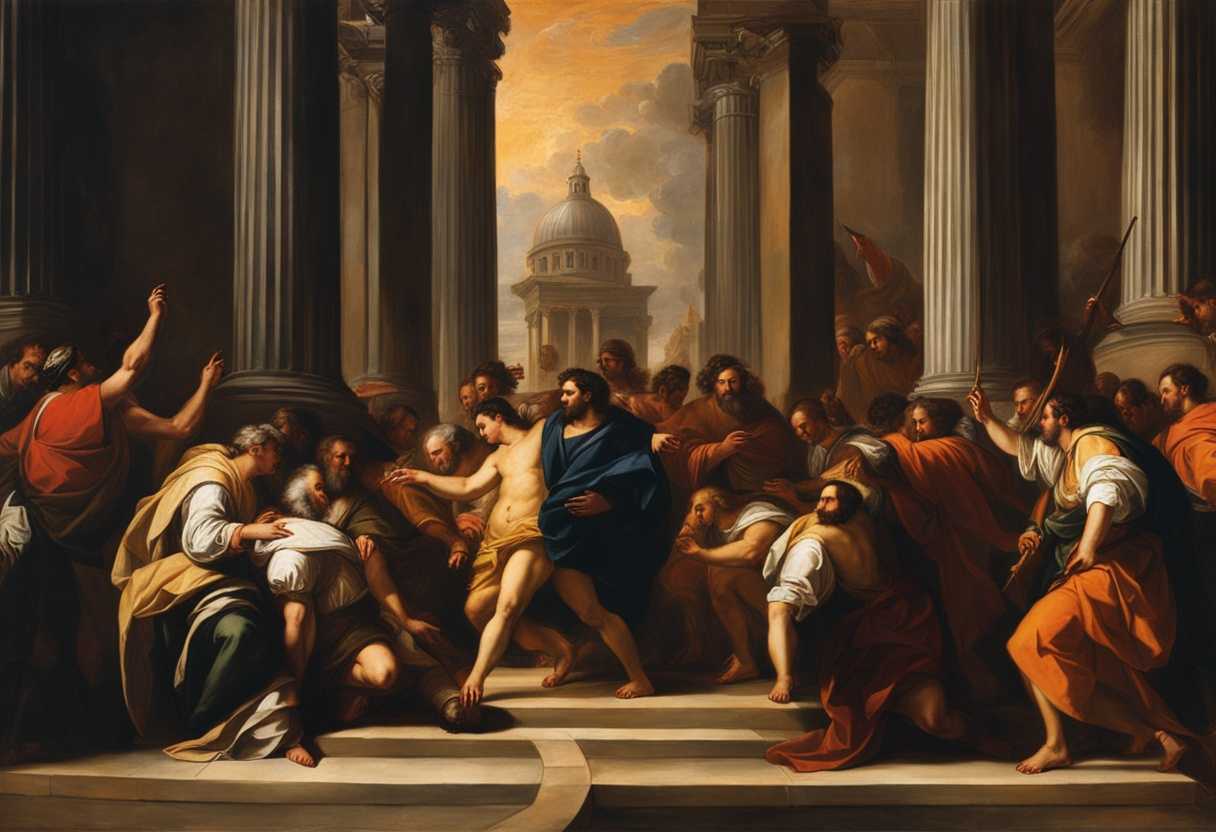
Setting the Scene for Judges 8:22-23
In Judges chapter 8, we find Gideon, a valiant warrior chosen by God to lead the Israelites against their oppressors, the Midianites. After a miraculous victory over the Midianites with only 300 men, Gideon and his army pursued the remaining enemies. Along the way, they encountered the men of Succoth and Penuel, two Israelite towns. Gideon requested provisions for his weary soldiers, but the men of Succoth and Penuel refused, doubting the outcome of Gideon’s mission.
The scene unfolds in the aftermath of Gideon’s triumph over the Midianites. Gideon, accompanied by his battle-weary but victorious men, stands before the leaders of Succoth and Penuel. The atmosphere is tense as Gideon confronts the elders of these towns for their lack of support during the crucial moments of the battle. The leaders of Succoth and Penuel, who had doubted Gideon’s ability to defeat the Midianites, now face the consequences of their lack of faith as Gideon rebukes them for their refusal to aid his men.
Surrounded by the remnants of the Midianite army, the leaders of Succoth and Penuel now stand before Gideon, who demands justice for their lack of assistance. The setting is one of both triumph and tension, as Gideon asserts his authority as a chosen leader of God’s people. The scene serves as a powerful reminder of the importance of faith and unity in the face of adversity, as well as the consequences of doubt and lack of support within the community.
What is Judges 8:22-23 about?
Gideon’s humility and understanding of his role in God’s plan are seen in this verse. Gideon acknowledges that God is the ultimate ruler and source of authority by refusing kingship. He chooses to give glory to God rather than seeking power or status for himself. This act demonstrates Gideon’s faith and his willingness to submit to God’s will above his own desires.
This verse teaches us about the importance of humility and recognizing God’s sovereignty in our lives. It challenges us to reflect on our own ambitions and priorities, questioning whether we are seeking to exalt ourselves or give glory to God. Gideon’s decision to refuse kingship serves as a powerful example of how we should approach leadership and authority, always putting God’s will above our own. It prompts us to consider how we can align our actions with God’s plan, trusting in His guidance and wisdom above all else.
Understanding what Judges 8:22-23 really means
In Judges 8:22-23, we witness a pivotal moment where the Israelites, fresh from Gideon’s triumph over the Midianites, approach him with a request for kingship. This request, though seemingly straightforward, carries profound implications. The Israelites, weary of constant oppression and seeking stability, ask Gideon to rule over them. However, Gideon’s response is a poignant reminder of where true authority lies. He declines their offer, declaring, “Neither I nor my son will rule over you. The Lord will rule over you.”
This exchange encapsulates a timeless struggle faced by humanity – the tension between desiring tangible, human leadership and recognizing the supremacy of divine authority. The Israelites’ plea for a king echoes our innate yearning for guidance and protection from visible, earthly figures. Yet, Gideon’s refusal serves as a stark proclamation of his understanding that ultimate sovereignty rests with God alone. His words resonate with a profound truth: human leaders, no matter how capable, are but instruments of a higher power.
This passage reverberates through the pages of Scripture, finding echoes in later narratives. In 1 Samuel 8:7, God laments the Israelites’ rejection of Him as their king in favor of a human ruler. Deuteronomy 17:14-20 lays out guidelines for kingship, emphasizing the importance of leaders operating under God’s authority. Psalm 47:7-8 exalts God as the supreme ruler, a theme reiterated in Gideon’s declaration. These interconnected passages weave a tapestry of divine kingship, cautioning against elevating human authority above God’s.
The relevance of Gideon’s response extends beyond ancient Israel, resonating with contemporary society. In a world where political disillusionment and societal unrest abound, the temptation to place unwavering trust in human leaders looms large. Yet, Judges 8:22-23 serves as a beacon, guiding us to anchor our faith not in fallible individuals but in the unwavering sovereignty of God. It challenges us to reevaluate where we place our trust and to realign our allegiance with the ultimate ruler of all creation.
Consider a scenario where a community faces a crisis, turning to a charismatic leader for solutions. While human leadership is vital, a wise leader, like Gideon, would redirect focus to God’s ultimate authority. This anecdote underscores the enduring relevance of Judges 8:22-23, prompting reflection on our tendencies to idolize human leaders and systems over divine guidance.
As we ponder the implications of Gideon’s response, let us introspect on our own lives. Are there areas where we prioritize human leadership over God’s sovereignty? How can we actively acknowledge and submit to God’s rule in our daily decisions and challenges? Let us not only seek divine wisdom for ourselves but also encourage others to embrace God’s guidance, especially in times of uncertainty and turmoil. May Judges 8:22-23 serve as a compass, guiding us back to the foundational truth that ultimate authority rests in the hands of the Almighty.
How can we resist the temptation of power?
We can resist the temptation of power by remembering that ultimately, all power and authority belong to God alone. When we acknowledge God’s sovereignty and humbly submit ourselves to His will, we can guard against the pride and misuse of power that often leads to corruption and harm. We can avoid being consumed by the lure of control and dominance by staying grounded in our faith and seeking to serve others rather than seeking power for its own sake.
It is important to prioritize integrity and righteousness over the pursuit of power. When our actions are guided by moral principles and a desire to do what is right in the eyes of God, we are less likely to be swayed by the allure of power. We can resist the temptation to abuse any power or authority we may have been given by maintaining a strong moral compass and surrounding ourselves with accountability partners who can help keep us in check.
Additionally, we can resist the temptation of power by staying humble and remembering that true greatness comes from serving others. When we focus on using any influence or authority we have been entrusted with to benefit those around us rather than to exalt ourselves, we can avoid falling into the trap of seeking power for personal gain. We can resist the corrupting influence of power and remain faithful to our calling as followers of Christ by keeping a servant’s heart and striving to follow the example of Jesus, who came not to be served but to serve.
Application
In the vast symphony of life, let’s take a cue from Gideon’s humility and let our successes be a testament to God’s grace. It’s not about grandstanding, but about honoring the divine guidance that illuminates our path. Harness the power of humility in all your endeavors, both in the hustle of modern work and the warmth of family. Will you choose to walk humbly and empower your journey with divine grace?

Reverend Michael Johnson is an experienced Church Minister with a profound expertise in spirituality and guidance. With a serene presence and a compassionate heart, he has faithfully served his congregation for over 20 years, leading them on a spiritual journey towards inner peace and enlightenment. Reverend Johnson’s extensive knowledge of religious philosophies and profound understanding of human nature have made him a trusted confidant and mentor to many, as he seamlessly weaves his profound wisdom into life teachings. Reverend Johnson’s calming demeanor and empathetic nature continue to uplift and heal souls, nurturing a sense of unity and tranquility within his community.