
Judges 8:22 is about Gideon refusing the kingship over Israel, emphasizing that God alone should rule His people.
22 Then the men of Israel said to Gideon, “Rule over us, you and your son and your grandson also, for you have saved us from the hand of Midian.”
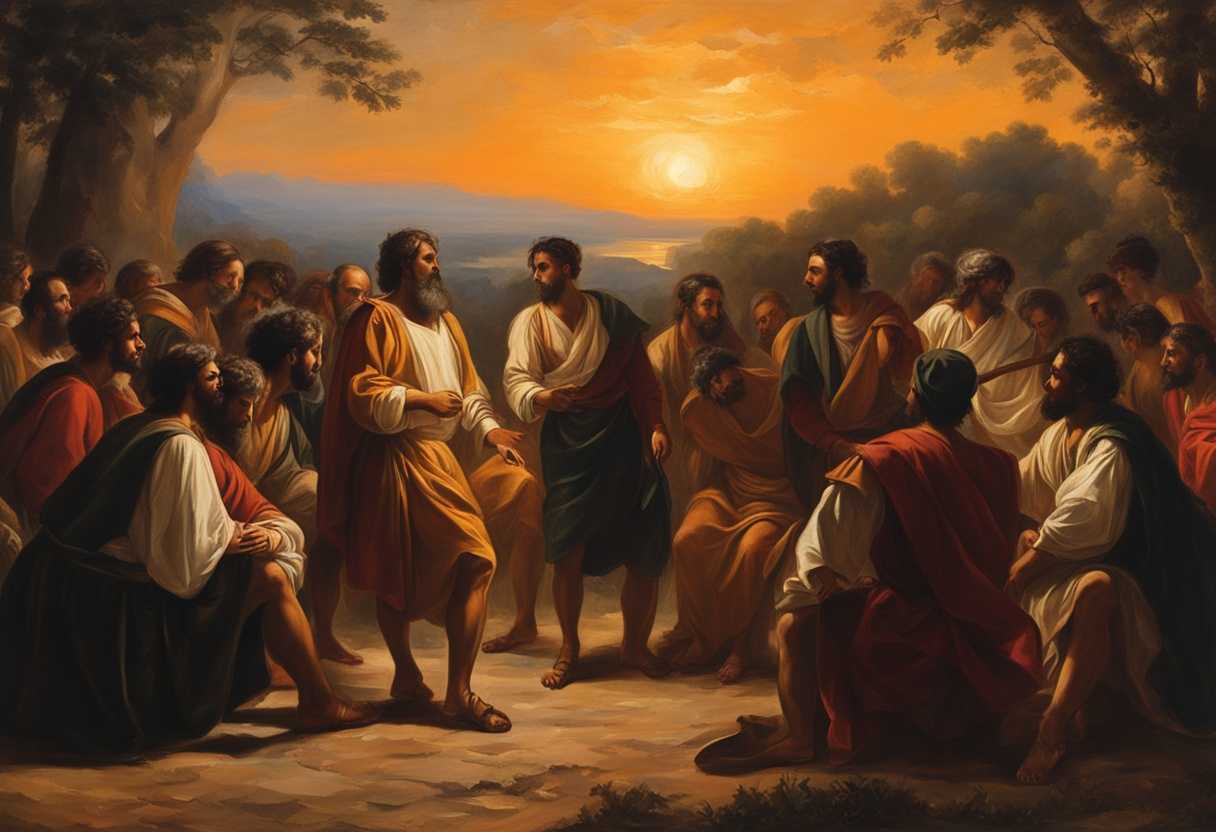
Setting the Scene for Judges 8:22
In Judges chapter 8, we find Gideon, a valiant warrior chosen by God to lead the Israelites against their oppressors, the Midianites. After a miraculous victory over the Midianite army, Gideon and his 300 men pursued the remaining enemies. Along the way, they encountered the leaders of the city of Succoth and Penuel, who had refused to provide food and support to Gideon and his weary troops during their pursuit of the Midianites.
The scene unfolds in the aftermath of the battle, with Gideon confronting the elders of Succoth and Penuel for their lack of assistance. The leaders of these cities are now standing before Gideon, their faces filled with trepidation as they face the consequences of their actions. Gideon, still filled with the zeal of victory and the authority given to him by God, demands justice for their betrayal. The tension in the air is palpable as Gideon holds these leaders accountable for their lack of support in the time of need, showcasing the importance of loyalty and unity among God’s people in the face of adversity. The setting is likely a dusty battlefield, with the sounds of victory still echoing in the distance, as Gideon stands firm in his resolve to uphold justice and righteousness.
What is Judges 8:22 about?
This verse is a powerful declaration of faith and leadership by Gideon. Gideon shows his deep trust and reliance on God’s guidance and sovereignty by refusing kingship and proclaiming God as the true ruler of Israel. This act exemplifies humility, obedience, and a deep understanding of spiritual leadership. It also serves as a reminder for us to prioritize God’s will and authority in our own lives, placing Him above all human power and authority.
When Gideon refuses kingship and acknowledges God as the ultimate ruler, he is emphasizing the importance of faith and obedience in leadership. Instead of seeking power and recognition for himself, Gideon redirects the focus to God, highlighting the need for humility and selflessness in positions of authority. This verse challenges us to reflect on our own attitudes towards leadership and the extent to which we submit to God’s will in every aspect of our lives. We can aspire to be humble and faithful leaders who prioritize God’s sovereignty above all else by following Gideon’s example.
Understanding what Judges 8:22 really means
In the Book of Judges, nestled between the conquest of Canaan and the establishment of the monarchy in Israel, we encounter a pivotal moment involving Gideon, a judge and military leader. Having just secured a victory over the Midianites, Gideon finds himself in a position of influence and respect among the Israelites. It is at this juncture that the people approach him with a significant request, saying, “Rule over us.” This simple yet profound plea reveals the underlying desire of the Israelites for stability, continuity, and guidance in their leadership.
The phrase “Rule over us” encapsulates a longing for security and direction, a yearning for a leader who can provide a sense of order and protection in tumultuous times. Furthermore, the mention of “You, your son, and your grandson also” hints at the people’s inclination towards dynastic rule, indicating a desire for a sustained leadership lineage that can offer enduring stability and direction to the nation.
This request to Gideon echoes a recurring theme in the Bible, where the Israelites, and indeed humanity as a whole, often seek human leadership to fulfill their need for guidance and security. In 1 Samuel 8:5-7, we see a similar plea as the Israelites ask Samuel for a king to rule over them, showcasing the persistent human inclination towards earthly authority figures. However, Deuteronomy 17:14-20 provides a crucial framework for such leadership, emphasizing that while human rulers are permissible, they must adhere to divine principles and guidelines.
Gideon’s response to the people’s request in Judges 8:23 is illuminating. He declines the offer of kingship, asserting that it is the Lord who should rule over Israel. This pivotal moment underscores the importance of aligning leadership with divine will and seeking God’s guidance in all matters of governance and authority.
The relevance of this passage extends beyond its historical context, resonating with contemporary society’s ongoing quest for strong and principled leadership. In times of uncertainty and crisis, people still yearn for leaders who can offer security, direction, and stability. This verse serves as a poignant reminder for individuals and communities to evaluate their leaders through a lens of godly principles rather than mere human desires.
Consider a scenario where a community faces a crisis, turning to a charismatic figure for leadership. This situation mirrors the Israelites’ plea to Gideon, highlighting the universal tendency to seek steadfast and capable leaders during challenging times. It prompts us to reflect on the qualities we value in leaders and whether they align with the timeless principles of divine guidance and wisdom.
As we ponder the lessons embedded in Judges 8:22, let us introspect on the qualities we seek in leaders, both in personal spheres and broader societal contexts. Are our expectations rooted in godly principles and values? How can we support and pray for our leaders, encouraging them to seek divine wisdom and direction in their roles? By engaging with these questions, we can glean valuable insights on leadership, trust, and the enduring relevance of seeking divine guidance in all aspects of governance and authority.
How can we avoid seeking recognition from others?
Seeking recognition from others can be avoided by focusing on our own intentions and actions rather than the approval of those around us. This can be achieved by aligning our purpose and deeds with our core values and beliefs, striving for self-improvement and growth without being dependent on external validation. When our actions are driven by sincerity and genuine intentions, the need for recognition from others diminishes as our inner satisfaction and sense of fulfillment become the primary motivations. Cultivating humility and self-awareness helps reduce the desire for recognition from others. Understanding our own strengths and weaknesses helps in acknowledging our limitations and areas for improvement. This self-awareness allows us to appreciate our efforts and progress without constantly seeking affirmation from outside sources. Finding contentment and confidence within ourselves ultimately enables us to detach from the need for constant recognition and approval from others, leading to a more fulfilling and internally driven life.
Application
Unlock the power of divine wisdom in your choices. Let God be your compass in the maze of life, guiding you to clarity and purpose. Embrace this truth as a driving force in your journey, at work, and with your loved ones. Can you truly commit to prioritizing God’s will in every step you take?

Reverend Michael Johnson is an experienced Church Minister with a profound expertise in spirituality and guidance. With a serene presence and a compassionate heart, he has faithfully served his congregation for over 20 years, leading them on a spiritual journey towards inner peace and enlightenment. Reverend Johnson’s extensive knowledge of religious philosophies and profound understanding of human nature have made him a trusted confidant and mentor to many, as he seamlessly weaves his profound wisdom into life teachings. Reverend Johnson’s calming demeanor and empathetic nature continue to uplift and heal souls, nurturing a sense of unity and tranquility within his community.