
Judges 8:33 is about the Israelites falling into idolatry and worshipping the false god Baal after the death of Gideon, disregarding their covenant with the Lord and straying from His guidance.
33 As soon as Gideon died, the people of Israel turned again and whored after the Baals and made Baal-berith their god.
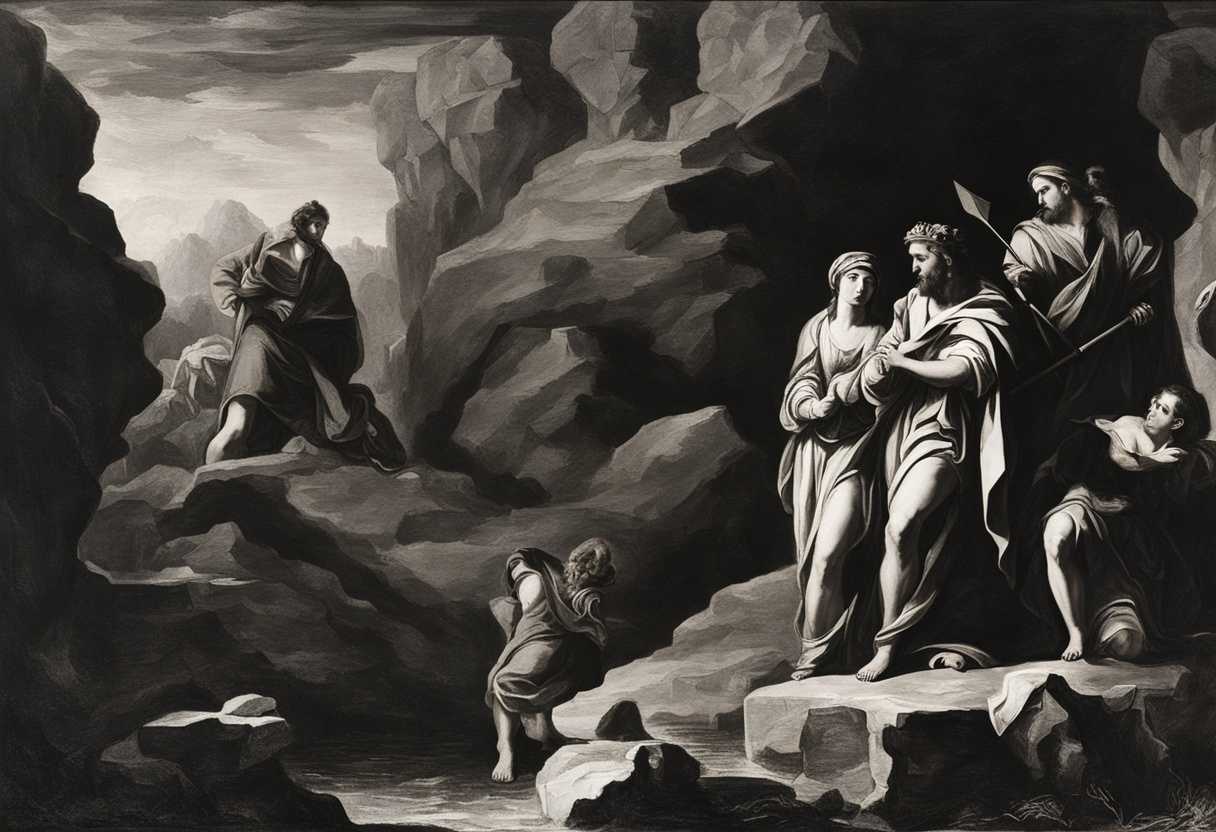
Setting the Scene for Judges 8:33
The scene in Judges 8:33 takes place in the aftermath of the Israelites’ victory over the Midianites. Gideon, also known as Jerub-Baal, has led the Israelites to triumph with the help of God. The people of Israel have just witnessed the miraculous defeat of their enemies and are filled with gratitude and relief. Gideon, a humble and reluctant leader, has proven himself to be a mighty warrior chosen by God.
In this moment, the Israelites gather around Gideon, their faces reflecting a mix of awe and reverence. They have seen the power of God at work through Gideon and are now looking to him for guidance and leadership. The scene is set in a camp in the wilderness, with the dust of battle still settling around them. The air is filled with a sense of victory and the sweet relief of deliverance from their oppressors. Gideon stands before the people, his face radiant with the light of God’s favor, ready to lead his people into a new era of peace and prosperity.
Among the crowd are Gideon’s loyal followers, battle-weary but filled with hope for the future. They have witnessed Gideon’s faith and courage in the face of overwhelming odds, and they now stand united in their devotion to him and to the God who has delivered them. As they look to Gideon for guidance, they are filled with a sense of gratitude and awe at the power of God that has been displayed through him. The scene is a powerful reminder of the faithfulness of God and the importance of trusting in His chosen leaders.
What is Judges 8:33 about?
Oh, the story of the Israelites and their wavering devotion to God is a timeless one, isn’t it? After the mighty leader Gideon passed away, the Israelites seemed to have forgotten the miracles and victories that God had brought them through. Instead of staying true to their faith and relying on God’s guidance, they turned their hearts towards idols and worshiped false gods.
It’s a stark reminder of how easily we as humans can be swayed by worldly temptations and forget the strength and love that God offers us. The Israelites’ actions serve as a cautionary tale for us all, showing the consequences of straying from our faith and placing our trust in things that do not bring true fulfillment. It’s a call for us to always remain steadfast in our devotion to God and to resist the allure of idols and false gods that promise temporary satisfaction but ultimately lead us astray. Let’s learn from the Israelites’ mistakes and strive to keep our hearts pure and our faith unwavering.
Understanding what Judges 8:33 really means
After Gideon’s death, the Israelites turned away from God and began to worship Baal-berith, marking a significant shift in their faithfulness. This verse in Judges 8:33 serves as a poignant reminder of the cyclical nature of Israel’s relationship with God, oscillating between devotion and disobedience. It underscores the consequences of forsaking the one true God for idols, highlighting the fragility of human faith and the need for constant vigilance in spiritual matters.
In Judges 2:11-19, a similar pattern emerges as Israel repeatedly falls into sin, faces oppression, cries out to God, and is delivered by judges. This cyclical narrative echoes throughout the Old Testament, emphasizing the recurring theme of human waywardness and God’s faithfulness in rescuing His people. The story of the golden calf in Exodus 32:1-6 further illustrates the swift descent into idol worship when faced with uncertainty or delay, showcasing the allure of false gods in times of distress.
The challenge presented in 1 Kings 18:21 by Elijah to choose between God and Baal resonates with the choices we face today. Just as the Israelites were confronted with the decision to remain faithful or follow after idols, we too must examine our hearts and choose whom we will serve. The relevance of these passages extends beyond ancient history, speaking directly to the modern struggles of idolatry, faithfulness, and the influence of community on individual beliefs.
Consider a community that thrived on shared values but faltered when influential leaders departed, prioritizing personal gain over communal well-being. The parallels with the Israelites’ decline after Gideon’s death are striking, highlighting the pivotal role of leadership in shaping spiritual direction. The immediate shift in behavior upon Gideon’s passing underscores the people’s reliance on human figures rather than cultivating a personal, unwavering connection with God.
The phrase “whored after the Baals” in Judges 8:33 vividly portrays the severity of Israel’s unfaithfulness, likening it to marital infidelity and covenant betrayal. This strong language conveys the depth of their transgression and the gravity of turning away from the true God. By naming Baal-berith as their god, the verse emphasizes the deliberate choice to worship a specific idol, showcasing the tangible nature of their rebellion and the clarity of their deviation from God’s commands.
Reflecting on this verse prompts introspection on our own faithfulness, the allure of modern idols, and the impact of community influences on our spiritual journey. It urges us to consider the patterns of disobedience in our lives, the need for steadfast devotion to God, and the significance of godly leadership in guiding communities towards righteousness. May we learn from Israel’s mistakes, strive for unwavering faith, and resist the temptations that lead us astray from the path of righteousness.
How can we guard against worshiping false gods?
One way to guard against worshiping false gods is to always remember and acknowledge that there is only one true God. Constantly reminding ourselves of the oneness and supremacy of God makes us less likely to be swayed by the temptations of false idols. This awareness can help us remain steadfast in our faith and resist the lure of worshiping anything other than the one true God.
Additionally, studying and understanding the teachings of our faith can also be a powerful defense against worshiping false gods. We arm ourselves with knowledge that can guide us away from any potential deviations from the truth by educating ourselves about the principles of our religion and the consequences of idolatry. Building a strong foundation of faith through learning and reflection can help us stand firm in our beliefs and avoid the pitfalls of worshiping false gods.
Furthermore, cultivating a deep and personal relationship with God through prayer, worship, and spiritual practices can strengthen our connection to the divine and guard us against the influence of false idols. We can safeguard our hearts and minds against straying towards worshiping false gods by prioritizing our relationship with God and seeking His guidance in all aspects of our lives. This intimate bond with the true God can provide us with the clarity and discernment needed to recognize and reject any false idols that may try to lead us astray.
Application
Let’s take a deep look within our hearts, just like updating the software of our innermost being. Are we ready to let God be the CEO of our lives, making decisions that align with His vision? It’s time to commit to living out our purpose in His name, shaping our lives like a master craftsman molds a masterpiece. Will you embrace this transformation and let His light lead you in this journey?

Reverend Michael Johnson is an experienced Church Minister with a profound expertise in spirituality and guidance. With a serene presence and a compassionate heart, he has faithfully served his congregation for over 20 years, leading them on a spiritual journey towards inner peace and enlightenment. Reverend Johnson’s extensive knowledge of religious philosophies and profound understanding of human nature have made him a trusted confidant and mentor to many, as he seamlessly weaves his profound wisdom into life teachings. Reverend Johnson’s calming demeanor and empathetic nature continue to uplift and heal souls, nurturing a sense of unity and tranquility within his community.