
Leviticus 12:6 is about the purification ritual that a woman was required to undergo after giving birth, symbolizing a restoration to spiritual purity and a new beginning.
6 “And when the days of her purifying are completed, whether for a son or for a daughter, she shall bring to the priest at the entrance of the tent of meeting a lamb a year old for a burnt offering, and a pigeon or a turtledove for a sin offering,”
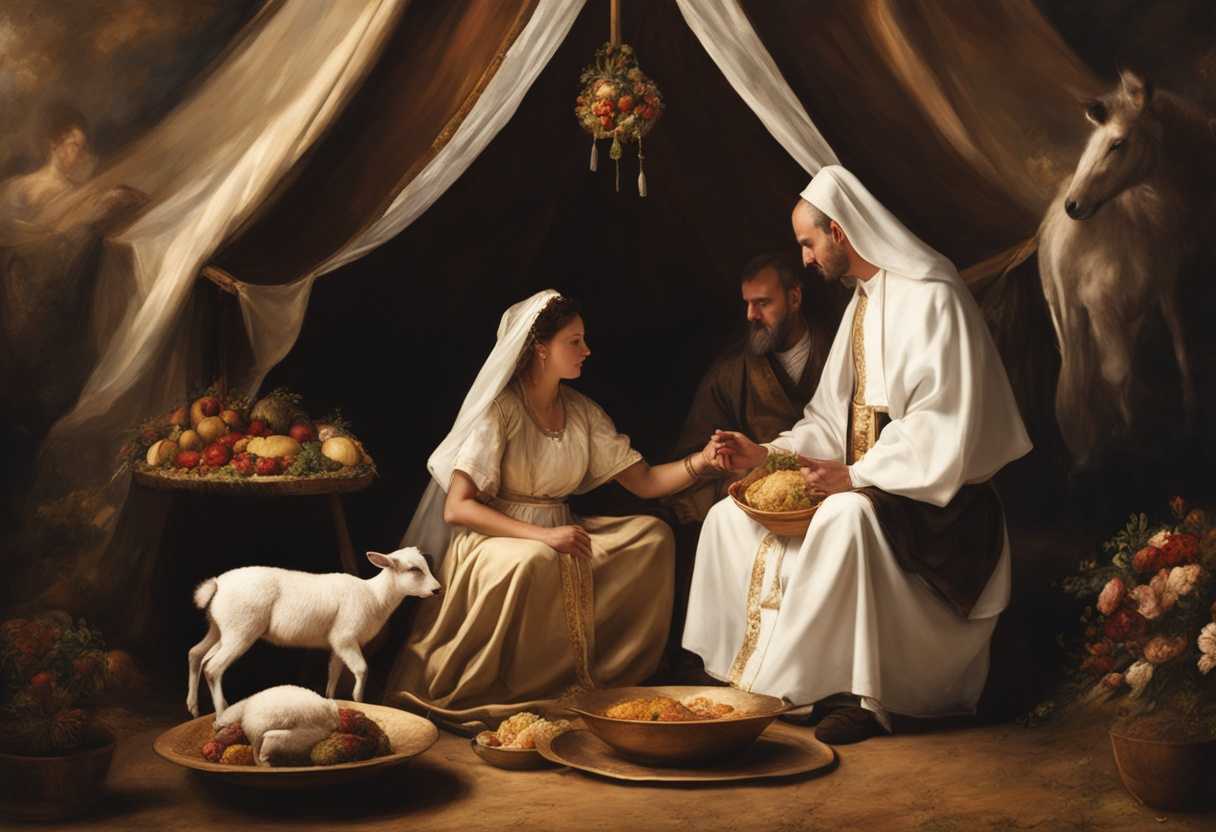
Setting the Scene for Leviticus 12:6
In the scene described in Leviticus 12:6, we find a new mother in ancient Israel who has recently given birth to a child. According to the laws outlined in Leviticus, after giving birth to a son, the mother is considered ceremonially unclean for seven days. On the eighth day, the baby boy is to be circumcised as a sign of the covenant between God and the Israelites. This circumcision ceremony is a significant event in the life of a Jewish boy and marks his inclusion in the community of God’s people.
The scene takes place in a humble Israelite home, where the mother, surrounded by her female relatives and friends, is recovering from childbirth. The women are caring for her and the newborn baby, providing support and assistance during this special time. The atmosphere is one of joy and celebration as they prepare for the circumcision ceremony on the eighth day. The father of the child is also present, along with other male relatives and friends who will witness and participate in the circumcision ritual, which symbolizes the child’s entry into the covenant with God.
As the eighth day arrives, the family gathers together in a designated area of the home for the circumcision ceremony. A designated individual, often a respected member of the community or a religious leader, performs the circumcision according to the customs and traditions of the time. Prayers are offered, blessings are spoken over the child, and the family rejoices in the faithfulness of God to His people. The scene is filled with a sense of reverence and gratitude as the family embraces the covenantal relationship with God and the community welcomes the new addition with love and support.
What is Leviticus 12:6 about?
The act of sacrificing an animal after childbirth in Leviticus 12:6 symbolizes the importance of spiritual purification and cleansing. The sacrifice serves as a reminder of the need for spiritual renewal and cleansing in one’s life, just as a new mother undergoes physical purification rituals after giving birth. This verse highlights the idea that just as physical cleanliness is important for health and well-being, spiritual cleanliness is essential for maintaining a strong connection with one’s faith and God.
Have you ever thought about the significance of rituals and symbols in our spiritual lives? The sacrifice after childbirth mentioned in Leviticus serves as a tangible reminder of the need for regular spiritual cleansing and renewal in our lives. It prompts us to reflect on our own spiritual practices and consider how we can incorporate acts of purification into our routine to strengthen our faith and relationship with God. Remembering the importance of spiritual cleansing and purification is crucial as we navigate through life’s challenges and joys. Dedicating time for spiritual reflection and purification can help us deepen our connection with our faith and feel more aligned with our spiritual values, just as a fresh start after childbirth brings a sense of renewal. Let us prioritize our spiritual well-being and consider how we can incorporate rituals of purification into our daily lives, taking inspiration from this verse.
Understanding what Leviticus 12:6 really means
In Leviticus 12:6, we delve into a specific aspect of the Mosaic Law, focusing on the purification rituals for women after childbirth. This verse mandates the presentation of a burnt offering and a sin offering at the Tent of Meeting, emphasizing the importance of ceremonial cleanliness and atonement in the eyes of the Lord. The meticulous instructions given to the Israelites underscore the significance of approaching God with reverence and obedience in all aspects of life.
Drawing parallels to the New Testament, we see the continuity of these practices in Luke 2:22-24, where Mary and Joseph adhere to the law by presenting Jesus at the temple. This act not only fulfills the requirements of the Mosaic Law but also foreshadows the ultimate sacrifice of Christ as discussed in Hebrews 10:1-4. The sacrificial system, including burnt and sin offerings, serves as a precursor to the redemptive work of Jesus, highlighting the divine plan for salvation through His sacrifice.
Today, the principles of spiritual cleansing and atonement embodied in Leviticus 12:6 remain relevant in our understanding of Christ’s sacrifice. Just as the Israelites sought purification through offerings, we can find renewal and reconciliation with God through Jesus. His sacrificial death on the cross serves as the ultimate burnt and sin offering, providing a pathway for all to experience spiritual cleansing and restoration in their relationship with God.
Consider a mother who, after the physical and emotional strain of childbirth, yearns for a fresh start and inner peace. Similarly, we all encounter moments of brokenness and sin that necessitate spiritual renewal. Through Christ’s sacrifice, we are offered a chance for complete transformation and forgiveness, mirroring the purification rituals outlined in Leviticus. The burnt offering symbolizes our surrender to God, urging us to dedicate our entire being to His service, while the sin offering underscores our continual need for repentance and God’s mercy.
Reflecting on the profound symbolism of the burnt and sin offerings, we grasp the depth of God’s provision for our spiritual needs. The burnt offering calls for a total commitment to God, prompting us to live lives wholly devoted to His will. Conversely, the sin offering acknowledges our inherent flaws and underscores the necessity of seeking forgiveness and reconciliation with God. Through these ancient rituals, we gain insight into the completeness of Christ’s sacrifice and the eternal significance of His atonement for humanity’s sins.
How can we spiritually cleanse ourselves after physical impurity?
After experiencing physical impurity, we can spiritually cleanse ourselves by engaging in acts of purification and seeking forgiveness from God. This process typically involves rituals such as bathing or washing, as a symbolic act to cleanse the body and soul. During this time, one might also reflect on their actions and seek repentance through prayer, asking for forgiveness and guidance in moving forward. Cleansing ourselves spiritually after physical impurity is a way to restore our connection with God and reaffirm our commitment to living a life in accordance with His will. Cleansing rituals in religious traditions serve as a way to purify oneself and reset the spiritual state after being ritually impure. These practices not only symbolize a physical cleansing but also a deeper spiritual renewal, emphasizing the importance of maintaining purity in both body and soul. Engaging in these rituals of purification can help one seek spiritual clarity and restore a sense of closeness to God, reinforcing the belief in the power of forgiveness and redemption in the journey towards spiritual growth and enlightenment.
Application
Embrace Leviticus 12:6 as your roadmap; your guide in this fast-paced digital jungle. Let it remind you of the power of being steadfast in your faith, much like you navigate through deadlines and family duties every day. Are you ready to steer your life’s course in alignment with His divine plan and promises?

Reverend Michael Johnson is an experienced Church Minister with a profound expertise in spirituality and guidance. With a serene presence and a compassionate heart, he has faithfully served his congregation for over 20 years, leading them on a spiritual journey towards inner peace and enlightenment. Reverend Johnson’s extensive knowledge of religious philosophies and profound understanding of human nature have made him a trusted confidant and mentor to many, as he seamlessly weaves his profound wisdom into life teachings. Reverend Johnson’s calming demeanor and empathetic nature continue to uplift and heal souls, nurturing a sense of unity and tranquility within his community.