
1 The Lord spoke to Moses and Aaron, saying,
2 “Speak to the people of Israel and say to them, When any man has a discharge from his body, his discharge is unclean.
3 And this is the law of his uncleanness for a discharge: whether his body runs with his discharge, or his body is blocked up by his discharge, it is his uncleanness.
4 Every bed on which the one with the discharge lies shall be unclean, and everything on which he sits shall be unclean.
5 And anyone who touches his bed shall wash his clothes and bathe himself in water and be unclean until the evening.
6 And whoever sits on anything on which the one with the discharge has sat shall wash his clothes and bathe himself in water and be unclean until the evening.
7 And whoever touches the body of the person with the discharge shall wash his clothes and bathe himself in water and be unclean until the evening.
8 And if the one with the discharge spits on someone who is clean, then he shall wash his clothes and bathe himself in water and be unclean until the evening.
9 And whatever saddle he who has the discharge rides on shall be unclean.
10 And whoever touches anything that was under him shall be unclean until the evening, and whoever carries such things shall wash his clothes and bathe himself in water and be unclean until the evening.
11 Whoever touches anything that has the discharge shall wash his clothes and bathe himself in water and be unclean until the evening.
12 And the earthenware vessel that he who has the discharge touches shall be broken, and every vessel of wood shall be rinsed in water.
13 “And when the one with a discharge is cleansed of his discharge, then he shall count for himself seven days for his cleansing, and wash his clothes. And he shall bathe his body in fresh water and shall be clean.”
14 And on the eighth day he shall take two turtledoves or two pigeons and come before the Lord to the entrance of the tent of meeting and give them to the priest.
15 And the priest shall offer them, one for a sin offering and the other for a burnt offering. And the priest shall make atonement for him before the Lord for his discharge.
16 “If a man has an emission of semen, he shall bathe his whole body in water and be unclean until the evening.
17 And every garment and every skin on which the semen comes shall be washed with water and be unclean until the evening.
18 If a man lies with a woman and has an emission of semen, both of them shall bathe themselves in water and be unclean until the evening.
19 “When a woman has a discharge, and the discharge in her body is blood, she shall be in her menstrual impurity for seven days, and whoever touches her shall be unclean until the evening.”
20 Everything on which her bed or on which she sits during her menstrual impurity shall be unclean. Everything also on which she lies shall be unclean.
21 And whoever touches her bed shall wash his clothes and bathe himself in water and be unclean until the evening.
22 And whoever touches anything on which she sits shall wash his clothes and bathe himself in water and be unclean until the evening.
23 And if a woman has a discharge, and the discharge in her body is blood, she shall be in her menstrual impurity for seven days, and whoever touches her shall be unclean until the evening.
24 And if any man lies with her and her menstrual impurity comes upon him, he shall be unclean seven days, and every bed on which he lies shall be unclean.
25 “If a woman has a discharge of blood for many days, not at the time of her menstrual impurity, or if she has a discharge beyond the time of her impurity, all the days of the discharge she shall continue in uncleanness. As in the days of her impurity, she shall be unclean.
26 “Every bed on which she lies, all the days of her discharge, shall be to her as the bed of her impurity. And everything on which she sits shall be unclean, as in the uncleanness of her menstrual impurity.”
27 Whoever touches these things shall be unclean, and shall wash his clothes and bathe himself in water and be unclean until the evening.
28 But if she is cleansed of her discharge, she shall count for herself seven days, and after that she shall be clean.
29 And on the eighth day she shall take two turtledoves or two pigeons and bring them to the priest, to the entrance of the tent of meeting.
30 And the priest shall offer one for a sin offering and the other for a burnt offering, and the priest shall make atonement for him before the Lord for his discharge.
31 Thus you shall keep the people of Israel separate from their uncleanness, lest they die in their uncleanness by defiling my tabernacle that is in their midst.
32 This is the law for him who has a discharge and for him who has an emission of semen, becoming unclean thereby.
33 And for a woman who is in her menstrual impurity, or for anyone in whom a discharge of semen occurs, tell your people that they must keep their distance from the holy things.
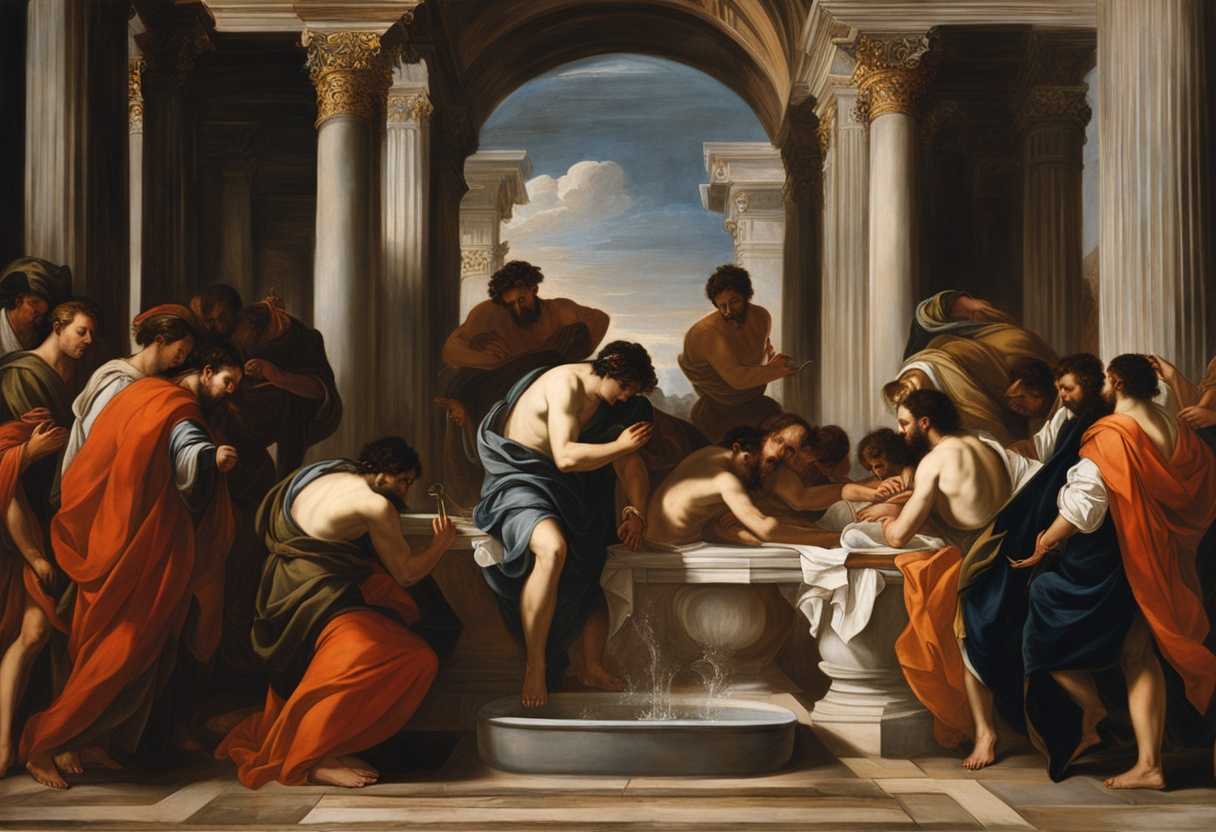
The True Meaning of Leviticus 15
The book of Leviticus was written by Moses, the great prophet and leader of the Israelites. Moses provides detailed instructions on the laws of bodily discharges and the rituals required for purification in this chapter. These laws were crucial for maintaining the holiness and purity of the Israelite community as they prepared to enter the Promised Land.
The chapter begins by addressing the issue of male bodily discharges, both normal and abnormal, and the necessary steps for cleansing and restoration to ritual purity. It then transitions to the laws concerning women’s menstrual cycles and the purification rites to be observed. These regulations were not merely arbitrary rules, but were designed to uphold the sanctity of life and the sacred relationship between God and His people. We will delve into this chapter to see how these laws were intended to protect the Israelites from the consequences of sin and to preserve the holiness of the community. The principles of purity and cleanliness found in Leviticus 15 are echoed throughout the Scriptures, reminding us of the importance of maintaining a right relationship with God and one another.
Leviticus 15:1-12
The passage in Leviticus 15:1-12 discusses the rules concerning bodily discharges and their impact on ritual cleanliness within the community of Israel. This section outlines the regulations regarding various types of bodily discharges that may make a person unclean. It begins by detailing the issue of a man with a discharge, specifying that any man with a discharge is unclean due to it being considered abnormal and potentially linked to an illness or infection. This concept of cleanliness and purity was crucial in the religious practices of the Israelites, as maintaining purity was not only a hygiene issue but also a spiritual and moral one.
The text goes on to explain that anyone who has a bodily discharge must undergo a period of isolation, both to prevent the spread of any potential contagion and to allow time for healing. During this time of separation, the individual is to wash their clothes and bathe their bodies, indicating a physical and symbolic cleansing before being allowed back into the communal life of the people. The emphasis on cleanliness in these situations reflects the holiness of God and the importance of approaching Him with reverence and respect.
Furthermore, the passage distinguishes between different types of discharges and their implications for cleanliness. For instance, it specifies that a man with an emission of semen is unclean until evening, highlighting the significance of sexual purity and the sacredness of the marital relationship in the eyes of God. This serves as a reminder of the covenantal relationship between God and His people and the importance of upholding moral values and ethical conduct in all aspects of life. The regulations on bodily discharges in Leviticus are part of the Mosaic Law, a set of guidelines given to the Israelites by God through Moses in a broader context. These laws were meant to set the Israelites apart from other nations as a holy people dedicated to God. While these specific regulations may no longer apply in the same way today, they serve as a reminder of the importance of spiritual purity and moral integrity in the sight of God. The New Testament further emphasizes the idea of purity, with Jesus teaching on the significance of inner purity of the heart and mind (Matthew 5:8). Leviticus 15:1-12 highlights the significance of ritual cleanliness in the religious practices of ancient Israel and serves as a reminder of the importance of maintaining purity, both physically and spiritually, in the sight of God. Through these regulations, the Israelites were called to live a life set apart for God, reflecting His holiness and righteousness in all their actions and attitudes.
Leviticus 15:13-18
The verses in Leviticus 15:13-18 discuss the guidelines for a man who has a discharge. It details the process he must go through to become ceremonially clean again. The man experiencing the discharge is to wash his clothes and bathe in water, and he will remain unclean until evening. Anyone or anything he touches will become unclean until evening.
This passage is significant because it emphasizes the importance of cleanliness and purity in the eyes of God. Physical cleanliness was closely tied to spiritual purity in the Old Testament. The intricate rules and regulations surrounding bodily discharges and cleanliness served to set the Israelites apart from other nations and remind them of their commitment to holiness.
The concept of cleanliness and purification carries through the Bible, particularly in the New Testament. Jesus in the New Testament often emphasizes the importance of spiritual purity over outward rituals. Jesus says in Matthew 15:11, “It is not what goes into the mouth that defiles a person, but what comes out of the mouth; this defiles a person.”” This shift in focus from external rituals to internal purity reflects a deeper understanding of God’s expectations for His people.
Furthermore, the idea of being unclean until evening and the need for washing and waiting for purification can also be symbolic of waiting on God for cleansing and forgiveness. Psalm 51:10 says, “Create in me a pure heart, O God, and renew a steadfast spirit within me.” This verse reflects the desire for spiritual cleansing and renewal that goes beyond the physical realm. Leviticus 15:13-18 serves as a reminder of the importance of cleanliness and purity before God. It teaches us to be mindful of our actions and thoughts, seeking spiritual purity as we strive to live according to God’s will. The principles of cleanliness and purification laid out in these verses continue to point believers towards a life of holiness and devotion to God.
Leviticus 15:19-24
Leviticus 15:19-24 provides a detailed account of the cleanliness laws regarding a woman’s menstrual cycle. This section of the scripture emphasizes the importance of ritual purity in the Israelite community. The text outlines that when a woman has a discharge of blood, she becomes ritually unclean, and anything or anyone she touches during this time also becomes unclean. This ritual impurity would have meant separation from the community, including restricted access to the Tabernacle and participation in sacred rituals.
The concept of ritual purity and cleanliness was deeply ingrained in ancient Israelite society. It was believed that physical impurity could lead to spiritual contamination and consequently distance individuals from God. Leviticus 15 serves as a guide for the Israelites on how to maintain purity and approach God with reverence and respect.
This emphasis on ritual purity paints a vivid picture of the distinctiveness of the Israelites as a chosen people set apart by God. The meticulous rules and regulations surrounding issues like menstruation underscore the holiness and purity that God expected from His people. It also serves as a reminder of the importance of obedience and adherence to God’s commandments for the Israelites.
The laws in Leviticus 15:19-24 are a part of a broader set of regulations in Leviticus that deal with various issues of cleanliness and purity. Other chapters in Leviticus address topics such as skin diseases, bodily discharges, and dietary restrictions, all of which were meant to reinforce the sanctity of the Israelite community and its relationship with God. Jesus challenged the strict interpretation of purity laws by the religious leaders of his time in the New Testament. He emphasized that true purity comes from within, from a heart devoted to God, rather than just external observances. Jesus says in Mark 7:15, “Nothing outside a person can defile them by going into them.” Rather, it is what comes out of a person that defiles them.”
While the specific laws of ritual purity outlined in Leviticus may not directly apply to Christians today, the underlying principle of approaching God with reverence, obedience, and a desire for holiness is still relevant. It reminds believers of the importance of living a life that is pleasing to God and striving for purity of heart and mind.
Leviticus 15:25-30
Detailed regulations regarding the uncleanness that accompanies a woman’s menstrual cycle are seen in Leviticus 15:25-30. This section discusses the laws concerning a woman who has a discharge of blood, specifying the length of her uncleanness and the required purification process.
The concept of ritual purity and cleanliness was vital in the Jewish culture during the time of Leviticus. Menstrual blood was considered unclean, and women were regarded as impure during this time. This ritual impurity was not due to any sin on the woman’s part but was part of the ceremonial laws set forth by God for the Israelites. The laws in Leviticus played a crucial role in shaping the Israelites’ identity as a holy and set-apart people.
The regulations outlined in this passage highlight the separation between the Israelites and the surrounding cultures. It was a way to maintain God’s chosen people in a state of holiness and set apart from the practices of other nations. The Israelites were demonstrating their obedience to God and their commitment to following His commandments by adhering to these guidelines.
It’s important to note that the laws in Leviticus, including those regarding menstrual purity, were fulfilled and completed in the ultimate sacrifice of Jesus Christ. Jesus redeems believers from the burden of having to adhere strictly to these ceremonial laws in the New Testament. A woman who had been subject to bleeding for twelve years reached out in faith to touch Jesus’ cloak and was healed, as seen in Mark 5:25-34. This story demonstrates Jesus’ power over physical impurity and His willingness to restore those who are considered unclean. We, as Christians, can understand the principles behind these Old Testament laws while recognizing that we are now under the new covenant of grace through Christ. While the specific regulations may not apply to us today, the underlying concepts of holiness, obedience, and separation from the world are timeless truths that we can still learn from and apply to our lives.
Leviticus 15:31-33
The text in Leviticus 15:31-33 reads: “Thus you shall keep the people of Israel separate from their uncleanness, lest they die in their uncleanness by defiling my tabernacle that is in their midst.” This is the law for him who has a discharge and for him who has an emission of semen, becoming unclean thereby; also for her who is unwell with her menstrual impurity, that is, for anyone, male or female, who has a discharge, and for the man who lies with a woman who is unclean.”
The passage is emphasizing the importance of maintaining cleanliness and purity among the people of Israel, particularly in relation to bodily discharges which were considered sources of ritual impurity. The Israelites were instructed to keep away from anything that would make them unclean, as impurity would prevent them from being in the presence of God and defile the tabernacle.
This passage reflects the meticulous attention to purity rituals in Leviticus, highlighting the significance of ritual cleanliness as a means of approaching the holiness of God. It reinforces the idea of separation from impurity for spiritual sanctification. The Israelites were showing their reverence for God and their commitment to living in accordance with His commandments by adhering to these laws.
The mention of bodily discharges and menstrual impurity in the verse is a reminder of the physical aspects of human existence that were subject to these purity laws. It underscores the holistic approach of the Israelite laws, encompassing all aspects of life including bodily functions, to maintain a sense of order and discipline within the community.
This emphasis on purity laws in Leviticus also serves as a foreshadowing of the need for spiritual purification in the New Testament. Jesus Christ’s sacrifice is often seen as the ultimate purification that cleanses believers from sin and impurity, highlighting the contrast between the external rituals of the Old Testament and the internal transformation brought about by faith in Christ. Leviticus 15:31-33 reminds readers of the importance of holiness, purity, and separation from impurity in order to draw near to God. It presents a foundational aspect of the Old Testament laws that sets the stage for understanding the principles of spiritual purity and sanctification that are further developed throughout the Bible.
After Leviticus 15
The Lord spoke to Moses and Aaron, saying, “Speak to the people of Israel and say to them, When any man has a discharge from his body, his discharge is unclean. And this is the law of his uncleanness for a discharge: whether his body runs with his discharge, or his body is blocked up by his discharge, it is his uncleanness.”
My friends, we have learned of the Lord’s instructions regarding the uncleanness that can come from bodily discharges. This is a weighty matter, for the Lord takes great care in preserving the purity of His people. Yet, we must not forget that even in our uncleanness, the Lord offers a path to restoration. We will explore the Lord’s provisions for cleansing and atonement in the next chapter, so that we may once again stand before Him in holiness. Let us approach this with humility and reverence because the Lord’s ways are higher than our own.

Reverend Michael Johnson is an experienced Church Minister with a profound expertise in spirituality and guidance. With a serene presence and a compassionate heart, he has faithfully served his congregation for over 20 years, leading them on a spiritual journey towards inner peace and enlightenment. Reverend Johnson’s extensive knowledge of religious philosophies and profound understanding of human nature have made him a trusted confidant and mentor to many, as he seamlessly weaves his profound wisdom into life teachings. Reverend Johnson’s calming demeanor and empathetic nature continue to uplift and heal souls, nurturing a sense of unity and tranquility within his community.