
Leviticus 16:2 is about the specific instructions given to Aaron the high priest regarding entering the Most Holy Place in the tabernacle to offer sacrifices for the atonement of the Israelites’ sins.
2 and the Lord said to Moses, “Tell Aaron your brother not to come at any time into the Holy Place inside the veil, before the mercy seat that is on the ark, so that he may not die. For I will appear in the cloud over the mercy seat.
Setting the Scene for Leviticus 16:2
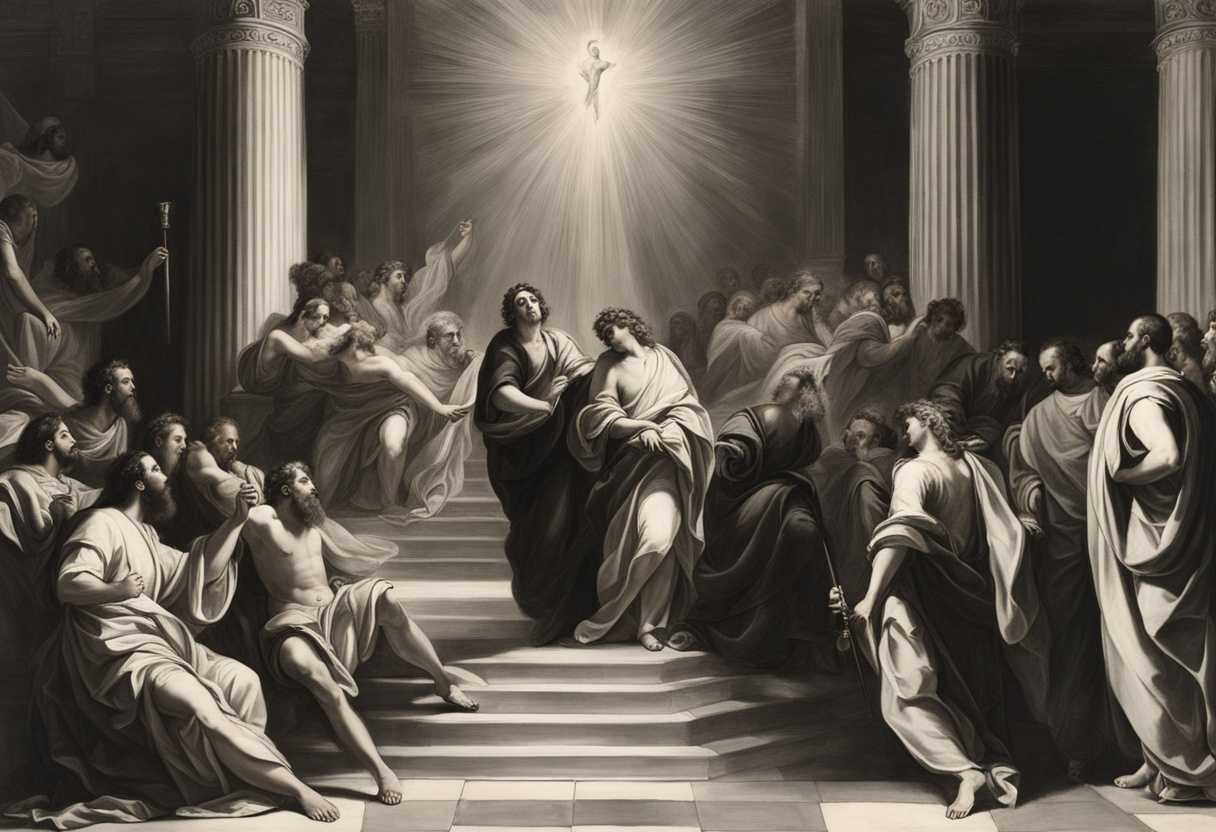
The scene in Leviticus 16:2 takes place in the Tabernacle in the wilderness, a sacred space where the Israelites worshiped and made offerings to God. The main characters in this scene are Moses, the leader of the Israelites, and Aaron, the high priest. They have come together in the Tabernacle to discuss the rituals and sacrifices that need to be performed on the Day of Atonement, also known as Yom Kippur.
The Tabernacle is a tent-like structure made of fine linen and animal skins, filled with sacred objects like the Ark of the Covenant and the altar of incense. The air is heavy with the scent of burning offerings and incense, creating a solemn and reverent atmosphere. The flickering light of the oil lamps casts a warm glow over the scene as Moses and Aaron consult the instructions given to them by God regarding the rituals of atonement.
As they stand in the holy space, Moses and Aaron are dressed in their priestly garments, adorned with intricate designs and symbols that represent their roles as intermediaries between the people and God. The gravity of the task at hand weighs heavily on them as they prepare to carry out the sacred duties prescribed in Leviticus 16, seeking forgiveness and reconciliation for the sins of the Israelites.
What is Leviticus 16:2 about?
The instruction given to Aaron in Leviticus 16:2 emphasizes the importance of entering the Most Holy Place with reverence and caution. This verse highlights the sacred nature of the Most Holy Place and the need for Aaron, as the high priest, to approach this space with utmost respect and mindfulness. It stresses the significance of the environment and the actions that need to be performed within it.
Imagine the Most Holy Place as a space of divine presence and power, a place where the spiritual and the physical converge. Aaron is being reminded of the responsibility he carries and the sanctity of the task at hand. The verse serves as a lesson in humility and obedience, guiding Aaron to uphold the rituals and traditions with sincerity and purity of heart.
Therefore, as we reflect on Leviticus 16:2, let us also consider the spaces and moments in our lives that require reverence and caution. It prompts us to ponder on how we approach sacred things in our own lives, be it relationships, opportunities, or moments of reflection. We should approach our own sacred spaces with the same level of respect and mindfulness as Aaron was called to enter the Most Holy Place with.
Understanding what Leviticus 16:2 really means
Leviticus 16:2 delves into the sacred instructions given to Moses concerning the Day of Atonement, a pivotal day in the Jewish calendar. The verse specifically directs Aaron, the high priest, on the manner in which he is to approach the Most Holy Place, highlighting the necessity of sanctity and reverence in his actions.
The phrase “Tell your brother Aaron that he is not to come whenever he chooses into the Most Holy Place” underscores the significance of approaching God with reverence and adherence to His divine instructions, rather than on human terms. The mention of being “behind the curtain in front of the atonement cover on the ark” symbolizes the inner sanctum of the Tabernacle, representing the presence of God and the imperative of holiness in His presence. The warning “Or else he will die” starkly emphasizes the gravity of God’s holiness and the severe consequences of approaching Him in an inappropriate manner.
In Hebrews 9:7, the New Testament reflects on the high priest’s annual entry into the Most Holy Place, drawing parallels between the sacrificial system and the ultimate sacrifice of Jesus. Exodus 25:22 underscores the sanctity of the space above the atonement cover where God met with Moses, highlighting the divine presence. Matthew 27:51 portrays the tearing of the temple curtain at Jesus’ death as the removal of the barrier between God and humanity, offering a fresh perspective on access to God.
This verse resonates with contemporary audiences by emphasizing the significance of approaching God with reverence and acknowledging His holiness. It serves as a poignant reminder that access to God is not on our terms but through the means He has ordained, culminating in the sacrifice of Jesus Christ. In a world where casual attitudes can infiltrate spiritual practices, Leviticus 16:2 calls for a revival of awe and respect in our interactions with God.
Consider the analogy of meeting a world leader, where meticulous preparation and adherence to protocol are essential. Similarly, approaching the Creator of the universe demands even greater reverence and preparation. A personal anecdote shared by a church member highlights the profound sense of God’s presence experienced during reverent prayer, contrasting it with hurried and unfocused approaches to prayer. This narrative underscores the importance of reverence in worship and spiritual encounters.
In conclusion, Leviticus 16:2 stands as a poignant testament to God’s holiness and the proper approach to Him. It prompts introspection into our spiritual practices, urging us to nurture a spirit of reverence and respect in our relationship with God. By internalizing and applying the principles encapsulated in this verse, we can forge a deeper connection with God and encounter His presence in a more profound manner.
How can we approach God with reverence and respect?
Approaching God with reverence and respect involves maintaining a humble and obedient attitude towards Him. This means acknowledging His supreme authority, holiness, and sovereignty over all creation. It requires us to approach Him with awe, fear, and a deep sense of respect for who He is. We are called to approach God with a heart that is surrendered, pure, and reverent, just as the high priest in Leviticus 16:2 followed specific instructions and rituals to enter the Most Holy Place.
To approach God with reverence and respect also involves recognizing our own unworthiness and need for His mercy and forgiveness. When we come before God in prayer, worship, or service, we should do so with a genuine desire to honor Him, seeking His will above our own desires. This reverence and respect for God lead us to live in obedience to His commands, to uphold His principles in our daily lives, and to maintain a posture of submission to His authority. We ultimately approach God with reverence and respect through an ongoing process that requires us to continually examine our hearts, seek His guidance, and strive to live in a way that brings glory to His name. It is about cultivating a deep sense of awe and gratitude for the privilege of being in relationship with the Creator of the universe, and allowing that reverence to shape every aspect of our lives.
Application
Let’s tune into our spiritual Wi-Fi and upgrade our connection with reverence and holiness. It’s time to show up for our divine meeting with humility and respect. Reflect on Leviticus 16:2 and let it guide your actions. Will you prioritize a genuine and sincere connection with the Almighty in your everyday life?

Reverend Michael Johnson is an experienced Church Minister with a profound expertise in spirituality and guidance. With a serene presence and a compassionate heart, he has faithfully served his congregation for over 20 years, leading them on a spiritual journey towards inner peace and enlightenment. Reverend Johnson’s extensive knowledge of religious philosophies and profound understanding of human nature have made him a trusted confidant and mentor to many, as he seamlessly weaves his profound wisdom into life teachings. Reverend Johnson’s calming demeanor and empathetic nature continue to uplift and heal souls, nurturing a sense of unity and tranquility within his community.