
Leviticus 1:1-17 is about the protocol for presenting burnt offerings to God as an act of worship and atonement for sins.
1 In the beginning, God created the heavens and the earth.
2 “Speak to the people of Israel and say to them, When any one of you brings an offering to the Lord, you shall bring your offering of livestock from the herd or from the flock.”
3 If his offering is a burnt offering from the herd, he shall offer a male without blemish. He shall bring it to the entrance of the tent of meeting, that he may be accepted before the Lord.
4 He shall lay his hand on the head of the burnt offering, and it shall be accepted for him to make atonement for him.
5 Then he shall kill the bull before the Lord, and Aaron’s sons the priests shall bring the blood and throw the blood against the sides of the altar that is at the entrance of the tent of meeting.
6 And he shall flay the burnt offering and cut it into pieces,
7 The sons of Aaron the priest shall put fire on the altar and arrange wood on the fire.
8 And the priests, Aaron’s sons, shall arrange the pieces, the head, and the fat, on the wood that is on the fire on the altar;
9 but its entrails and its legs he shall wash with water. And the priest shall burn all of it on the altar, as a burnt offering, a food offering with a pleasing aroma to the Lord.
10 “But if his offering is a burnt offering from the flock, from sheep or goats, he shall offer a male without blemish.
11 And he shall kill it on the north side of the altar before the Lord, and Aaron’s sons the priests shall throw its blood against the sides of the altar.
12 And he shall cut it into pieces, with its head and its fat, and the priest shall arrange them on the wood that is on the fire on the altar,
13 But he shall wash the entrails and the legs with water. And the priest shall offer all of it and burn it on the altar; it is a burnt offering, a food offering with a pleasing aroma to the Lord.
14 “If his offering to the Lord is a burnt offering of birds, then he shall bring his offering of turtledoves or pigeons.”
15 And the priest shall bring it to the altar and wring off its head and burn it on the altar. Its blood shall be drained out on the side of the altar.
16 And he shall remove its crop with its contents and cast it beside the altar on the east side, in the place for ashes.
17 It shall be a statute forever throughout your generations, in all your dwelling places, that you eat neither fat nor blood.
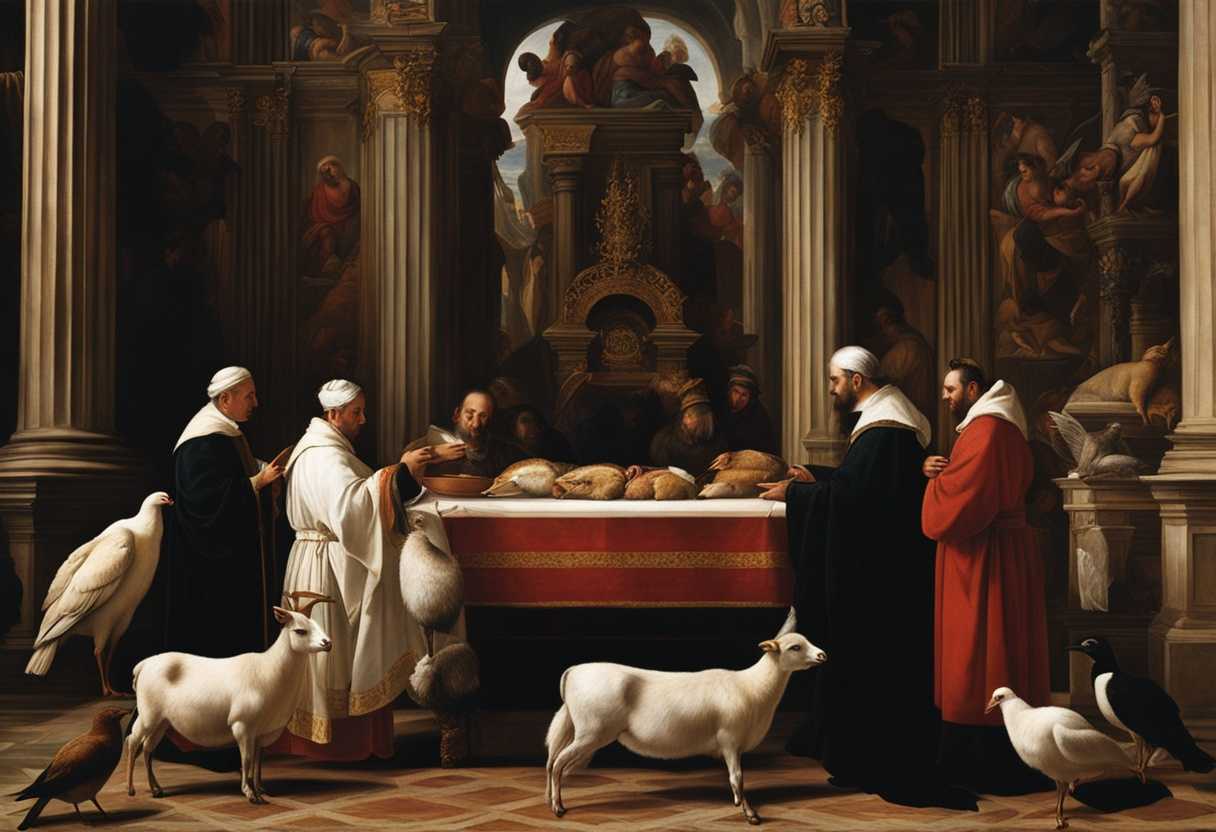
Setting the Scene for Leviticus 1:1-17
The scene in Leviticus chapter 1 opens with the Lord speaking to Moses from the Tabernacle in the wilderness. The Tabernacle is a sacred tent where the Israelites worship and offer sacrifices to God. The air is filled with the scent of burning incense and the sound of prayers being lifted up to the heavens. The Israelites have been wandering in the wilderness after their exodus from Egypt, and now they are learning the laws and rituals that will govern their worship and daily lives.
Moses, the great leader of the Israelites, stands before the Tabernacle, listening intently to the instructions given to him by the Lord. He is surrounded by a group of priests and elders who have been chosen to assist him in carrying out the rituals and sacrifices prescribed in the book of Leviticus. The priests are dressed in elaborate garments, ready to perform their duties with reverence and precision.
As the people gather around the Tabernacle, they bring their offerings of livestock and grain to present to the Lord. The scene is one of solemnity and devotion, as the Israelites seek to honor God and seek forgiveness for their sins through the rituals outlined in Leviticus chapter 1. The smoke from the burnt offerings rises towards the sky, symbolizing the prayers of the people ascending to God, who is pleased by their obedience and faithfulness.
What is Leviticus 1:1-17 about?
The verse details the instructions for offering burnt offerings to the Lord as a way to provide a pleasing aroma to Him. This practice of offering burnt offerings dates back to ancient times when it was seen as a way to honor and communicate with God. The people were showing their reverence and devotion to God by following these specific instructions. Consider these instructions as you read the symbolism behind the burnt offerings. What does it mean to offer something as a pleasing aroma to the Lord? Reflect on the significance of following these detailed steps and the importance of ritual and tradition in expressing one’s faith. Imagine yourself in the shoes of those ancient worshipers, diligently preparing the burnt offerings according to the guidelines laid out in the verse. We can gain a deeper appreciation for the ways in which people have sought to connect with the Divine throughout history by understanding the meaning behind these instructions.
Understanding what Leviticus 1:1-17 really means
The passage in Leviticus 1:1-17 delves into the intricate procedures surrounding burnt offerings, a fundamental aspect of worship in ancient Israel. It underscores the significance of sacrifice, obedience, and the pursuit of holiness in the worship of God. As we explore the key phrases within this passage, we encounter profound meanings that shed light on the sacredness and symbolism embedded in these rituals. When God calls to Moses from the tent of meeting, it signifies direct divine communication, emphasizing the sanctity of the instructions being imparted.
The requirement for offerings to be without defect highlights the importance of presenting our best to God, symbolizing our desire to offer pure and unblemished sacrifices. The act of laying hands on the burnt offering symbolizes the transfer of sin and the need for atonement, ultimately pointing towards the sacrificial work of Jesus Christ. This act of atonement is a recurring theme throughout the Bible, culminating in the ultimate sacrifice made by Jesus for the redemption of humanity.
Drawing connections to related biblical passages such as Hebrews 10:1-10, Romans 12:1, and John 1:29, we see how the sacrificial system in Leviticus foreshadows Christ’s sacrificial offering and the call for believers to offer themselves wholly to God. These passages emphasize the spiritual significance of sacrifice and the importance of living lives dedicated to God’s service. The relevance of these ancient practices extends to modern times, urging believers to offer their best to God not only in material terms but also in their daily actions and attitudes.
Consider the analogy of a devoted artist meticulously crafting a painting as a gift for a loved one. The dedication, effort, and love poured into the artwork mirror the Israelites’ desire to honor God with their best through the detailed instructions for burnt offerings. Similarly, we are called to present our lives, talents, and resources to God with unwavering dedication and love. Leviticus 1:1-17, though rooted in ancient traditions, imparts timeless principles of sacrifice, obedience, and holiness that challenge believers to live lives of gratitude and dedication.
In conclusion, delving into Leviticus 1:1-17 unveils profound truths about sacrifice, obedience, and the pursuit of holiness in worship. By grasping the deeper meanings and connections to other biblical passages, believers can gain a deeper appreciation for offering their best to God and recognizing the sacrificial work of Jesus Christ. This passage serves as a poignant reminder for us to live lives dedicated to honoring God in all aspects of our existence, embodying a spirit of gratitude and devotion in our daily walk with Him.
How does sacrifice demonstrate reverence and commitment to God?
Sacrifice demonstrates reverence and commitment to God because it involves giving up something valuable or significant as an offering to Him. Through sacrifice, individuals show their devotion and respect for God by giving a portion of their possessions or resources as an act of worship. The act of sacrifice requires faith and obedience, symbolizing a willingness to surrender to God’s will and trust in His provision.
Furthermore, sacrifice serves as a physical demonstration of commitment to God’s commands and desire for forgiveness and reconciliation. Individuals acknowledge their need for atonement for their sins and seek to restore their relationship with God by presenting a sacrifice. Sacrifice represents a personal investment in one’s relationship with God, reflecting a desire to honor Him above all else and uphold His standards of righteousness and justice. Sacrifice ultimately highlights the importance of surrendering one’s self-interests in order to prioritize God’s will and glory, as it is a tangible expression of love and devotion to God.
Application
Approach worship with sincerity and reverence, offering your best to the Lord like the unblemished sacrifices in Leviticus. Just as the Israelites brought their finest, present your purified self in service to Him. Give your all, just as God expected the best from them. Will you rise up by presenting your best self to the Lord in every sphere of your life?

Reverend Michael Johnson is an experienced Church Minister with a profound expertise in spirituality and guidance. With a serene presence and a compassionate heart, he has faithfully served his congregation for over 20 years, leading them on a spiritual journey towards inner peace and enlightenment. Reverend Johnson’s extensive knowledge of religious philosophies and profound understanding of human nature have made him a trusted confidant and mentor to many, as he seamlessly weaves his profound wisdom into life teachings. Reverend Johnson’s calming demeanor and empathetic nature continue to uplift and heal souls, nurturing a sense of unity and tranquility within his community.