
Leviticus 1:1-9 is about outlining the guidelines for presenting burnt offerings to the Lord, emphasizing the importance of a willing heart and a spirit of devotion in approaching God.
1 In the beginning, God created the heavens and the earth.
2 “Speak to the people of Israel and say to them, When any one of you brings an offering to the Lord, you shall bring your offering of livestock from the herd or from the flock.”
3 If his offering is a burnt offering from the herd, he shall offer a male without blemish. He shall bring it to the entrance of the tent of meeting, that he may be accepted before the Lord.
4 He shall lay his hand on the head of the burnt offering, and it shall be accepted for him to make atonement for him.
5 Then he shall kill the bull before the Lord, and Aaron’s sons the priests shall bring the blood and throw the blood against the sides of the altar that is at the entrance of the tent of meeting.
6 And he shall flay the burnt offering and cut it into pieces,
7 The sons of Aaron the priest shall put fire on the altar and arrange wood on the fire.
8 And the priests, Aaron’s sons, shall arrange the pieces, the head, and the fat, on the wood that is on the fire on the altar;
9 but its entrails and its legs he shall wash with water. And the priest shall burn all of it on the altar, as a burnt offering, a food offering with a pleasing aroma to the Lord.
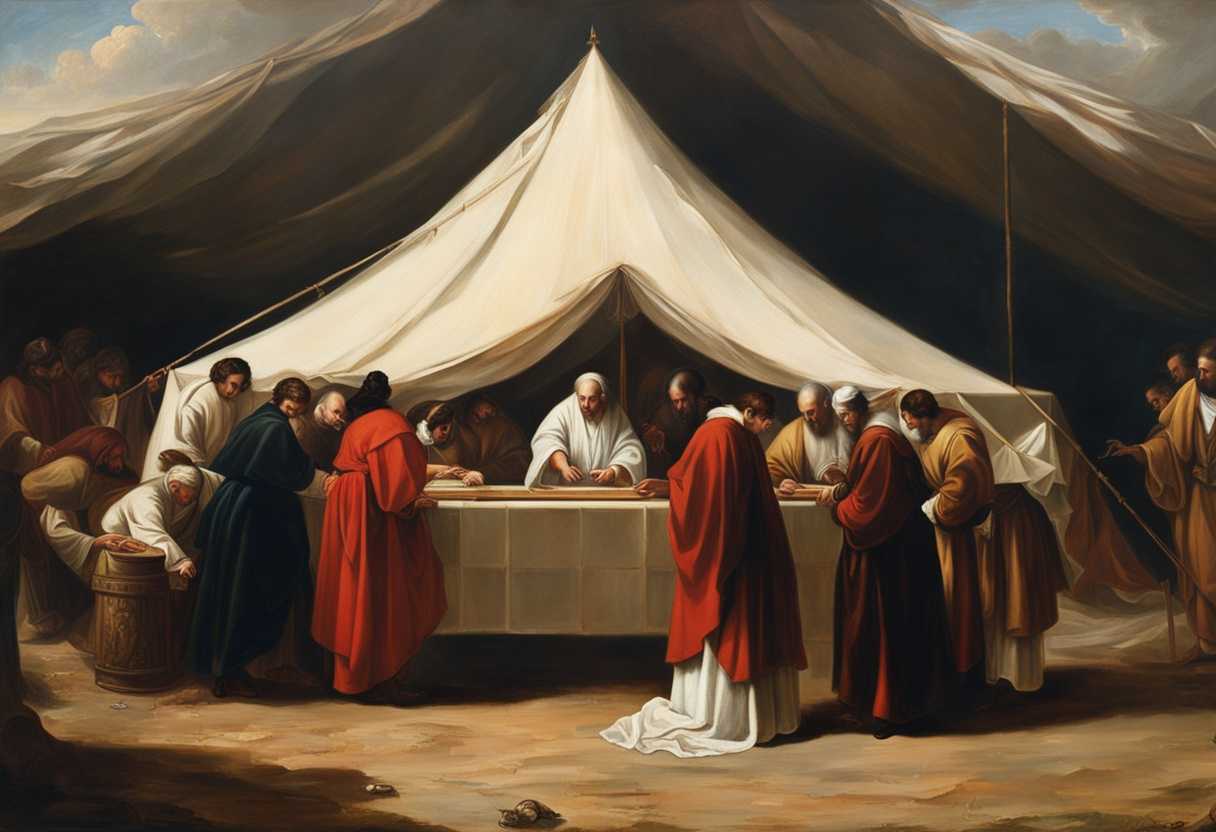
Setting the Scene for Leviticus 1:1-9
The scene in Leviticus chapter 1 opens with the Lord speaking to Moses from the Tabernacle in the wilderness. The Tabernacle is a sacred tent where the Israelites worship and make offerings to God. Moses, the great leader of the Israelites, is standing before the entrance of the Tabernacle, listening intently to the instructions given by the Lord.
As Moses listens, he is surrounded by a group of priests who have been chosen to assist in the religious rituals and ceremonies. These priests have been consecrated and set apart for this holy work. They are dressed in their sacred garments, ready to carry out the commands of the Lord.
In the distance, the Israelite community can be seen going about their daily activities, their tents pitched around the Tabernacle. The sound of bleating sheep and lowing cattle can be heard as the people bring their offerings to the priests. The air is filled with the scent of incense and burning flesh as the priests begin to make the required sacrifices according to the laws outlined in Leviticus chapter 1. The scene is one of reverence and devotion as the Israelites seek to honor and worship their God in the prescribed manner.
What is Leviticus 1:1-9 about?
The verse gives instructions for offering burnt offerings to the Lord as a pleasing aroma. Through this practice, the ancient Israelites showed their reverence, obedience, and gratitude to God. They demonstrated their willingness to give their very best to God by sacrificing the best and unblemished animals. The burning of the offerings symbolized the purification and consecration of the people and their desire for forgiveness and reconciliation with God.
Have you ever considered the significance of this act of sacrifice in a modern context? How could we apply the principles of offering our best to God in our daily lives today? How can we demonstrate our commitment, dedication, and devotion to God in our modern world, just as the burnt offerings represented a desire for spiritual renewal and closeness to God in ancient times? Let’s reflect on ways we can give our best to God in our thoughts, actions, and service, striving to create a pleasing aroma in His sight.
Understanding what Leviticus 1:1-9 really means
Leviticus 1:1-9 delves into the intricate details of offering a burnt sacrifice to the Lord, a fundamental aspect of the sacrificial system in the Old Testament. As we explore this passage, we are reminded of the significance of obedience and reverence in worship, as these instructions were directly given by God to Moses. The context of this passage is enriched by cross-references such as Exodus 29:38-42, which underscores the continual need for atonement and dedication to God through daily burnt offerings. Moreover, Hebrews 10:1-10 sheds light on how the sacrifices in Leviticus foreshadowed the ultimate sacrifice of Jesus Christ, who offered Himself once for all, emphasizing the profound symbolism embedded in these ancient rituals.
In our modern context, the concept of sacrifice remains pertinent as it serves as a poignant reminder of Christ’s ultimate sacrifice on the cross. By delving into the intricacies of the Old Testament sacrificial system, we gain a deeper appreciation for the profound depth of Christ’s atonement and the unyielding love of God. The timeless principles of obedience, reverence, and dedication in worship, as elucidated in Leviticus, continue to resonate with believers today, urging us to approach God with humility and devotion in our daily lives.
To illustrate the enduring significance of these ancient practices, consider a family tradition that binds generations together through shared memories and values. Similarly, the sacrificial system in Leviticus served as a tangible reminder for the Israelites of their covenant with God and their perpetual need for atonement, fostering a deep sense of identity and connection to their faith heritage.
Within the intricate details of Leviticus 1:1-9, phrases like “The Lord called to Moses and spoke to him from the tent of meeting” underscore the divine origin and authority of these instructions, highlighting their sacred nature. The specificity of offering a burnt sacrifice from the herd signifies the worshiper’s commitment and reverence in presenting a valuable offering to the Lord. The symbolic act of laying hands on the burnt offering signifies the transfer of sins, portraying the concept of atonement and substitution in a tangible manner. Furthermore, the imagery of the burnt offering as a pleasing aroma to the Lord symbolizes acceptance and reconciliation, emphasizing the profound spiritual significance of these ancient rituals.
By delving into the intricate layers of Leviticus 1:1-9, we unravel a tapestry of symbolism that points towards the ultimate sacrifice of Jesus Christ and beckons us to a life of unwavering obedience and dedication to God. As we reflect on these timeless truths, may we be inspired to approach our worship with reverence, gratitude, and a deep understanding of the sacrificial love that underpins our faith journey.
How can we sincerely offer ourselves to God?
We can sincerely offer ourselves to God by presenting our whole selves to Him, with complete honesty and authenticity. Just like how the Israelites were instructed to present their burnt offerings to God without blemish, we should strive to offer ourselves to God without holding back anything. This means being transparent about our thoughts, feelings, and actions, acknowledging our faults and weaknesses, and surrendering our lives to His will completely.
Furthermore, we can offer ourselves sincerely to God by approaching Him with a pure heart and a spirit of genuine worship. This involves coming before Him with reverence, humility, and a desire to seek His presence in our lives. We demonstrate our commitment to God and our willingness to submit to His perfect will by offering ourselves in this manner. Genuine self-offering to God ultimately involves transforming our inner being, aligning our thoughts, desires, and actions with His divine purpose and plan for our lives.
Application
Let’s step into the tabernacle of our lives and offer our top shelf to the almighty. Just as the Israelites brought their finest, let’s give our best in all we do – in worship, in service, in obedience. Are we really laying down our best before Him? It’s time to check our spiritual pockets and see if we are handing over our first fruits, our best work, our ultimate dedication. Let’s rise to this call and show up with our A-game. Will you rise to the challenge and offer your utmost to the Lord today?

Reverend Michael Johnson is an experienced Church Minister with a profound expertise in spirituality and guidance. With a serene presence and a compassionate heart, he has faithfully served his congregation for over 20 years, leading them on a spiritual journey towards inner peace and enlightenment. Reverend Johnson’s extensive knowledge of religious philosophies and profound understanding of human nature have made him a trusted confidant and mentor to many, as he seamlessly weaves his profound wisdom into life teachings. Reverend Johnson’s calming demeanor and empathetic nature continue to uplift and heal souls, nurturing a sense of unity and tranquility within his community.