
Leviticus 1:10-13 is about emphasizing the importance of wholehearted dedication and sacrifice to God, demonstrated through the offerer’s active participation in the ritual, symbolizing a complete surrender and commitment to the divine.
10 “But if his offering is a burnt offering from the flock, from sheep or goats, he shall offer a male without blemish.
11 And he shall kill it on the north side of the altar before the Lord, and Aaron’s sons the priests shall throw its blood against the sides of the altar.
12 And he shall cut it into pieces, with its head and its fat, and the priest shall arrange them on the wood that is on the fire on the altar,
13 But he shall wash the entrails and the legs with water. And the priest shall offer all of it and burn it on the altar; it is a burnt offering, a food offering with a pleasing aroma to the Lord.
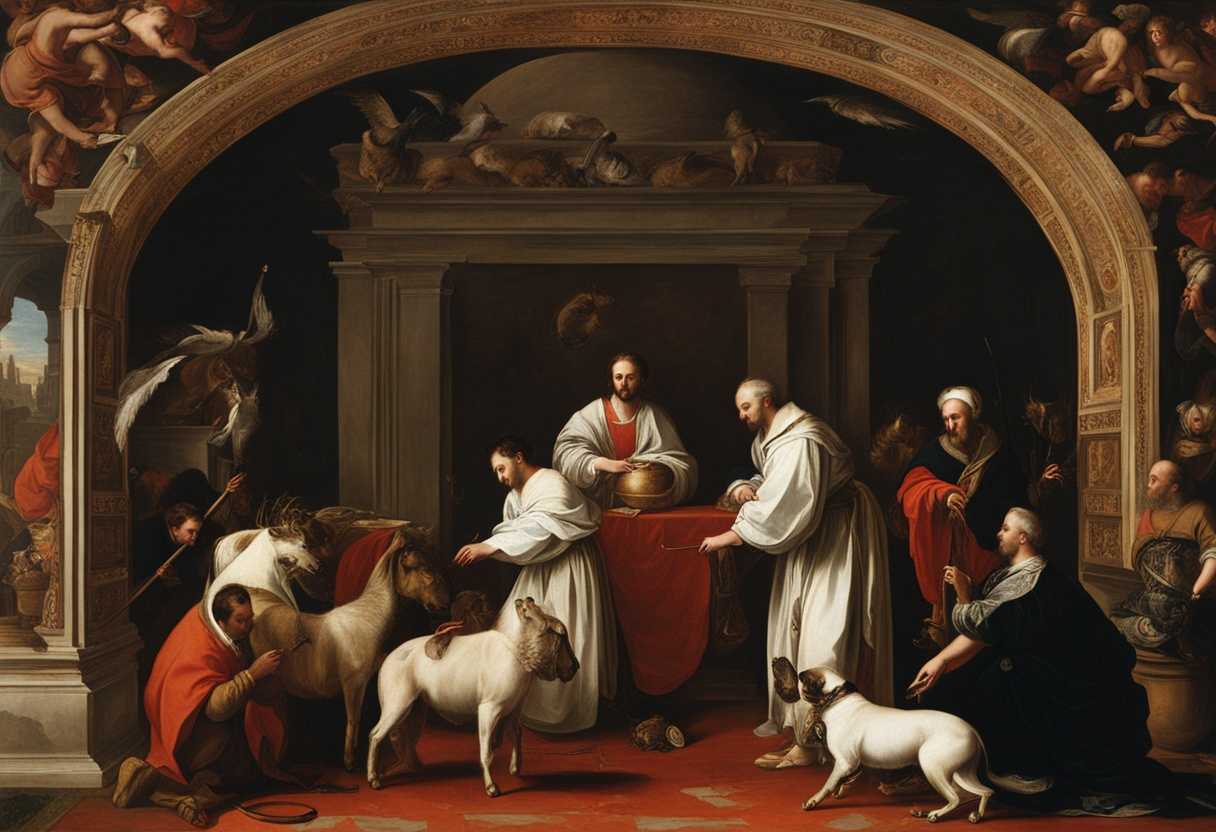
Setting the Scene for Leviticus 1:10-13
In Leviticus chapter 1, we find ourselves in the Tabernacle courtyard, a sacred space where the Israelites come to offer sacrifices to the Lord. The scene is set with the altar of burnt offering towering in the center, its bronze surface gleaming in the sunlight. The air is filled with the scent of burning incense and the sound of prayers being lifted up to heaven.
Aaron, the high priest, stands beside the altar, dressed in his sacred garments, ready to officiate the sacrifice. A man from the community approaches, leading a spotless male lamb for his offering. The man’s face is filled with reverence and awe as he presents the lamb to Aaron, a symbol of his desire to seek forgiveness and reconciliation with God.
As the man lays his hand on the head of the lamb, transferring his sins onto the innocent animal, Aaron takes a sharp knife and swiftly slaughters the lamb. The man watches as the blood is collected and splashed against the sides of the altar, a solemn reminder of the cost of sin. The burnt offering is then placed on the fire, its sweet aroma rising up as a pleasing sacrifice to the Lord. In this moment, the man finds peace and assurance that his sins have been atoned for, and he leaves the courtyard with a renewed sense of God’s mercy and grace.
What is Leviticus 1:10-13 about?
The instructions given for presenting a burnt offering of livestock to the Lord can be seen in this verse. This act was a significant part of religious practices in ancient times, symbolizing the desire to draw closer to God and seek forgiveness for sins. Individuals demonstrated their dedication and sincerity in offering a sacrifice to the Lord by following these detailed guidelines. As we delve deeper into the meaning of this verse, we can ponder on the significance of sacrifice in our own lives. What are we willing to give up or offer as a symbol of our devotion and commitment to our beliefs or values? How does this act of sacrifice bring us closer to our spiritual beliefs and principles? Reflecting on these questions can help us understand the deeper spiritual significance behind the practice of offering sacrifices to the Lord. This verse ultimately serves as a reminder of the importance of reverence, obedience, and humility in our relationship with a higher power. It prompts us to contemplate the ways in which we can demonstrate our faith and devotion in our own lives, even if the practice of animal sacrifice is no longer a common ritual. We can strive to walk the path of righteousness and deepen our connection with the divine by aligning our actions with our values and beliefs.
Understanding what Leviticus 1:10-13 really means
Leviticus 1:10-13, found in the Old Testament book of Leviticus, provides instructions for offering a burnt sacrifice, specifically from the flock, either a sheep or a goat, as an act of worship and atonement. In the broader context of Leviticus, a book focused on holiness and proper worship, the burnt offering symbolizes the worshiper’s complete dedication to God. The passage emphasizes the importance of offering God our best, without any defects, reflecting the idea of giving our utmost to the Divine.
The detailed instructions in the passage, such as slaughtering the animal at the north side of the altar, sprinkling its blood, cutting it into pieces, and arranging them on the burning wood, highlight the thoroughness and completeness of the offering. Each step symbolizes purification, the seriousness of sin, and the need for every aspect of our lives to be dedicated to God. The washing of internal organs and legs with water underscores the importance of internal purity and cleanliness before God, emphasizing the significance of a pure heart in worship.
While the practice of animal sacrifices is no longer observed today, the principles behind these offerings remain relevant. The concept of giving our best to God, seeking purity, and dedicating all aspects of our lives to Him are timeless truths that can be applied in modern contexts. This could involve dedicating our time, talents, and resources to serve God and others, reflecting a wholehearted commitment to our faith.
In Hebrews 10:1-10, the New Testament explains how the sacrifices in Leviticus foreshadowed Christ’s ultimate sacrifice, emphasizing the continuity of God’s redemptive plan throughout history. Romans 12:1 further encourages believers to offer themselves as living sacrifices, holy and pleasing to God, highlighting the spiritual act of worship that extends beyond physical offerings.
Consider the story of a young professional who dedicated his financial skills to help his church manage resources better, viewing it as his way of offering his best to God, akin to the unblemished sacrifices in Leviticus. This act of service not only benefited the church but also deepened his sense of purpose and connection to his faith, illustrating the transformative power of wholehearted dedication to God.
Leviticus 1:10-13 serves as a reminder of the importance of wholehearted dedication and purity in our relationship with God. By delving into the deeper meanings of these ancient rituals, we can apply their principles in our lives today, offering ourselves as living sacrifices in service to God and others, embodying the essence of true worship and devotion.
How can we present our whole selves to God?
Leviticus 1:10-13 describes the process of offering a burnt sacrifice to the Lord. This act symbolizes presenting one’s whole self to God in worship and obedience. We can present our whole selves to God by striving to live a life that is pleasing to Him, just as the Israelites were instructed to carefully select and offer a perfect animal without blemish. This involves surrendering all areas of our lives to God, not holding back anything from Him.
To present our whole selves to God means to come before Him with sincerity and openness. This includes offering our thoughts, emotions, desires, and actions to God in an attitude of humility and reverence. It is a continuous process of aligning our will with God’s will, seeking His guidance in all aspects of our lives, and being willing to make sacrifices for the sake of our relationship with Him. Presenting our whole selves to God ultimately acknowledges His sovereignty and lordship over our lives as an act of worship. It involves living with integrity and authenticity, being transparent before God, and allowing Him to work in and through us for His purposes. We demonstrate our love and devotion to God by offering ourselves fully to Him, inviting His presence to dwell in us and transform us into the image of His Son, Jesus Christ.
Application
Reflect on Leviticus 1:10-13. Offer your best to the Lord as the Israelites did with their burnt offerings. Dedicate your life to God, worship Him sincerely. Examine your heart, give God your best in everything. Are you ready to wholeheartedly dedicate yourself to the Lord in all you do?

Reverend Michael Johnson is an experienced Church Minister with a profound expertise in spirituality and guidance. With a serene presence and a compassionate heart, he has faithfully served his congregation for over 20 years, leading them on a spiritual journey towards inner peace and enlightenment. Reverend Johnson’s extensive knowledge of religious philosophies and profound understanding of human nature have made him a trusted confidant and mentor to many, as he seamlessly weaves his profound wisdom into life teachings. Reverend Johnson’s calming demeanor and empathetic nature continue to uplift and heal souls, nurturing a sense of unity and tranquility within his community.