
Leviticus 1:19 is about the importance of offering sacrifices as a symbol of one’s devotion and atonement to God.
19 then he shall tear it by its wings, but shall not sever it completely. And the priest shall burn it on the altar, on the wood that is on the fire. It is a burnt offering, a food offering with a pleasing aroma to the Lord.
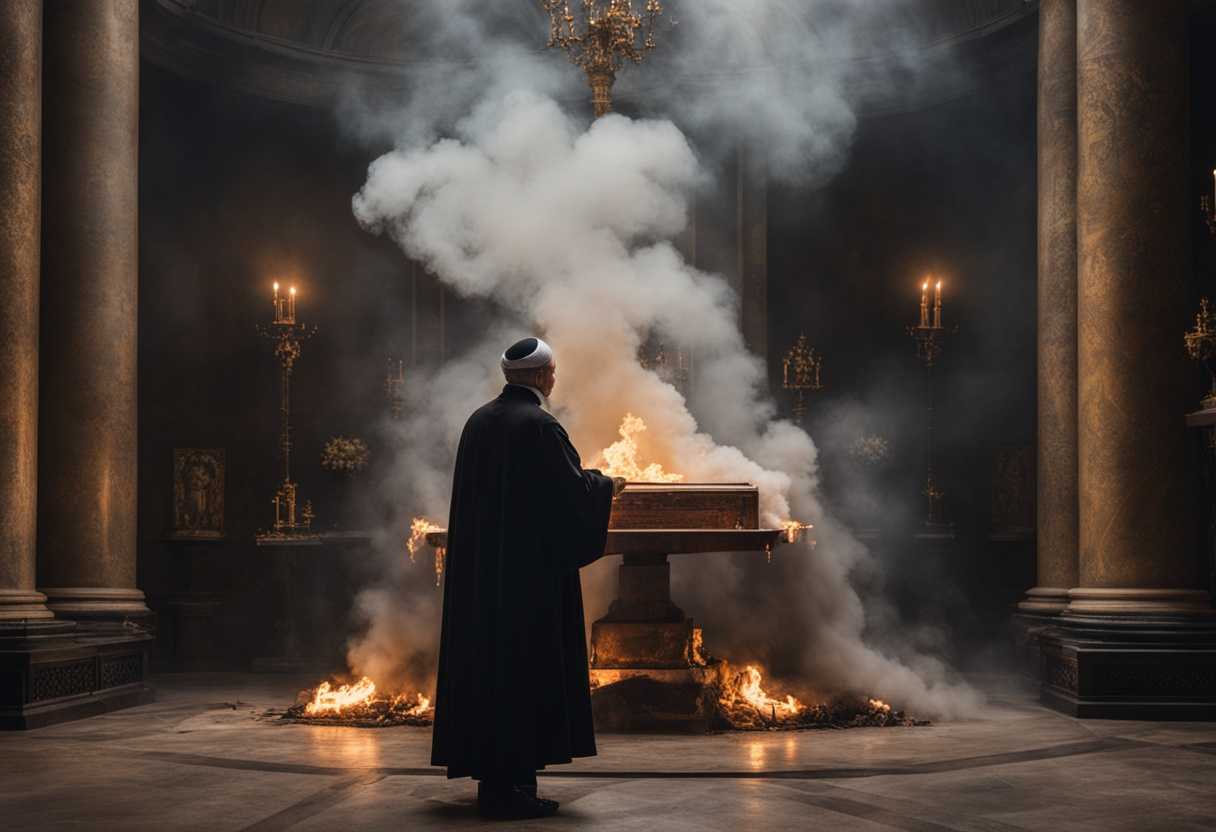
Setting the Scene for Leviticus 1:19
In Leviticus chapter 1, we find ourselves in the Tabernacle courtyard, a sacred space where the Israelites come to offer sacrifices to the Lord. The scene is set with the altar of burnt offering towering in the center, its bronze surface gleaming in the sunlight. The air is filled with the scent of burning incense and the sound of prayers being lifted up to heaven.
Among the gathered crowd are Aaron and his sons, the priests appointed by God to oversee the sacrificial rituals. They are dressed in their sacred garments, a symbol of their consecration to serve the Lord. Also present are the Israelites, who have come to present their offerings as a way of seeking forgiveness for their sins and expressing their devotion to God.
As the people bring their sacrifices forward, the priests carefully inspect each animal to ensure it is without blemish, as required by the law. The scene is one of reverence and solemnity, as the people bow their heads in prayer and the priests offer the sacrifices on their behalf. It is a moment of connection between the people and their God, a tangible expression of their faith and obedience.
What is Leviticus 1:19 about?
The act of offering a burnt sacrifice in Leviticus 1:19 serves a specific purpose – to be accepted as a pleasing aroma to the Lord. This verse reflects the importance of proper worship and sacrifice in the eyes of God. The Lord sees the offering of a burnt sacrifice that is accepted as a pleasing act that honors Him, just as the smell of a pleasant aroma can bring joy and satisfaction.
Have you ever considered the significance of the sacrifices made in ancient times to show reverence and devotion to God? This verse encourages us to reflect on the idea that our actions and offerings can evoke a response from the divine. It serves as a reminder that our worship is not just a ritualistic gesture, but a deeply meaningful way to express our love and commitment to God. Through this verse, we are invited to contemplate the ways in which we can offer our own sacrifices – whether they be acts of kindness, generosity, or service – in a manner that is pleasing to the Lord.
Understanding what Leviticus 1:19 really means
Leviticus 1:19, nestled within the intricate tapestry of Levitical laws, offers profound insights into the nature of worship and devotion to God. In this verse, the meticulous instructions for the burnt offering underscore the significance of purity and total dedication in approaching the Divine. The act of washing the entrails and legs with water symbolizes the necessity of both internal and external cleanliness in offerings to God, highlighting the importance of a pure heart and outward actions in worship. This emphasis on purity resonates with the broader theme of holiness that permeates the book of Leviticus, calling the Israelites to approach God with reverence and respect.
Furthermore, the directive for the priest to burn the entire offering on the altar signifies complete surrender and dedication to God. The burnt offering, consumed in its entirety, symbolizes the giving of oneself wholly to God without reservation or holding back. This imagery of total commitment echoes throughout Scripture, finding resonance in passages like Romans 12:1, where believers are urged to present their bodies as living sacrifices, holy and pleasing to God. The parallel between the burnt offering in Leviticus and the call to sacrificial living in the New Testament underscores the timeless truth of wholehearted devotion to God.
In a world marked by distractions and competing priorities, the message of Leviticus 1:19 remains relevant for believers today. The call to purity and total dedication challenges us to examine our lives and ensure that our worship is not merely lip service but flows from a sincere and undivided heart. Just as the Israelites were called to offer their best to God, we are reminded to give our all in service to Him, holding nothing back in our devotion and commitment.
Consider the analogy of a dedicated artist who pours their heart and soul into every piece of work, regardless of its perceived value. Just as the artist’s creations reflect their passion and commitment, our lives should mirror our dedication to God, offering Him our best in every aspect of our being. This illustration underscores the essence of Leviticus 1:19 – the call to present ourselves as living sacrifices, wholly devoted to God’s service.
In conclusion, Leviticus 1:19 serves as a poignant reminder of the importance of purity and total dedication in our worship and service to God. As we reflect on this verse, may we strive to offer our lives as a pleasing sacrifice to Him, embodying the principles of holiness and wholehearted devotion in all that we do.
How can we fully present ourselves as a sacrifice?
To fully present ourselves as a sacrifice means to offer ourselves wholly and completely to God, just as the sacrifices were presented without blemish or defect. We must strive to give our best to God in all aspects of our lives, surrendering our desires, thoughts, and actions to align with His will. This involves dedicating our time, talents, and resources to serve God and others in a manner that is pleasing and honorable to Him.
Additionally, presenting ourselves as a sacrifice requires a humble and contrite heart, acknowledging our need for God’s mercy and forgiveness. We must come before God with a spirit of repentance and gratitude for the sacrifice of Jesus that allows us to draw near to Him, just as the sacrifices in the Old Testament were meant to atone for sins and restore relationship with God. We emulate the ultimate sacrifice of Jesus and point others to the transformative power of God’s love and grace by living a life marked by obedience, faithfulness, and humility.
Application
Reflect on Leviticus 1:19, and give your best to the Lord like the flawless animal for the burnt offering. Are you truly giving your all to God in everything you do? Ponder on this and honor Him in all aspects of your life. Will you rise to this challenge?

Reverend Michael Johnson is an experienced Church Minister with a profound expertise in spirituality and guidance. With a serene presence and a compassionate heart, he has faithfully served his congregation for over 20 years, leading them on a spiritual journey towards inner peace and enlightenment. Reverend Johnson’s extensive knowledge of religious philosophies and profound understanding of human nature have made him a trusted confidant and mentor to many, as he seamlessly weaves his profound wisdom into life teachings. Reverend Johnson’s calming demeanor and empathetic nature continue to uplift and heal souls, nurturing a sense of unity and tranquility within his community.