
Leviticus 21:23 is about maintaining the holiness and sanctity of the priesthood by ensuring that those with physical imperfections are not allowed to serve as priests in the tabernacle.
23 but he shall not go through the veil or approach the altar, because he has a blemish, that he may not profane my sanctuaries, for I am the Lord who sanctifies them.”
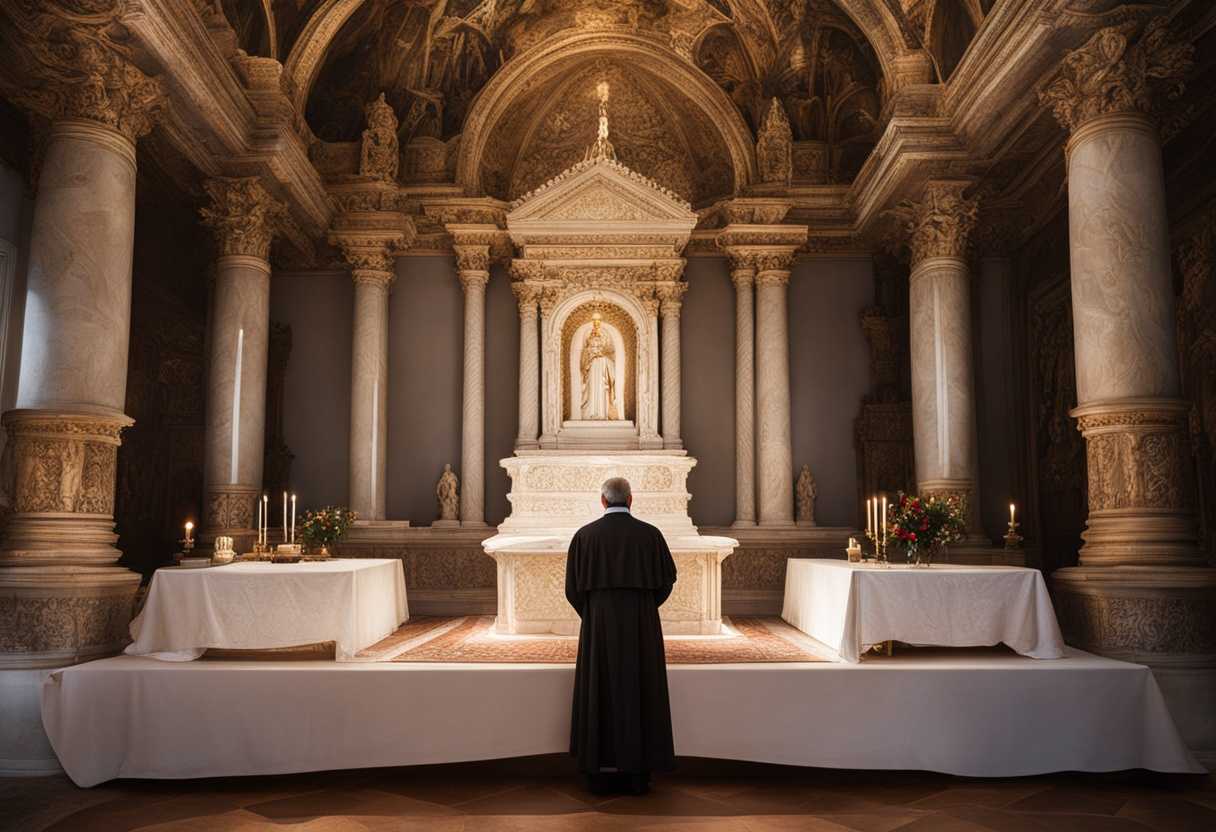
Setting the Scene for Leviticus 21:23
In Leviticus chapter 21, we find a scene set in the ancient Israelite camp during the time when the laws and regulations for the priests were being established. The chapter outlines specific instructions for the priests regarding their conduct and eligibility to perform certain sacred duties. The scene is filled with a sense of reverence and solemnity as the priests gather to receive these divine instructions from Moses, the revered leader of the Israelites.
Among those present in the scene are Aaron, the high priest, and his sons who are also priests. They have been called to assemble before Moses and are listening attentively as he imparts the laws that will govern their behavior and responsibilities. The setting is likely a designated area within the camp, perhaps near the Tabernacle, where the priests would regularly convene for matters concerning their sacred duties.
The atmosphere is charged with a sense of duty and holiness as Moses communicates the importance of maintaining purity and sanctity in their roles as intermediaries between the people and God. The priests are being reminded of the need to uphold a higher standard of behavior and to set themselves apart from the rest of the community in order to fulfill their sacred obligations.
What is Leviticus 21:23 about?
The requirement for priests to be free from physical defects when offering sacrifices in this verse is a sign of the holiness and purity that is expected in the service of God. It reflects the idea that those who serve in sacred roles should strive for wholeness and perfection in their physical being as well as their spiritual devotion. Priests symbolize their dedication to upholding the sanctity of their roles and the rituals they perform by presenting themselves without physical blemishes. This requirement emphasizes the importance of presenting one’s best self in service to the divine. What does this verse say about the standards set for those entrusted with carrying out religious duties? How does it reflect the belief in the sacred nature of the priesthood and the act of sacrifice? Think about how physical wholeness is tied to spiritual purity in this context. Reflecting on this verse reminds us of the solemn responsibility that comes with serving in a priestly role and the importance of striving for excellence in both our physical and spiritual selves when approaching sacred duties.
Understanding what Leviticus 21:23 really means
Leviticus 21:23, nestled within the Holiness Code of Leviticus, serves as a poignant reminder of the standards of purity and holiness set for the priests serving in the sanctuary. This verse underscores the significance of both physical and spiritual integrity in the service of God. The meticulous attention to detail in the requirements for priests reflects the reverence and respect due to the divine presence they represent.
In Exodus 28:2-3, the emphasis on holy garments for Aaron and his sons echoes the theme of holiness and purity in the priestly duties. This attention to outward appearance symbolizes the inner purity required to stand before God. Similarly, 1 Peter 2:9 extends the concept of priesthood to all believers, highlighting the universal call to holiness and purity in serving God. The principles outlined in Leviticus find resonance in the broader Christian community, emphasizing the enduring relevance of spiritual purity.
Hebrews 4:14-16 portrays Jesus as the ultimate High Priest, perfect and without blemish, fulfilling the requirements of the Old Testament priesthood. This depiction reinforces the idea that true holiness and purity are embodied in Christ, serving as a model for believers to emulate. The call to holiness remains a foundational aspect of Christian faith, guiding believers in navigating the complexities of a morally challenging world.
Consider a craftsman meticulously caring for his tools to ensure optimal performance. Just as the craftsman’s work depends on the condition of his tools, our spiritual effectiveness is intricately linked to our purity and holiness. By prioritizing the purity of our hearts and minds, we can better serve God and fulfill our calling to impact the world around us positively.
Delving into the specifics of Leviticus 21:23, phrases like “He shall not go in unto the vail” and “Nor come nigh unto the altar” underscore the reverence and sanctity required in approaching God. These restrictions highlight the need for spiritual integrity in worship and service, emphasizing the importance of maintaining purity in our relationship with God. The term “blemish” symbolizes any imperfection that could hinder our service to God, prompting us to address and overcome our spiritual shortcomings.
Reflecting on these timeless principles, we are reminded of the profound significance of holiness in our lives. By striving for purity and integrity in our thoughts, actions, and worship, we honor God and embody the essence of true discipleship. Leviticus 21:23 serves as a beacon, guiding us towards a deeper understanding of the sacred call to holiness that transcends time and culture.
How do we approach and relate to God’s holiness?
We approach and relate to God’s holiness with reverence, awe, and a deep sense of respect. Understanding that God is holy means recognizing His perfect, pure, and elevated nature that is separate from sin and impurity. It requires us to approach Him with a humble heart, acknowledging our own brokenness and need for His mercy and grace. We should strive to live lives that are set apart for God in response to His holiness, seeking to align our thoughts, actions, and desires with His will. This includes confessing our sins, seeking forgiveness, and continually growing in our relationship with God through prayer, study of His Word, and obedience to His commands. We can experience a deeper connection with God and reflect His character to the world around us by recognizing and honoring His holiness in all aspects of our lives.
Application
Embrace the call to uphold holiness in all you do, aligning yourself with God’s standards. Be a shining example of righteousness in this modern world, where distractions and temptations abound. Strive to be set apart, a beacon of light in a sea of darkness. Will you rise to this challenge and live out your faith with unwavering dedication today?

Reverend Michael Johnson is an experienced Church Minister with a profound expertise in spirituality and guidance. With a serene presence and a compassionate heart, he has faithfully served his congregation for over 20 years, leading them on a spiritual journey towards inner peace and enlightenment. Reverend Johnson’s extensive knowledge of religious philosophies and profound understanding of human nature have made him a trusted confidant and mentor to many, as he seamlessly weaves his profound wisdom into life teachings. Reverend Johnson’s calming demeanor and empathetic nature continue to uplift and heal souls, nurturing a sense of unity and tranquility within his community.