
Leviticus 23:5 is about the institution of Passover as a sacred and significant feast commemorating the Israelites’ exodus from Egypt and their obedience to God’s instructions.
5 In the first month, on the fourteenth day of the month at twilight, is the Lord’s Passover.
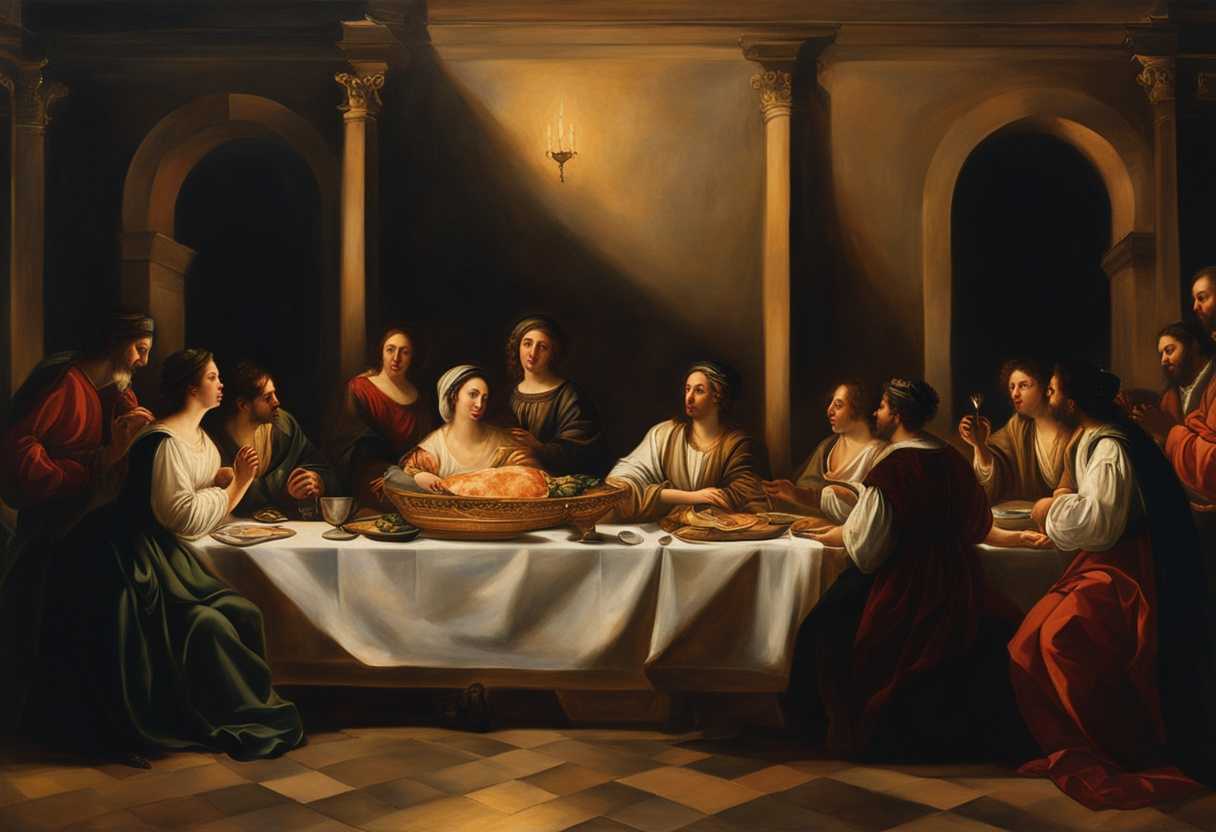
Setting the Scene for Leviticus 23:5
The scene in Leviticus 23:5 takes place during the celebration of Passover in ancient Israel. The Israelites have gathered in Jerusalem to observe this important festival, as commanded by God in Leviticus chapter 23. The streets are bustling with activity as families from all over the land make their way to the city, bringing with them their offerings and sacrifices for the occasion.
Among the crowd are familiar faces such as Moses, Aaron, and other prominent leaders of the Israelites. They are dressed in their finest garments, leading the people in worship and guiding them through the rituals of the Passover celebration. The air is filled with the sound of prayers and songs of praise as the people come together to commemorate God’s deliverance of their ancestors from slavery in Egypt.
The scene is set against the backdrop of the majestic Temple in Jerusalem, its grandeur a testament to the glory of God. The sun is setting, casting a warm glow over the gathering as the Israelites prepare to partake in the Passover meal, a symbol of their covenant with God and a reminder of His faithfulness throughout the generations.
What is Leviticus 23:5 about?
This verse from Leviticus provides specific instructions on when the Passover should be observed – on the fourteenth day of the first month. The Passover is a significant religious festival in Judaism that commemorates the Israelites’ liberation from slavery in Egypt. Adherents are following a tradition that dates back to the time of Moses and the Exodus by celebrating the Passover on this specific day.
The verse serves as a reminder of the importance of honoring and observing sacred traditions and commemorating pivotal moments in history. It emphasizes the value of religious rituals in fostering a sense of identity, community, and connection to one’s faith. Individuals demonstrate their commitment to their beliefs and maintain a link to their cultural heritage by adhering to the prescribed date for the Passover. Reflect on this verse as you consider the significance of rituals and traditions in your own life. How do they shape your sense of belonging and identity? How can observing sacred days like the Passover deepen your connection to your faith and community? Let this verse inspire you to appreciate the rich tapestry of traditions that have been passed down through generations and to embrace the values they embody.
Understanding what Leviticus 23:5 really means
Leviticus 23:5 is a verse that holds significant meaning within the context of the Israelites’ religious practices and history. It is part of a chapter in the Bible that delineates the appointed festivals and holy days for the Israelites, emphasizing the importance of observing God’s designated times. Specifically, this verse pertains to the Passover, a pivotal event in Jewish history that commemorates the Israelites’ liberation from slavery in Egypt. The phrase “The fourteenth day of the first month” highlights the precise timing of the Passover, underscoring the meticulousness with which the Israelites were instructed to adhere to God’s commands.
“At twilight,” another key phrase in Leviticus 23:5, signifies the specific time at which the Passover observance was to begin. This detail serves as a reminder of the reverence and obedience that the Israelites were expected to demonstrate in their worship and adherence to God’s instructions. The broader context of the Passover can be found in Exodus 12:1-14, where the original instructions for the Passover, including the sacrifice of the lamb and the marking of doorposts with its blood, are detailed. Additionally, in 1 Corinthians 5:7, Paul draws a parallel between the Old Testament Passover and Jesus’ sacrificial role as the “Passover lamb” for humanity’s sins, highlighting the continuity and significance of this event in Christian theology.
The relevance of Leviticus 23:5 extends beyond historical observance to contemporary spiritual practice. By reflecting on God’s faithfulness and the importance of obedience through observing His appointed times, individuals can deepen their connection to their faith and heritage. The Passover serves as a precursor to Jesus’ ultimate sacrifice, making it a poignant symbol of redemption and deliverance for Christians. Just as a family gathers annually to celebrate a significant event, like a wedding anniversary, and follows specific traditions to honor the occasion, understanding the significance of the Passover can strengthen believers’ faith and commitment to God.
In conclusion, Leviticus 23:5 is not merely a historical directive but a poignant reminder of God’s deliverance and the significance of obedience and reverence in worship. It bridges the Old Testament observance of the Passover with the New Testament understanding of Jesus’ sacrificial atonement, illustrating the continuity and depth of God’s redemptive plan for humanity. As believers reflect on the Passover and its implications, they are encouraged to embody obedience, reverence, and gratitude in their spiritual journey.
How can we prioritize our time for worship?
One way we can prioritize our time for worship is by following the instructions given in Leviticus 23:5. This verse emphasizes the importance of setting aside specific times for gathering to worship the Lord. We demonstrate our commitment to honoring and revering God in our lives by making a conscious effort to designate specific times for worship.
Additionally, we can prioritize our time for worship by planning ahead and organizing our schedules to accommodate regular times of prayer, meditation, and devotion. We can cultivate a deeper connection with God and experience spiritual growth and renewal by intentionally setting aside time for worship amidst our busy lives.
Furthermore, we can prioritize our time for worship by practicing consistency and discipline in our worship habits. We can strengthen our faith, align our hearts with God’s will, and experience the peace and joy that come from drawing near to Him in worship by making worship a regular and non-negotiable part of our routine.
Application
Dear friend, just as we allocate time for work and family, let us also carve out sacred moments for the Lord. Let Leviticus 23:5 be a compass guiding you towards a deeper connection with God. Make a commitment to set aside moments in your day for worship and reflection. How will you intentionally create space to nurture your spiritual life and strengthen your relationship with Him?

Reverend Michael Johnson is an experienced Church Minister with a profound expertise in spirituality and guidance. With a serene presence and a compassionate heart, he has faithfully served his congregation for over 20 years, leading them on a spiritual journey towards inner peace and enlightenment. Reverend Johnson’s extensive knowledge of religious philosophies and profound understanding of human nature have made him a trusted confidant and mentor to many, as he seamlessly weaves his profound wisdom into life teachings. Reverend Johnson’s calming demeanor and empathetic nature continue to uplift and heal souls, nurturing a sense of unity and tranquility within his community.