
Leviticus 24:17 is about emphasizing the sanctity of human life by prohibiting the unjustified killing of another person, highlighting the value and respect that should be placed on every individual.
17 “Whoever takes a human life shall surely be put to death.
Setting the Scene for Leviticus 24:17
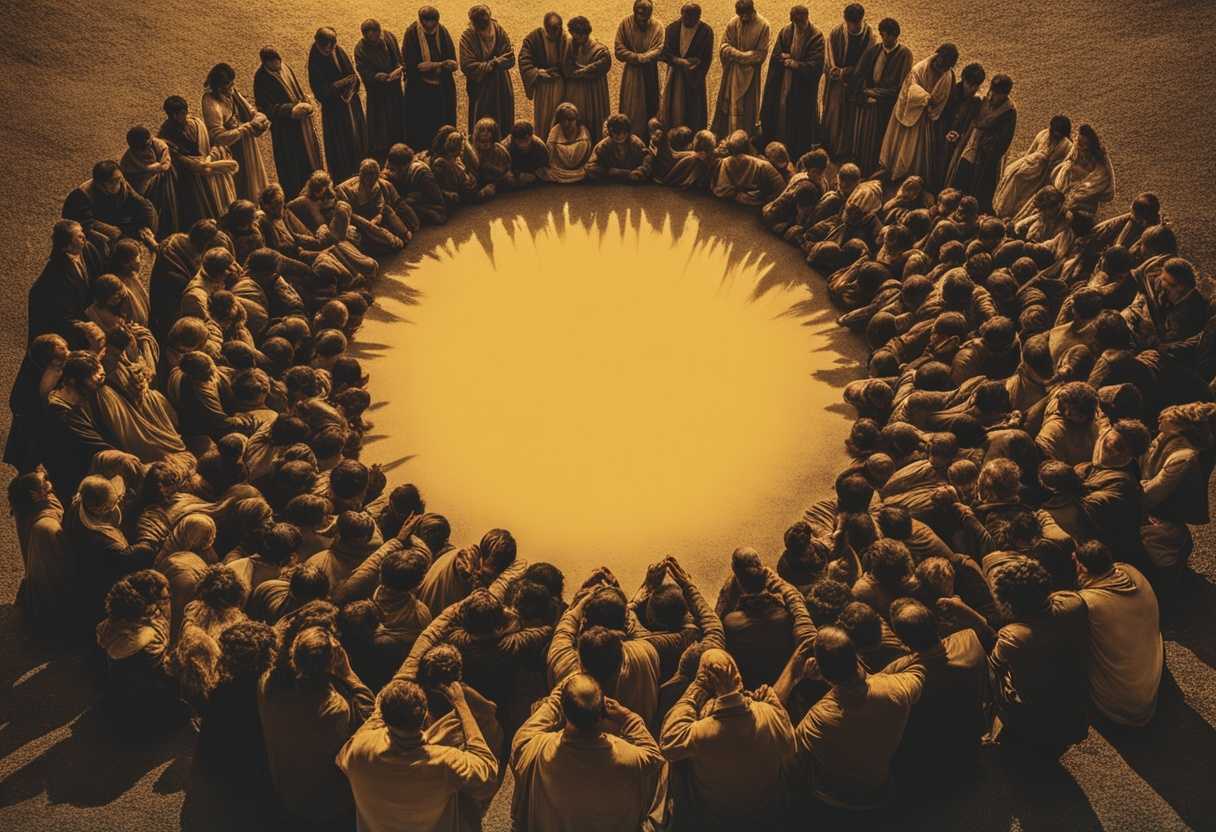
In Leviticus chapter 24, we find ourselves in the midst of the Israelite camp in the wilderness. The scene is set near the Tabernacle, the sacred tent where God’s presence dwells among His people. The air is filled with the scent of incense and the sound of prayers being offered up by the priests. The sun is beginning to set, casting a warm glow over the camp as the day comes to a close.
Among the gathered crowd are Moses, the revered leader of the Israelites, and Aaron, the high priest. They are surrounded by a group of elders and Levites, all assembled to hear the laws and commandments that God has given to His people. The atmosphere is solemn and reverent, as everyone listens intently to the words being spoken.
As Moses reads aloud from the scroll, he reaches the verse in Leviticus 24:17, which states, “Anyone who takes the life of a human being is to be put to death.” The gravity of this commandment hangs heavy in the air, reminding the Israelites of the sanctity of human life and the importance of upholding justice and righteousness in their community. The scene serves as a powerful reminder of the responsibility that comes with being chosen by God and the need to live according to His laws.
What is Leviticus 24:17 about?
This verse is a direct statement about justice and the value of human life in the context of ancient laws and beliefs. It emphasizes the principle of “an eye for an eye, a tooth for a tooth” which means that the punishment should fit the crime. The verse establishes a clear consequence for taking a life – the offender must also face death as retribution. This concept reflects the idea of personal responsibility and accountability for one’s actions, especially when it comes to such a grave and irreversible act as murder.
Have you ever thought about the weight of our actions and the impact they have on others? This verse highlights the seriousness of taking a life and the gravity of such a deed in the eyes of the law and society. It challenges us to consider the value of every human life and the need for justice to be served in cases of violence and harm. What do you think about this principle of reciprocity when it comes to punishment for taking a life? It raises important ethical questions about the measure of justice and the boundaries of punishment in the face of such a fundamental violation.
Understanding what Leviticus 24:17 really means
Leviticus 24:17 is a significant verse within the Mosaic Law, emphasizing the sanctity of human life and the gravity of taking a life. This verse is part of a broader context of laws that aim to establish justice and maintain order within the community. It echoes the sentiment expressed in Genesis 9:6, highlighting that humans are created in the image of God, underscoring the profound value of every individual. The prohibition against murder, reiterated in Exodus 20:13, reinforces the principle that the intentional taking of a life is a severe transgression.
In Matthew 5:21-22, Jesus delves deeper into the concept of murder, expanding it to include the internal disposition of the heart. He emphasizes that harboring anger or hatred towards others can be as detrimental as committing the physical act of murder. This teaching challenges individuals to consider not only their actions but also their thoughts and intentions, highlighting the holistic nature of ethical living. The relevance of these teachings extends to contemporary society, where issues of violence, justice, and the value of human life continue to be debated.
Consider a scenario where a community grapples with the aftermath of a violent incident resulting in loss of life. In such moments, the tension between seeking justice and extending mercy becomes palpable. Leviticus 24:17 reminds us of the delicate balance required in addressing such situations, advocating for justice tempered with compassion. The anecdote of a father forgiving his son’s killer illustrates the profound impact of choosing mercy over vengeance, embodying the principles of respect for life and the transformative power of forgiveness.
The phrase “Anyone who takes the life of a human being is to be put to death” from Leviticus 24:17 underscores the seriousness of the crime of murder. It reflects the principle of retributive justice, where the punishment aligns with the offense committed. This directive serves as a stark reminder of the sacredness of life and the communal responsibility to uphold justice. By upholding the value of life and promoting justice, individuals contribute to the creation of a society where human dignity is revered and protected.
In conclusion, Leviticus 24:17 challenges us to reflect on the sanctity of human life and the imperative of justice. It prompts us to consider how we can embody these principles in our daily lives, fostering a culture where life is esteemed and justice is pursued. By engaging with this verse and related biblical passages, we deepen our understanding of the ethical foundations that underpin our interactions with others and our commitment to upholding the value of every individual.
How can we show love and mercy to others?
We can show love and mercy to others by valuing and respecting the sanctity of human life. Treating others with kindness, empathy, and understanding is a reflection of our love and compassion towards them. Offering support, forgiveness, and acceptance to those in need allows us to practice mercy in our interactions with others.
When we acknowledge the dignity and worth of every individual, we demonstrate our commitment to showing love and mercy. We can cultivate a culture of compassion and understanding that reflects the love and mercy we are called to embody by being mindful of our words and actions towards others. Through acts of kindness, generosity, and forgiveness, we can show love and mercy to others in a tangible and meaningful way.
Application
Embrace the essence of Leviticus 24:17 and honor the sanctity of life gifted by the Creator. Let us be beacons of respect and kindness, acknowledging the intrinsic value each soul holds as divine creation. Seek to sow seeds of harmony and compassion in every encounter, mirroring the unconditional love extended to us. How will you embody this reverence for life in your daily interactions – fostering a world where every life is cherished and treasured?

Reverend Michael Johnson is an experienced Church Minister with a profound expertise in spirituality and guidance. With a serene presence and a compassionate heart, he has faithfully served his congregation for over 20 years, leading them on a spiritual journey towards inner peace and enlightenment. Reverend Johnson’s extensive knowledge of religious philosophies and profound understanding of human nature have made him a trusted confidant and mentor to many, as he seamlessly weaves his profound wisdom into life teachings. Reverend Johnson’s calming demeanor and empathetic nature continue to uplift and heal souls, nurturing a sense of unity and tranquility within his community.