
Leviticus 25:1-12 is about the Sabbath year and the Year of Jubilee, emphasizing the importance of giving the land rest, releasing debts, and allowing for restoration and freedom.
8 “You shall count seven weeks of years, seven times seven years, so that the time of the seven weeks of years shall give you forty-nine years.
2 “Speak to the people of Israel and say to them, When you come into the land that I give you, the land shall keep a Sabbath to the Lord.
3 For six years you shall sow your field, and for six years you shall prune your vineyard and gather in its fruits,
4 but in the seventh year there shall be a Sabbath of solemn rest for the land, a Sabbath to the Lord.
5 You shall not reap what grows of itself in your harvest, or gather the grapes of your undressed vine. It shall be a year of solemn rest for the land.
6 The Sabbath of the land shall provide food for you, for yourself and for your male and female slaves and for your hired worker and the sojourner who lives with you,
7 And for your livestock also, and for the wild animals in your land, all its yield shall be for food.
8 “You shall count seven weeks of years, seven times seven years, so that the time of the seven weeks of years shall give you forty-nine years.
9 Then you shall sound the loud trumpet on the tenth day of the seventh month. On the Day of Atonement you shall sound the trumpet throughout all your land.
10 And you shall consecrate the fiftieth year, and proclaim liberty throughout the land to all its inhabitants. It shall be a jubilee for you, when each of you shall return to his property and each of you shall return to his clan.
11 That fiftieth year shall be a jubilee for you; in it you shall neither sow nor reap what grows of itself nor gather the grapes from the undressed vines.
12 For it is a jubilee. It shall be holy to you. You may eat the produce of the field.
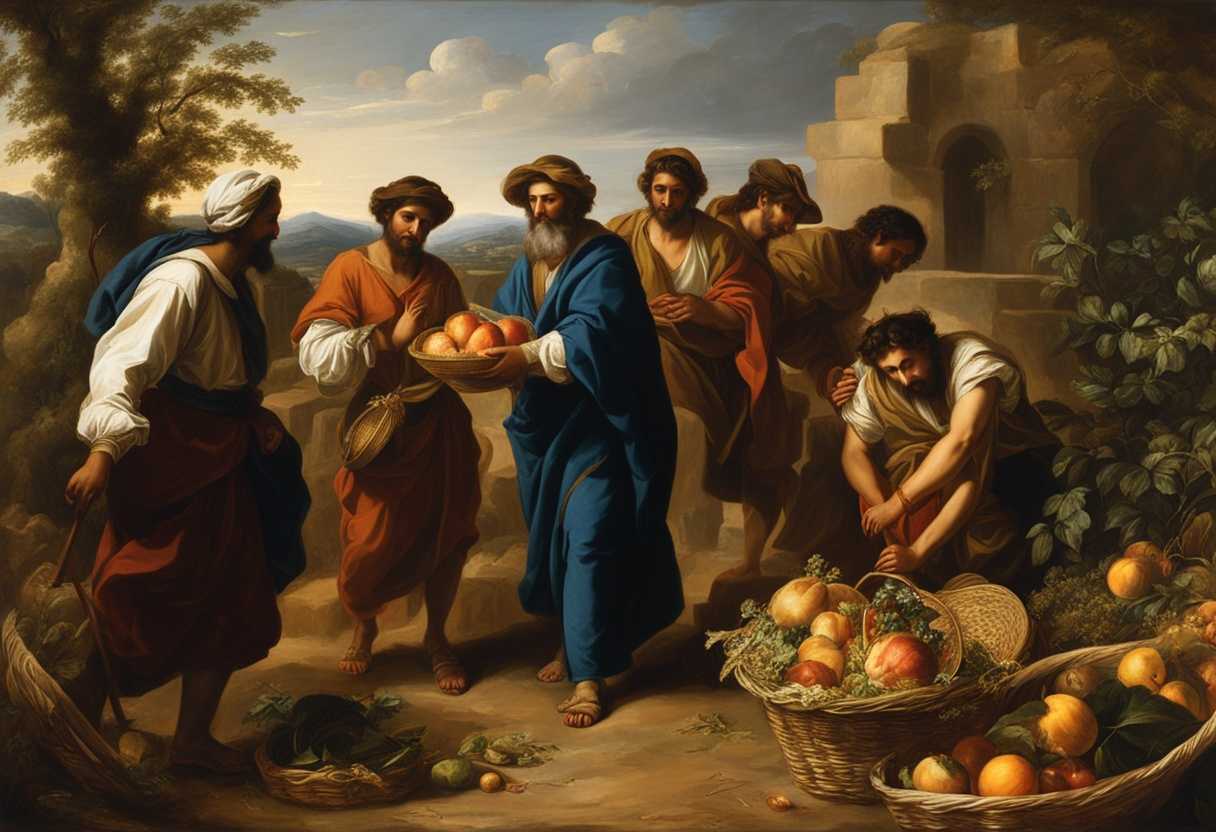
Setting the Scene for Leviticus 25:1-12
In Leviticus chapter 25, we find ourselves in the midst of the Israelites as they gather at the foot of Mount Sinai. The scene is set with Moses, the revered leader of the Israelites, standing before the people, his face illuminated by the presence of God. The Israelites have been wandering in the wilderness for some time now, and Moses has been receiving instructions from God on how they are to live and worship as a holy nation.
As Moses begins to speak, the people quiet down, eager to hear the words that will guide their lives. He explains to them the concept of the Sabbath year, a time when the land is to rest and lie fallow. Every seventh year, the Israelites are to refrain from sowing their fields or pruning their vineyards, allowing the land to rejuvenate and replenish itself. This period of rest is not only for the benefit of the land but also for the people and animals who depend on it for sustenance.
The Israelites listen intently as Moses outlines the importance of this Sabbath year, emphasizing the need to trust in God’s provision and to show compassion for the land and all living creatures. As the sun sets behind the mountains, casting a warm glow over the assembly, the Israelites bow their heads in reverence, grateful for the wisdom and guidance they have received.
What is Leviticus 25:1-12 about?
God instructs His people in this verse to observe a Sabbath year for the land every seven years. This practice, known as the Sabbatical Year, not only served as a time of rest for the land but also as a way to demonstrate trust in God’s provision and care. The earth needs rest and renewal just as humans do. The land can rejuvenate, restore its fertility, and prevent exhaustion from overuse by allowing it to lie fallow every seventh year. Start with explaining the importance of taking breaks and practicing self-care to your students as a teacher. Similarly, this verse highlights the significance of giving the land a chance to recover and replenish itself. It also underscores the concept of stewardship, showing respect for the earth and acknowledging that it is a gift from God that should be cared for and preserved. Through this practice, God’s people were not only ensuring the sustainability of the land but also demonstrating their faith and obedience to His commands. How can we apply this concept of rest and renewal to our own lives and environments today? What lessons can we learn from this verse about responsibility, sustainability, and trust in God’s provision?
Understanding what Leviticus 25:1-12 really means
Leviticus 25:1-12, nestled within the Holiness Code, offers profound insights into living a life of holiness as instructed by God to Moses on Mount Sinai. The passage introduces the concept of Sabbath rest for both people and the land, emphasizing the importance of rejuvenation and trust in God’s provision. The land itself is to observe a Sabbath to the Lord, highlighting the interconnectedness between rest, renewal, and honoring God’s commandments.
In this passage, the idea of letting the land lie fallow every seventh year reflects a deep understanding of the need for rest and restoration. Just as individuals require periods of rest to thrive, the land also benefits from a time of solemn rest. This principle of sabbatical rest extends beyond physical rejuvenation to encompass spiritual renewal and a reliance on God’s faithfulness for sustenance.
“The land shall keep a sabbath to the Lord” underscores the holistic nature of rest, encompassing not just human beings but the very earth we inhabit. This interconnectedness between humanity and creation reminds us of our responsibility as stewards of the environment. By honoring the Sabbath year, we acknowledge our role in preserving and nurturing the land for future generations, promoting sustainable practices and environmental stewardship.
The Year of Jubilee, with its proclamation of liberty and restoration, serves as a powerful reminder of God’s grace and justice. This period of freedom and renewal for all inhabitants reflects God’s desire for social equity and economic justice. The principles of the Year of Jubilee challenge us to seek liberation for the oppressed, restoration for the marginalized, and reconciliation in our communities.
In today’s fast-paced world, the timeless truths found in Leviticus 25:1-12 hold relevance for modern society. The themes of rest, environmental stewardship, and social justice resonate deeply in a world marked by busyness, exploitation of resources, and social inequalities. By reflecting on these principles, we are prompted to consider how we can incorporate rest, care for the environment, and advocate for justice in our daily lives.
Consider the story of a farmer who, by allowing his land to rest, experiences unexpected blessings in the form of enriched soil and increased fertility. This anecdote illustrates the transformative power of rest and renewal, showing how moments of pause can lead to growth and abundance. Similarly, embracing the principles of Sabbath rest and the Year of Jubilee can bring about positive change in our lives and communities.
In conclusion, Leviticus 25:1-12 invites us to trust in God’s provision, care for the environment, and pursue justice and restoration in our world. By embodying these principles, we can find balance, renewal, and a deeper connection to God’s purpose for our lives. May we heed the call to rest, stewardship, and justice, embodying the timeless wisdom of Scripture in our daily walk with God.
How can we faithfully practice rest and restoration?
The Lord commands the people to observe a Sabbath year every seven years in Leviticus 25:1-12, during which the land should rest and lie fallow, allowing for restoration and rejuvenation. This practice was a reminder of God’s provision and that ultimately, He is the one who sustains and provides for His people. The Israelites not only respected God’s creation but also acknowledged their dependence on Him by following this commandment.
To faithfully practice rest and restoration, we can incorporate the principle behind this commandment into our own lives. We can set aside designated times for rest and self-care, allowing ourselves to recharge and be refreshed. We also need moments of stillness and renewal for our own well-being, just as the land needs a break to regain nutrients and fertility. Recognizing the importance of rest can help us maintain a balanced and sustainable lifestyle. Practicing rest and restoration is an act of trust and faith in God’s provision. We demonstrate our faith that He will sustain us and provide for our needs by stepping back from our work and worries. It is a way of surrendering control and aligning ourselves with God’s sovereignty. Through intentional rest and restoration, we not only care for ourselves but also deepen our trust in the Lord’s faithfulness.
Application
Dear friend, just as we maintain a good balance between work and family, let us also remember the importance of rest and rejuvenation in our lives. Reflect on God’s command for a Sabbath year every seven years and let it inspire you to trust in His provision and sovereignty. Let’s embrace this challenge together – prioritize rest and trust in God’s faithfulness starting today. How will you make room for rest and trust in your life from now on?

Reverend Michael Johnson is an experienced Church Minister with a profound expertise in spirituality and guidance. With a serene presence and a compassionate heart, he has faithfully served his congregation for over 20 years, leading them on a spiritual journey towards inner peace and enlightenment. Reverend Johnson’s extensive knowledge of religious philosophies and profound understanding of human nature have made him a trusted confidant and mentor to many, as he seamlessly weaves his profound wisdom into life teachings. Reverend Johnson’s calming demeanor and empathetic nature continue to uplift and heal souls, nurturing a sense of unity and tranquility within his community.