
Leviticus 2:1-2 is about the regulations regarding the offering of grain to the Lord as an expression of gratitude and devotion, emphasizing the importance of presenting offerings with pure intentions and sincerity.
1 “When anyone brings a grain offering as an offering to the Lord, his offering shall be of fine flour. He shall pour oil on it and put frankincense on it
2 And he shall bring it to Aaron’s sons the priests, and shall take from it a handful of the fine flour and oil, with all of its frankincense, and the priest shall burn this as its memorial portion on the altar, a food offering with a pleasing aroma to the Lord.
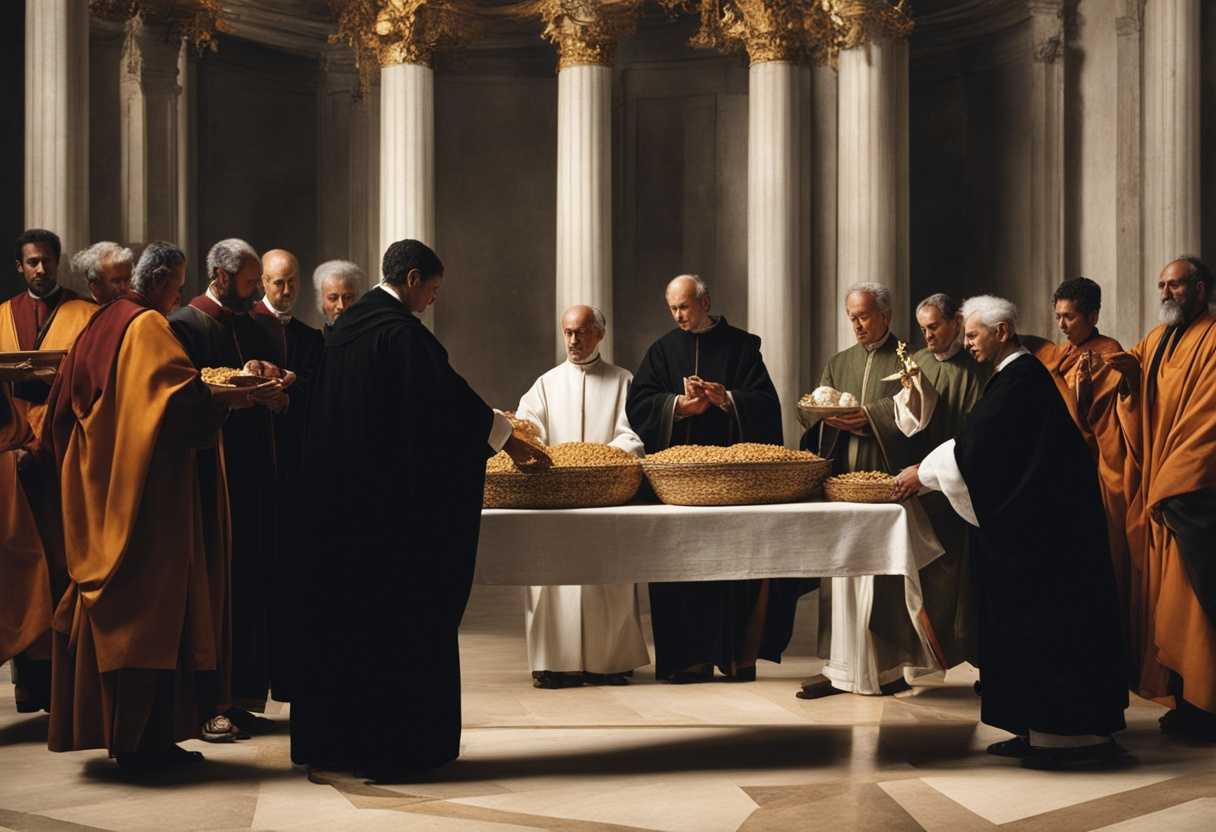
Setting the Scene for Leviticus 2:1-2
In Leviticus chapter 2, we find ourselves in the Tabernacle courtyard, a sacred space where the Israelites come to worship and offer sacrifices to the Lord. The scene is set with the aroma of burning incense and the sound of prayers being lifted up to heaven. The sun is shining brightly, casting a warm glow over the courtyard, as the people gather to fulfill their religious duties.
Among the crowd, we see Aaron, the high priest, dressed in his sacred garments, overseeing the offerings brought by the people. The Israelites, both young and old, have come from near and far to present their grain offerings to the Lord. Each person carries a basket filled with fine flour, oil, and frankincense, as prescribed in the law given to Moses by God.
As the people approach the altar, they are filled with reverence and awe, knowing that their offerings are a symbol of their devotion and gratitude to the Almighty. The air is filled with a sense of holiness and solemnity as the smoke from the burning incense rises towards the heavens, carrying their prayers and petitions to the ears of the Lord.
What is Leviticus 2:1-2 about?
The significance of offering grain, oil, and frankincense to the Lord can be seen in Leviticus 2:1-2. This verse emphasizes the importance of giving our best to God as an act of worship. Grain represents sustenance and provision, oil symbolizes anointing and consecration, while frankincense signifies prayers and adoration. We acknowledge God’s provision in our lives, consecrate ourselves to His service, and express our love and reverence through prayer by offering these elements together.
This verse teaches us that true worship is not just about rituals or outward gestures, but it is about the condition of our hearts. When we offer ourselves to God with sincerity and purity, it becomes a pleasing aroma to Him. Our heartfelt worship permeates the atmosphere and delights the Lord just as the fragrant scent of incense fills a room. So, as we reflect on Leviticus 2:1-2, let us consider how we can present ourselves as a pleasing offering to God in all aspects of our lives. How can we offer our time, talents, and treasures as a fragrant sacrifice to Him? We should strive to give God our best and honor Him with our whole being, knowing that our worship is truly a sweet aroma in His sight.
Understanding what Leviticus 2:1-2 really means
Leviticus 2:1-2 delves into the significance of the grain offering, a form of sacrifice outlined in the Old Testament. This offering served as a tangible expression of the Israelites’ devotion and gratitude towards God, showcasing their reverence and thankfulness through a prescribed ritual.
Within the context of the Levitical laws, the grain offering required the presentation of fine flour, oil, and frankincense to the Lord. Unlike sin offerings meant for atonement, this sacrifice was specifically designated for acts of worship and expressions of thanksgiving, emphasizing the importance of acknowledging God’s goodness and sovereignty.
Key elements within the offering, such as “fine flour,” symbolize purity and the offering of one’s best to God. The inclusion of “oil” signifies the presence of the Holy Spirit and anointing, while “frankincense” represents prayer and worship, creating a pleasing aroma before the Lord.
Connecting this concept to other biblical passages, Psalm 141:2 links offerings with prayer and worship, highlighting the spiritual significance of presenting ourselves before God. Similarly, Romans 12:1 expands on the idea of offerings by urging believers to offer their entire lives as living sacrifices, embodying a lifestyle of worship and dedication to God.
The timeless principles embodied in the grain offering—offering our best to God, maintaining purity, and living lives of worship—remain relevant in contemporary times. This translates to dedicating our talents, time, and resources to serve God, reflecting a heart of gratitude and devotion in all aspects of our lives.
Illustratively, envision a young artist meticulously crafting her finest painting as a dedication to a church, mirroring the essence of the grain offering. Through her deliberate effort and use of premium materials, she exemplifies the act of giving her best to honor God, showcasing how we can apply these principles by offering our utmost efforts and resources in service to Him.
In conclusion, Leviticus 2:1-2 illuminates the values of devotion, purity, and worship encapsulated in the grain offering. By internalizing and embodying these principles, we can lead lives that are pleasing to God, consistently offering our best in every facet of our existence as an act of reverence and gratitude towards Him.
How can we present our offerings with sincerity?
To present our offerings with sincerity, we should make sure that they are the best we have to offer. Just like how in the verse, the Israelites were instructed to bring their finest wheat flour to make their grain offering, we should give from the heart without holding back. This conveys our sincerity and devotion to God in our giving.
Furthermore, our offerings should be given with pure intentions. It is not merely about the physical act of presenting something, but it is about the attitude and mindset behind it. When we offer something to God with a pure heart and genuine motives, our offering becomes a true reflection of our love and devotion towards Him.
Additionally, presenting our offerings with sincerity involves a sense of reverence and respect. We demonstrate our understanding of His greatness and our gratitude for all that He has done for us by approaching the act of giving with humility and a deep sense of reverence for God. This attitude of respect towards God and our offerings shows a true sincerity in our worship and devotion.
Application
Embrace the opportunity to offer our best selves to the world, much like presenting a stellar project at work or being fully present with our loved ones at home. Let’s demonstrate our sincerity and eagerness in all that we do, just as the Israelites presented their grain offerings. Reflect on how we can cultivate a spirit of authenticity and gratitude in our relationship with the divine. Are we truly showing up with our whole hearts and minds as we bring our offerings before the Lord?

Reverend Michael Johnson is an experienced Church Minister with a profound expertise in spirituality and guidance. With a serene presence and a compassionate heart, he has faithfully served his congregation for over 20 years, leading them on a spiritual journey towards inner peace and enlightenment. Reverend Johnson’s extensive knowledge of religious philosophies and profound understanding of human nature have made him a trusted confidant and mentor to many, as he seamlessly weaves his profound wisdom into life teachings. Reverend Johnson’s calming demeanor and empathetic nature continue to uplift and heal souls, nurturing a sense of unity and tranquility within his community.