
Leviticus 2:1 is about the instructions for presenting grain offerings to the Lord with sincerity and dedication.
1 “When anyone brings a grain offering as an offering to the Lord, his offering shall be of fine flour. He shall pour oil on it and put frankincense on it
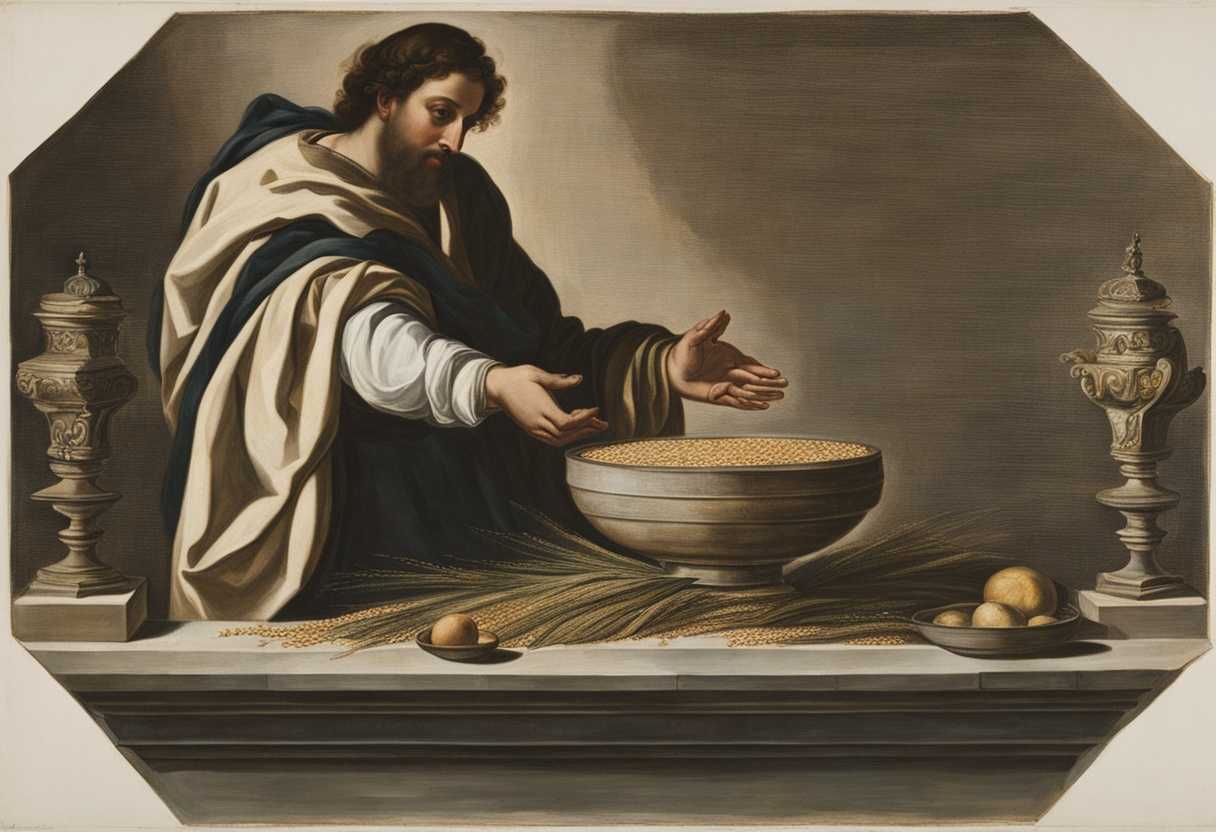
Setting the Scene for Leviticus 2:1
In Leviticus chapter 2, we find ourselves in the Tabernacle courtyard, a sacred space where the Israelites come to worship and offer sacrifices to the Lord. The scene is bustling with activity as priests and Levites go about their duties, preparing for the various rituals and ceremonies prescribed by God. The air is filled with the scent of burning incense and the sound of prayers being lifted up to heaven.
Among the crowd, we see Aaron, the high priest, overseeing the offerings brought by the people. He is assisted by his sons, Nadab, Abihu, Eleazar, and Ithamar, who are dressed in their priestly garments. The people have come from far and wide to present their grain offerings to the Lord, as outlined in Leviticus chapter 2. Each offering is carefully prepared according to the specific instructions given by God, symbolizing the people’s gratitude and devotion to Him.
As the sun begins to set, the courtyard is bathed in a warm golden light, casting a serene glow over the scene. The atmosphere is reverent and solemn, as the people bow their heads in prayer and thanksgiving. The Tabernacle stands as a tangible reminder of God’s presence among His people, a place where heaven and earth meet, and where the Israelites can draw near to their Creator in worship and adoration.
What is Leviticus 2:1 about?
This verse from Leviticus 2:1 signifies the importance of offering to God with a pure heart and intention. Our offerings to God should be sincere and pleasing to Him, just as the combination of grain, oil, and frankincense creates a pleasing aroma. The act of giving is not just about the physical items we offer but also about the spiritual state of our hearts when we present them.
Have you ever stopped to think about what you offer to God in your life? Are your actions, words, and thoughts aligned with God’s will and pleasing to Him? Just like how the combination of grain, oil, and frankincense creates a sweet fragrance, our offerings to God should be presented with love, humility, and reverence. Let us strive to offer our best to God, not out of obligation but out of a genuine desire to show our love and devotion to Him.
Understanding what Leviticus 2:1 really means
Leviticus 2:1 delves into the significance of the grain offering, a form of worship in the Old Testament that symbolized devotion and gratitude towards God. This verse is part of the Levitical law, a comprehensive guide outlining various offerings and sacrifices that the Israelites were to present to God. The grain offering, unlike mandatory sacrifices, was a voluntary act of worship, reflecting the worshipper’s heartfelt appreciation for God’s provision and sustenance in their lives.
In the context of the grain offering, fine flour, oil, and frankincense were key components, each carrying symbolic meanings. Fine flour represented purity and the offering of one’s best to God, signifying the importance of giving God our utmost efforts and resources. Oil symbolized the Holy Spirit’s guidance and empowerment in our offerings, reminding us that our worship should be led by the Spirit. Frankincense, associated with prayer and worship, emphasized the necessity of approaching God with a heart of adoration and communication.
Drawing parallels from related biblical passages, such as Genesis 4:3-5, Hebrews 13:15-16, and Matthew 6:11, we see a consistent theme of offering our best to God with a sincere heart. These passages underscore the significance of the attitude behind our offerings, emphasizing the importance of gratitude, praise, and sharing with others as acts of worship that please God. The Lord’s Prayer in Matthew 6:11 further reinforces the idea of relying on God for our daily needs, acknowledging Him as the ultimate provider in our lives.
The relevance of the grain offering extends to contemporary believers, reminding us to give our best to God, express gratitude for His provision, and offer our lives as living sacrifices, as Romans 12:1 exhorts. Just as the farmer sets aside the finest portion of his harvest to honor God, we are called to cultivate hearts of gratitude and dependence on God in all aspects of our lives. This act of giving not only acknowledges God’s role in our blessings but also fosters a deeper connection with Him.
In conclusion, Leviticus 2:1, though rooted in ancient practices, conveys timeless principles of worship, thanksgiving, and reliance on God. By understanding and applying these principles in our lives, we can strengthen our relationship with God, live lives that honor Him, and cultivate a spirit of gratitude and worship in all that we do.
How can we offer our best to God?
God instructs the people to bring their offerings to Him in Leviticus 2:1. This verse emphasizes the importance of offering our best to God. We are also called to present our best to God in everything we do, just as the Israelites were to bring forth their finest flour as an offering. This means giving Him our talents, our time, our resources, and our hearts with sincerity and humility.
To offer our best to God requires us to be intentional and disciplined in our worship and service. We should strive to give Him our very best efforts in all aspects of our lives, whether it be in our work, relationships, or ministries. We show God honor and demonstrate our love and devotion to Him by offering our best. We acknowledge His worthiness and sovereignty in our lives as we seek to bring Him our finest offerings. We ultimately offer our best to God as a reflection of our gratitude for all that He has done for us. It is a way for us to show Him our thankfulness and to respond to His goodness with our whole being. When we offer our best to God, we are aligning ourselves with His will and seeking to live in a manner that brings glory to His name.
Application
Are you truly giving your all in the modern world, where we juggle work and family like tightropes? Let Leviticus 2:1 guide you in presenting your best self to the Lord. Just as the offering was made with fine flour and oil, let us offer our finest gifts and sacrifices. Reflect on the quality of everything you give – your time, your efforts, your love. Are you truly offering your best to the Lord in all areas of your life?

Reverend Michael Johnson is an experienced Church Minister with a profound expertise in spirituality and guidance. With a serene presence and a compassionate heart, he has faithfully served his congregation for over 20 years, leading them on a spiritual journey towards inner peace and enlightenment. Reverend Johnson’s extensive knowledge of religious philosophies and profound understanding of human nature have made him a trusted confidant and mentor to many, as he seamlessly weaves his profound wisdom into life teachings. Reverend Johnson’s calming demeanor and empathetic nature continue to uplift and heal souls, nurturing a sense of unity and tranquility within his community.