
Leviticus 2:4-10 is about the instructions given to the Israelites on how to present grain offerings to the Lord, emphasizing the need for sincerity, quality, and the exclusion of certain ingredients, symbolizing the importance of genuine and pure worship in honoring God.
4 “When you bring a grain offering baked in the oven as an offering, it shall be unleavened loaves of fine flour mixed with oil or unleavened wafers smeared with oil.
5 And if your offering is a grain offering baked on a griddle, it shall be of fine flour unleavened, mixed with oil.
6 You shall break it in pieces and pour oil on it; it is a grain offering.
7 And if your offering is a grain offering baked in the oven, it shall be unleavened cakes of fine flour mixed with oil, or unleavened wafers smeared with oil.
8 And you shall bring the grain offering that is made of these things to the Lord, and when it is presented to the priest, he shall bring it to the altar.
9 And the priest shall take from the grain offering its memorial portion and burn this on the altar, a food offering with a pleasing aroma to the Lord.
10 But the rest of the grain offering shall be for Aaron and his sons; it is a most holy part of the Lord’s food offerings.
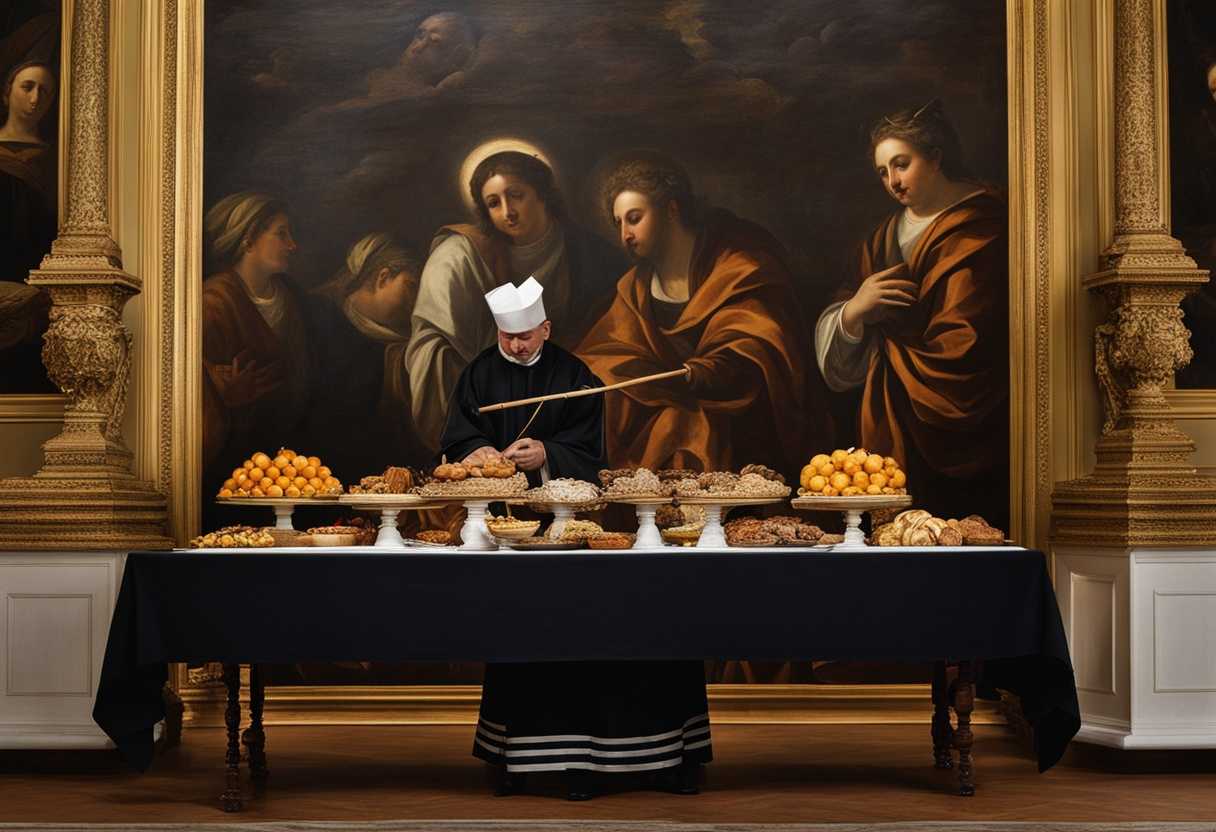
Setting the Scene for Leviticus 2:4-10
In the scene described in Leviticus 2:4-10, we find ourselves in the Tabernacle courtyard, a sacred space where the Israelites would bring their offerings to the Lord. The aroma of burning incense and the sound of prayers being lifted up to heaven fill the air. The sun is shining brightly, casting a warm glow over the scene.
Aaron, the high priest, is standing near the altar, dressed in his sacred garments. He is overseeing the offerings brought by the people. A group of Levites is assisting him, ensuring that the offerings are prepared according to the laws set forth by God in Leviticus. The people of Israel have gathered around, eager to present their offerings and seek forgiveness for their sins.
The scene is filled with a sense of reverence and devotion as the people approach the altar with their grain offerings. Each offering is carefully prepared, following the specific instructions outlined in Leviticus 2:4-10. The crackling of the fire consuming the offerings is a reminder of the people’s desire to be in right relationship with God and their commitment to following His commandments.
What is Leviticus 2:4-10 about?
The instructions for offering grain offerings with oil and frankincense in Leviticus 2:4-10 serve as a symbolic act of worship and devotion to God. The grain offering represents giving back to the Lord a portion of the harvest as an acknowledgment of His provision and sustenance. Adding oil and frankincense to the offering creates a fragrant aroma that pleases God, signifying purity, sweetness, and adoration in the act of worship.
This passage reminds us of the importance of offering our resources, time, and talents to God with a heart filled with thankfulness and reverence. We are encouraged to offer our best to God in our worship and service, just as the Israelites gave their best grain with oil and frankincense. The pleasing aroma signifies that our offerings are acceptable and pleasing to God when they are given with sincerity and love. Reflect on how you can offer your own “grain offerings” to God in your daily life, whether through acts of kindness, generosity, or service to others, with a heart that seeks to bring delight to the Lord.
Understanding what Leviticus 2:4-10 really means
Leviticus 2:4-10 delves into the grain offering, a significant aspect of worship in the Old Testament. This passage meticulously outlines the procedures for preparing and presenting the grain offering, underscoring the necessity of adhering to God’s directives. In the broader context of Leviticus, the grain offering is one of the fundamental offerings alongside others, each serving distinct purposes in the religious practices of ancient Israel. Comprising fine flour, oil, and frankincense, the grain offering symbolizes dedication and thanksgiving to God.
The specific phrases within the passage carry profound meanings that shed light on the significance of the offering. For instance, the mention of baking the offering in the oven highlights the varied methods of preparation allowed while emphasizing the need for compliance with prescribed guidelines. Furthermore, the use of unleavened cakes of fine flour mixed with oil symbolizes purity and the absence of sin, with oil often representing the Holy Spirit. The act of the priest burning it as a memorial portion on the altar signifies a remembrance before God, a gesture of honoring His provision and blessings.
Drawing connections to other biblical passages enriches our understanding of the grain offering’s symbolism and significance. Exodus 29:2 reinforces the themes of purity and dedication through references to unleavened bread, cakes, and wafers. Similarly, Hebrews 13:15-16 encourages believers to offer sacrifices of praise and good deeds, aligning with the spirit of worship and thanksgiving embodied in the grain offerings. While the practice of grain offerings is no longer observed today, the underlying principles of gratitude, dedication, and purity remain pertinent for contemporary believers.
Consider a family that extends their Thanksgiving celebrations beyond themselves by preparing a special meal for neighbors in need. This act of sharing and gratitude mirrors the essence of the grain offering, emphasizing giving back to God and others from the blessings received. Ultimately, Leviticus 2:4-10 underscores the importance of intentionality and purity in our offerings to God. By internalizing these principles, we can cultivate a spirit of gratitude and service in our daily lives, honoring God through our actions and stewardship of resources.
How can we offer our best to God?
To offer our best to God, we must present a grain offering that is made of the finest flour mixed with oil and frankincense. This signifies the importance of giving our best to God, not offering something that is subpar or of lesser value. The grain must also be baked into unleavened bread, symbolizing sincerity and purity in our worship.
Furthermore, the grain offering should not contain any yeast or honey. This highlights the need for us to offer God our lives with sincerity and pure motives, free from any impurities or distractions that may hinder our relationship with Him. We demonstrate our devotion and commitment to God by following these instructions, showing that we value Him above all else and seek to honor Him with our very best.
Application
Reflecting on Leviticus 2:4-10, let us understand the significance of giving our best to the Lord. Just like the Israelites presented their offerings with care, we are also urged to offer our utmost in worship and service. Are we truly giving our best to God, or are we merely giving Him what’s left over? Let’s internalize this lesson and vow to present only our finest gifts to the Lord in all areas of our lives. Will you rise to the occasion and dedicate your excellence to God today?

Reverend Michael Johnson is an experienced Church Minister with a profound expertise in spirituality and guidance. With a serene presence and a compassionate heart, he has faithfully served his congregation for over 20 years, leading them on a spiritual journey towards inner peace and enlightenment. Reverend Johnson’s extensive knowledge of religious philosophies and profound understanding of human nature have made him a trusted confidant and mentor to many, as he seamlessly weaves his profound wisdom into life teachings. Reverend Johnson’s calming demeanor and empathetic nature continue to uplift and heal souls, nurturing a sense of unity and tranquility within his community.