
Leviticus 4:3 is about the process of atonement for unintentional sins through the offering of a young bull as a sin offering, emphasizing the importance of acknowledging and seeking forgiveness for even our unintentional wrongdoings.
3 if it is the anointed priest who sins, thus bringing guilt on the people, then he shall offer for the sin that he has committed a bull from the herd without blemish to the Lord for a sin offering.
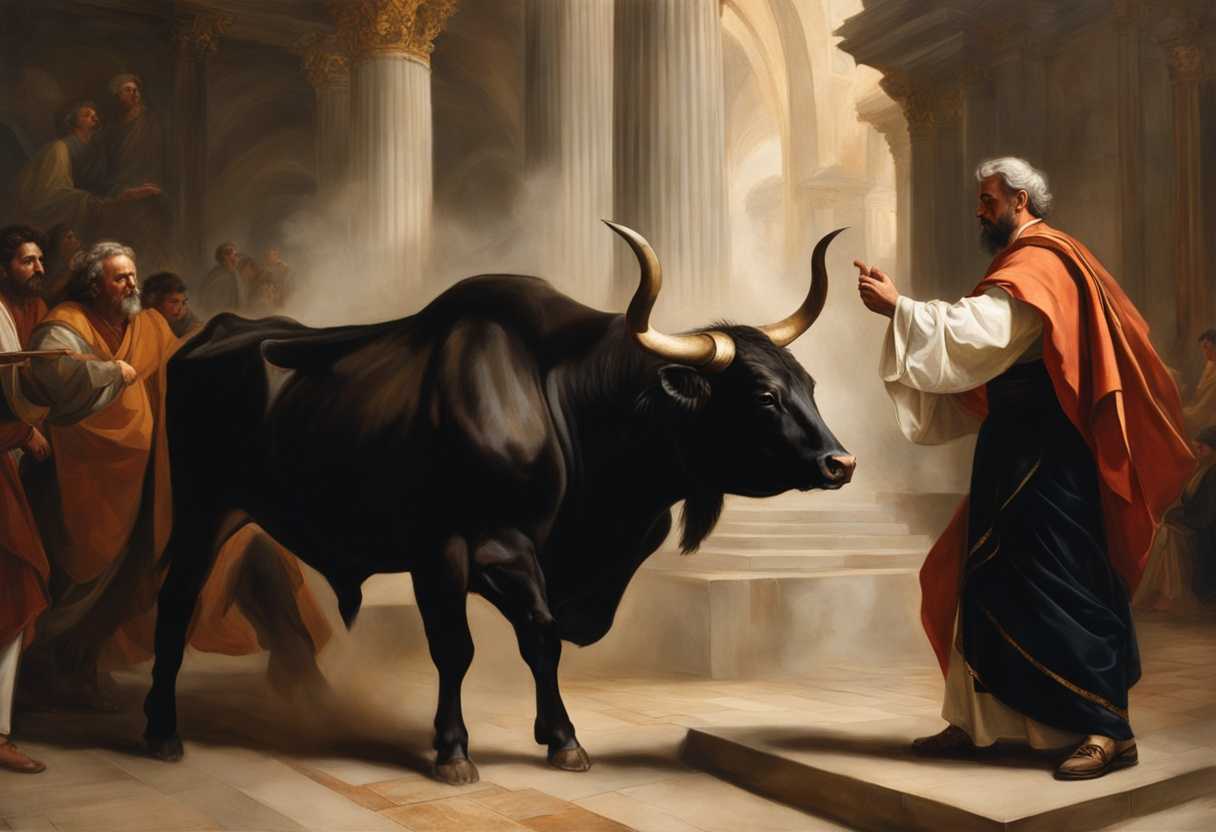
Setting the Scene for Leviticus 4:3
In Leviticus chapter 4, we find ourselves in the Tabernacle courtyard, a sacred space where the Israelites come to make offerings and seek forgiveness for their sins. The scene is set with the altar of burnt offering in the center, its bronze surface gleaming in the sunlight. The air is filled with the scent of burning incense and the sound of prayers being whispered.
Gathered around the altar are the priests, dressed in their sacred garments, ready to perform the rituals prescribed by God. Among them is the high priest, Aaron, a figure of authority and holiness. The people of Israel have come to witness the atonement process, seeking reconciliation with God for their unintentional sins.
As the ceremony begins, a sense of reverence and solemnity fills the air. The priests follow the instructions outlined in Leviticus chapter 4, carefully selecting the appropriate animals for sacrifice and sprinkling the blood on the altar. The people watch in awe as the rituals unfold, understanding the gravity of their transgressions and the need for forgiveness. In this moment, the Tabernacle becomes a place of repentance and grace, where the divine meets the human in a sacred exchange of mercy and atonement.
What is Leviticus 4:3 about?
Leviticus 4:3 introduces the concept of a sin offering for unintentional sins. This verse highlights the importance of seeking forgiveness and reconciling with God when we make mistakes without intending to do wrong. It emphasizes the idea that even when we fall short or make errors unknowingly, we are still responsible for seeking forgiveness and making amends in order to maintain a strong relationship with God.
Have you ever found yourself in a situation where you unintentionally hurt someone or made a mistake without realizing it? Just like in this verse, it is essential to acknowledge our faults, seek forgiveness, and take proactive steps towards reconciliation. This verse serves as a reminder that we are all imperfect and prone to making mistakes, but with humility and repentance, we can seek forgiveness and restore our connection with God.
Imagine the feeling of grace and relief that comes from seeking forgiveness for our unintentional sins. Just like the sin offering mentioned in Leviticus 4:3, it is a powerful opportunity to reflect on our actions, express remorse, and make things right with God. We can cultivate a deeper sense of accountability, growth, and closeness with the divine by embodying the humble and repentant spirit demonstrated in this verse.
Understanding what Leviticus 4:3 really means
In the book of Leviticus, a profound guide to holiness and worship, we delve into Chapter 4, which delves into the sin offering—a sacrifice aimed at reconciling unintentional sins. The verse Leviticus 4:3 opens a window into the gravity of sin and the meticulous process of atonement prescribed by God for the Israelites. It begins with the weighty scenario of “If the anointed priest sins,” highlighting the significant spiritual leadership role held by the high priest in the community. This sets the stage for a profound reflection on the interconnectedness of sin and its impact on the people, as the high priest’s transgression brings guilt upon the entire community.
The directive for the high priest to bring “a young bull without defect to the Lord” underscores the seriousness of sin and the necessity for purity in atonement. This requirement for an unblemished sacrifice serves as a poignant reminder of the uncompromising nature of God’s standards and the need for a perfect offering to address sin’s stain. The meticulous instructions laid out in Leviticus 4:3 not only emphasize the gravity of sin but also point to the meticulous care required in seeking reconciliation with God.
Drawing parallels to the New Testament, Hebrews 7:27 contrasts the repeated sacrifices in Leviticus with Jesus, our ultimate high priest, who offered Himself once for all. This shift from animal sacrifices to the ultimate sacrifice of Christ highlights the continuity of God’s grace and the fulfillment of atonement through Jesus. Similarly, 1 John 1:9 assures us of forgiveness when we confess our sins, bridging the gap between the Old and New Testaments and emphasizing the timeless need for atonement and reconciliation with God.
The relevance of Leviticus 4:3 extends beyond ancient rituals, resonating with contemporary themes of spiritual leadership, community interconnectedness, and the enduring need for atonement and forgiveness. Leaders today, whether in religious or secular realms, carry a weighty responsibility akin to the high priest, as their actions can reverberate through the community. The interconnectedness of our actions underscores the importance of mindfulness in our conduct, recognizing that even unintentional sins can impact those around us.
In a modern context, envision a CEO making an unethical decision—a choice that not only tarnishes the company’s reputation but also erodes trust and morale among employees. This anecdote mirrors the communal repercussions of the high priest’s sin, illustrating the profound impact of integrity and accountability in leadership roles. Leviticus 4:3 serves as a poignant reminder of the far-reaching consequences of our actions, urging us to live responsibly, seek forgiveness, and pursue purity in our relationships with God and others.
What sacrifice is required for unintentional sin?
For unintentional sins, the sacrifice required is a young bull without blemish. This offering was necessary to make atonement for the sin committed unknowingly by the individual or the community. The blood of the bull was brought into the tent of meeting and sprinkled before the veil of the sanctuary, showing the seriousness of the sin and the need for purification.
This sacrifice emphasized the importance of acknowledging and seeking forgiveness for unintentional sins. It was a way for the person to take responsibility for their actions, even if they were not done intentionally. The individual or the community sought reconciliation with God and restoration of their relationship with Him by offering a pure and unblemished bull.
The act of sacrificial offering demonstrated the value of recognizing one’s mistakes and seeking forgiveness. It required a physical and symbolic act to show sincerity and humility before God. The sacrifice served as a reminder of the need to be mindful of one’s actions and to strive for purity in thought and deed.
Application
Discover the power of self-reflection and seek forgiveness like never before. Take a moment to acknowledge your mistakes, step up to the plate, and seek repentance. Embrace the chance for renewal and walk the path of spirituality with a cleansed soul. Will you answer the divine call for forgiveness and transformation?

Reverend Michael Johnson is an experienced Church Minister with a profound expertise in spirituality and guidance. With a serene presence and a compassionate heart, he has faithfully served his congregation for over 20 years, leading them on a spiritual journey towards inner peace and enlightenment. Reverend Johnson’s extensive knowledge of religious philosophies and profound understanding of human nature have made him a trusted confidant and mentor to many, as he seamlessly weaves his profound wisdom into life teachings. Reverend Johnson’s calming demeanor and empathetic nature continue to uplift and heal souls, nurturing a sense of unity and tranquility within his community.