
Leviticus 4:7 is about the process of offering a sin offering for unintentional sins committed by the anointed priest to atone for his guilt before the Lord.
7 And the priest shall put some of the blood on the horns of the altar of fragrant incense before the Lord that is in the tent of meeting, and all the rest of the blood of the bull he shall pour out at the base of the altar of burnt offering that is at the entrance of the tent of meeting.
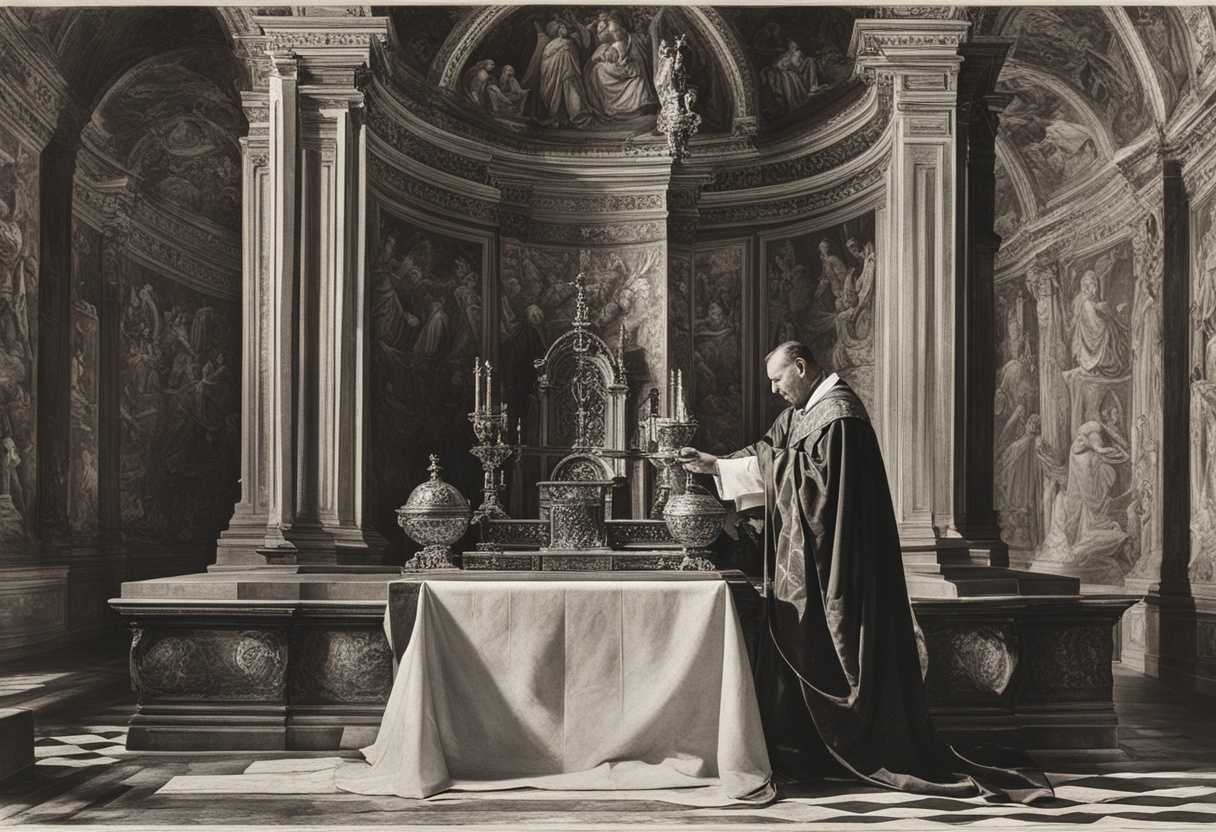
Setting the Scene for Leviticus 4:7
In Leviticus chapter 4, we find ourselves in the Tabernacle courtyard, a sacred space where the Israelites come to make offerings and seek forgiveness for their sins. The scene is set with the altar of burnt offering in the center, its bronze surface gleaming in the sunlight. The air is filled with the scent of burning incense and the sound of prayers being whispered.
Gathered around the altar are the priests, dressed in their sacred garments, ready to perform the rituals prescribed by God. Among them is the high priest, Aaron, a figure of authority and holiness. The people of Israel have come to witness the atonement process, seeking reconciliation with God for their unintentional sins.
As the ceremony unfolds, a sense of reverence and awe fills the courtyard. The people watch as the priest takes the blood of the sin offering and sprinkles it on the altar, symbolizing the transfer of sin from the sinner to the innocent animal. The rituals are precise and solemn, a reminder of the seriousness of sin and the need for repentance. In this moment, the Israelites are reminded of God’s mercy and grace, as they seek forgiveness and restoration in His presence.
What is Leviticus 4:7 about?
Leviticus 4:7 introduces the concept of a sin offering in the Old Testament. This verse specifically highlights the need for atonement for unintentional sins through a blood sacrifice. It teaches us that even sins committed unknowingly require a form of repentance and reconciliation with God. The offering of a sacrifice symbolizes the seriousness of sin and the need for restitution to restore one’s relationship with God.
Think about the significance of this verse. It prompts us to reflect on the nature of sin and the importance of taking responsibility for our actions, intentional or unintentional. It reminds us that even when we make mistakes unknowingly, it is essential to seek forgiveness and make amends. This verse underscores the idea that sin has consequences and that reconciliation with God requires humility, repentance, and seeking forgiveness through sacrificial measures. Consider the symbolism behind the blood sacrifice. Why was blood regarded as significant in these ancient rituals? Reflect on how this verse emphasizes the idea of atonement and the willingness to make restitution for one’s faults. It invites us to think about our own actions and how we can seek forgiveness and reconciliation in our relationship with God and others.
Understanding what Leviticus 4:7 really means
Leviticus 4:7, nestled within the intricate tapestry of the Old Testament, specifically in the book of Leviticus, delves into the realm of sin offerings. These offerings were not mere rituals but profound acts aimed at rectifying unintentional sins and restoring the delicate balance between humanity and the divine. The verse paints a vivid picture of the priest anointing the horns of the altar with blood, symbolizing purification and sanctification, rendering the altar acceptable in the eyes of God. This act underscores the gravity of sin and the necessity for thorough atonement, as the remaining blood is poured out at the base of the altar, signifying the completeness of the sacrifice.
Hebrews 9:22 echoes the sentiment of Leviticus 4:7, emphasizing the indispensable role of blood in forgiveness. This New Testament verse draws a direct line between the sacrificial practices of the Old Testament and the ultimate sacrifice of Jesus Christ, whose blood became the ultimate atonement for all sins. Similarly, 1 John 1:7 reinforces this connection, highlighting the purifying power of Jesus’ blood in cleansing humanity from sin, bridging the gap between the old sacrificial system and the new covenant of grace.
While the rituals of Leviticus may seem distant and archaic, the essence of atonement and forgiveness remains ever relevant. In a world where reconciliation with both God and fellow humans is a constant pursuit, the concept of sacrificial offerings finds resonance in acts of repentance, seeking forgiveness, and making amends. Just as the Israelites sought to appease God through offerings, modern individuals strive to mend broken relationships and seek forgiveness through tangible actions and heartfelt apologies.
Consider a scenario where a person, burdened by guilt after wronging a friend, seeks reconciliation through a heartfelt gesture or a kind act. This simple yet profound act mirrors the ancient practice of offering sacrifices to atone for transgressions. The universal need for reconciliation and forgiveness transcends time and culture, manifesting in everyday gestures of contrition and restoration.
Leviticus 4:7 serves as a poignant reminder of humanity’s perpetual need for atonement and reconciliation. It not only sheds light on the gravity of sin and the imperative of repentance but also points towards the ultimate sacrifice of Jesus Christ, whose blood became the ultimate offering for the sins of the world. By contemplating this verse, readers can glean insights into the profound themes of sin, repentance, and the unending mercy of God, inviting them to reflect on their own journey towards forgiveness and grace.
How can we seek forgiveness and make atonement?
To seek forgiveness and make atonement according to the verse, one must acknowledge the wrongdoing committed and take action to rectify it. Confession is a crucial step in the process of seeking forgiveness, demonstrating humility and a genuine desire to make amends. This involves admitting the mistake openly and honestly, without trying to justify or minimize the offense.
Additionally, making restitution or offering a suitable sacrifice as a symbol of repentance is essential for atonement. Through these actions, one can express their remorse and commitment to righting the wrong that was done. Seeking forgiveness and making atonement requires a genuine effort to make things right and a willingness to accept the consequences of one’s actions. It’s about taking responsibility for the harm caused and showing a sincere desire to change and do better in the future.
Application
Acknowledge your mistakes, seek forgiveness, and grow in righteousness. Take a moment to reflect on your actions and make amends where needed. Let this verse be your guide towards a closer relationship with the divine. Will you embrace this opportunity to cleanse your soul and walk a path of humility and grace?

Reverend Michael Johnson is an experienced Church Minister with a profound expertise in spirituality and guidance. With a serene presence and a compassionate heart, he has faithfully served his congregation for over 20 years, leading them on a spiritual journey towards inner peace and enlightenment. Reverend Johnson’s extensive knowledge of religious philosophies and profound understanding of human nature have made him a trusted confidant and mentor to many, as he seamlessly weaves his profound wisdom into life teachings. Reverend Johnson’s calming demeanor and empathetic nature continue to uplift and heal souls, nurturing a sense of unity and tranquility within his community.