
Leviticus 6:19-23 is about the regulations for the priests regarding the handling of the grain offerings and the importance of dedicating oneself to serving God with purity and reverence.
19 The Lord spoke to Moses, saying, “This is the offering of Aaron and his sons, which they shall offer to the Lord on the day when he is anointed: a tenth of an ephah of fine flour as a regular grain offering, half of it in the morning and half in the evening.
20 “This is the offering that Aaron and his sons shall offer to the Lord on the day when he is anointed: a tenth of an ephah of fine flour as a regular grain offering, half of it in the morning and half in the evening.”
21 It shall be made with oil on a griddle.
22 And the priest from among Aaron’s sons, who is anointed to succeed him, shall offer it to the Lord as decreed forever. It shall be wholly burned.
23 For every grain offering of the priest shall be wholly burned. It shall not be eaten.”
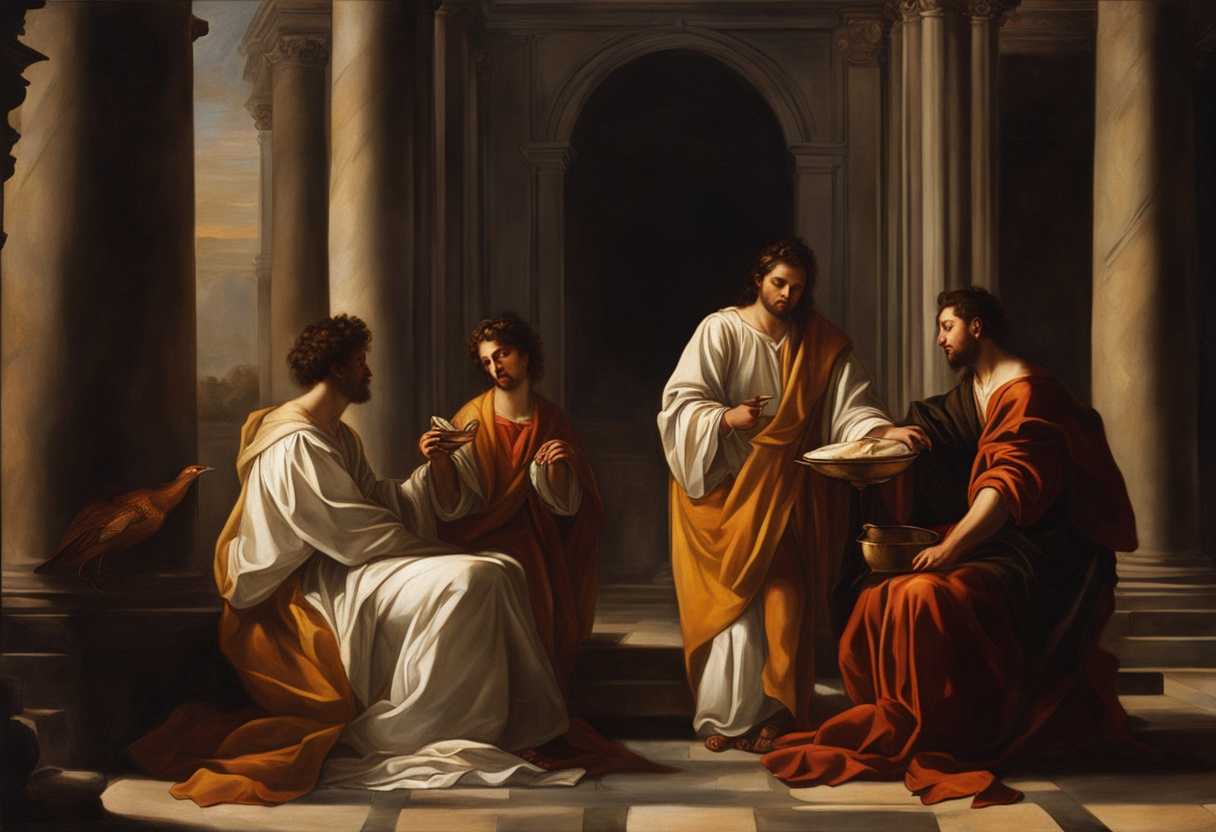
Setting the Scene for Leviticus 6:19-23
In the scene described in Leviticus 6:19-23, we find ourselves in the Tabernacle courtyard, a sacred space where the Israelites would gather for worship and offerings. The air is filled with the scent of burning incense and the sound of prayers being lifted up to the heavens. The sun is shining brightly, casting a warm glow over the scene.
Aaron, the high priest, is at the center of the courtyard, dressed in his sacred garments and carrying out his duties. He is surrounded by his sons, who are assisting him in the rituals prescribed by God. The people of Israel have gathered to witness these sacred ceremonies and to seek forgiveness for their sins.
As Aaron offers the grain offering on the altar, the people bow their heads in reverence, knowing that their sins are being atoned for through these rituals. The scene is one of solemnity and awe, as the Israelites are reminded of the holiness of God and the importance of following His commandments.
What is Leviticus 6:19-23 about?
God is providing specific instructions for the priests on how to handle the grain offerings brought by the Israelites in this verse. These offerings were an important part of the Israelites’ worship and were meant to symbolize thanksgiving and dedication to God. God is emphasizing the importance of respect, purity, and proper procedures in worship by detailing how the priests should handle these offerings. God values the details of worship and the reverence with which offerings should be presented as we reflect on this verse. How we approach our worship and offerings matters to God. This verse serves as a reminder for us to approach our worship with intentionality, purity, and respect. It challenges us to consider the significance of our actions and the attitude of our hearts when we come before God in worship.
So, as we strive to honor God in our worship, let us remember the importance of following His instructions with diligence and reverence. Let us take the lessons from this verse to heart and seek to offer our worship in a manner that pleases and glorifies God.
Understanding what Leviticus 6:19-23 really means
Leviticus, a book of laws given to the Israelites, delves into the realms of holiness and worship, providing a blueprint for their religious practices. In Leviticus 6:19-23, the focus shifts to the offerings made by the priests, particularly honing in on the grain offering. To truly grasp the significance of this passage, one must first understand the pivotal role of the priests and the profound symbolism behind their offerings. These offerings were not mere rituals but held deep spiritual meanings, reflecting the Israelites’ commitment to God.
“The offering that Aaron and his sons are to bring to the Lord on the day he is anointed” signifies the initiation of the priestly duties and the crucial aspect of consecration. It highlights the solemnity and sacredness of their role in serving God. The mention of “a regular grain offering, a tenth of an ephah of the finest flour” underscores the importance of offering the best to God, symbolizing dedication and purity in worship. This act of giving the finest flour was a tangible expression of their reverence and commitment to the divine.
The directive to offer “half of it in the morning and half in the evening” emphasizes the continual nature of worship and dedication to God. It serves as a reminder that our worship should not be confined to specific times but should permeate every moment of our lives. The meticulous instruction to prepare the offering with oil on a griddle showcases the care and attention to detail required in worship. It speaks to the idea of offering our service to God with precision and reverence, not haphazardly but with intentionality.
The mention of “the priest who succeeds him from among his sons” points to the continuity of the priestly line and the perpetual nature of worship and service to God. This highlights the importance of passing down faith and responsibilities to the next generation, ensuring the ongoing legacy of worship and devotion. Just as the priests were tasked with offering sacrifices regularly, believers today are called to live lives of continual worship and dedication to God. The passage serves as a timeless reminder of the dedication, quality, and continuity required in our worship and service to the Almighty.
In a modern context, the principles outlined in Leviticus 6:19-23 resonate deeply with believers today. The call to offer our best to God, to maintain a consistent and unwavering dedication in our worship, and to pass down our faith to future generations remains as relevant now as it was in ancient times. This passage challenges us to reflect on the depth of our commitment to God, urging us to approach our worship with reverence, excellence, and a steadfast heart. Just as a cherished family tradition is passed down with care and love, our worship and service to God should be marked by a similar spirit of dedication and continuity.
How can we cultivate gratitude in our daily lives?
One powerful way to cultivate gratitude in our daily lives is by recognizing the abundance that surrounds us. When we take a moment to reflect on the many blessings we have in our lives, both big and small, we can develop a deeper sense of appreciation and thankfulness. We can foster a spirit of gratitude that permeates our thoughts and actions by shifting our focus from what we lack to what we have been given.
Another way to cultivate gratitude is by practicing mindfulness. We can cultivate a sense of gratitude that extends beyond just the surface level by being fully present in each moment and acknowledging the goodness and beauty that exists in our lives. Mindfulness allows us to truly savor and appreciate the richness of our experiences, fostering a sense of thankfulness for the present moment and all that it offers.
Additionally, expressing gratitude to others can also help us cultivate a more grateful mindset. We reinforce our own sense of gratitude by acknowledging and thanking those who have positively impacted our lives. This practice of giving thanks can create a positive cycle of gratitude, where we both give and receive expressions of thankfulness, strengthening our sense of appreciation for the interconnectedness of our lives.
Application
Reflecting on Leviticus 6:19-23, it’s time to offer our best to the Lord, just like the Israelites gave unblemished offerings. Let’s present our lives as a living sacrifice, showing obedience and gratitude. Take a moment to evaluate if you’re utilizing your time, talents, and resources in a way that pleases Him. Will you dedicate yourself to giving your utmost to the Lord, wholeheartedly in every part of your life?

Reverend Michael Johnson is an experienced Church Minister with a profound expertise in spirituality and guidance. With a serene presence and a compassionate heart, he has faithfully served his congregation for over 20 years, leading them on a spiritual journey towards inner peace and enlightenment. Reverend Johnson’s extensive knowledge of religious philosophies and profound understanding of human nature have made him a trusted confidant and mentor to many, as he seamlessly weaves his profound wisdom into life teachings. Reverend Johnson’s calming demeanor and empathetic nature continue to uplift and heal souls, nurturing a sense of unity and tranquility within his community.