
Leviticus 6:24-30 is about the laws and procedures for the preparation and consumption of the sin offering, emphasizing the importance of properly handling sacrifices and maintaining purity before God.
24 And the Lord spoke to Moses, saying,
25 “Speak to Aaron and his sons, saying, This is the law of the sin offering. In the place where the burnt offering is killed shall the sin offering be killed before the Lord; it is most holy.
26 The priest who offers it for sin shall eat it. In a holy place it shall be eaten, in the court of the tent of meeting.
27 Whatever touches its flesh shall be holy, and when any of its blood is splashed on a garment, you shall wash that on which it was splashed in a holy place.
28 But the earthenware vessel in which it is boiled shall be broken. And if it is boiled in a bronze vessel, that shall be scoured and rinsed in water.
29 All the males among the priests shall eat of it. It is most holy.
30 But no sin offering shall be eaten from which any blood is brought into the tent of meeting to make atonement in the Holy Place; it shall be burned up with fire.
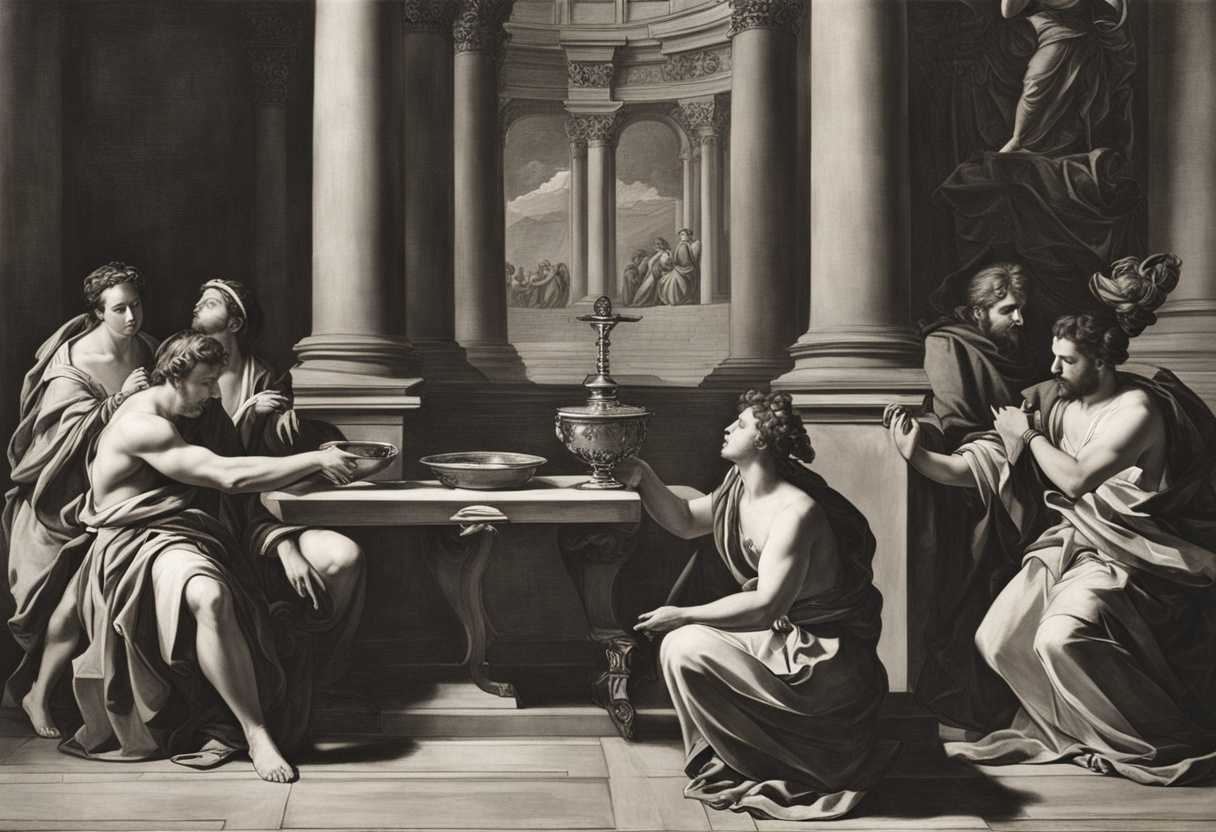
Setting the Scene for Leviticus 6:24-30
In the scene described in Leviticus 6:24-30, we find ourselves in the Tabernacle courtyard, a sacred space where the Israelites would gather for worship and offerings. The air is filled with the scent of burning incense and the sound of prayers being lifted up to the heavens. The sun is setting, casting a warm glow over the scene as the day’s activities come to a close.
Aaron, the high priest, is at the center of the courtyard, surrounded by his sons who are assisting him in the sacred duties. They are dressed in their priestly garments, a symbol of their consecration to serve the Lord. The altar of burnt offering stands before them, its flames flickering in the fading light as they perform the evening sacrifice.
The people of Israel have gathered to witness this holy moment, their faces turned towards the priests as they intercede on their behalf. As the smoke of the offering rises towards the sky, a sense of reverence and awe fills the air, reminding all present of the covenant between God and His chosen people. This scene serves as a powerful reminder of the importance of obedience, sacrifice, and the constant need for repentance and forgiveness in the presence of the Almighty.
What is Leviticus 6:24-30 about?
The priests are given instructions in this verse regarding the proper preparation and consumption of the sin offering. The sin offering was a crucial part of the sacrificial system in ancient times, symbolizing the atonement for sins committed by the people. The meticulous instructions provided by God through Moses ensured that the priests handled the sin offering with reverence and care, reflecting the seriousness of sin and the need for forgiveness. We delve into the instructions that emphasize cleanliness, respect, and attention to detail in handling the sin offering. The priests were not only demonstrating their obedience to God but also their understanding of the gravity of sin and the importance of seeking forgiveness and reconciliation by following these guidelines. Modern-day readers can reflect on the significance of these ancient practices and consider how they approach their own acts of repentance and seeking forgiveness. How can we emulate the reverence and attentiveness displayed by the priests in our own spiritual practices? How does the concept of atonement and forgiveness resonate with us in our daily lives? This verse ultimately serves as a reminder of the need for humility, repentance, and seeking forgiveness in our relationship with the divine. Studying and reflecting on these ancient rituals and instructions invite us to deepen our understanding of sin, atonement, and the importance of reconciliation with God and others. Let us approach this verse with a sense of reverence and contemplation, pondering how we can apply its teachings to our own spiritual journey.
Understanding what Leviticus 6:24-30 really means
In the book of Leviticus, a compilation of laws given to the Israelites, we delve into the realm of holiness and the proper way to worship God. Leviticus 6:24-30 specifically addresses the laws surrounding the sin offering, a pivotal component of the sacrificial system in ancient Israel. When we encounter the phrase “The LORD said to Moses,” we are reminded of the divine origin of these instructions, emphasizing their significance and authority. The term “sin offering” denotes a specific sacrifice aimed at atoning for sins and restoring the relationship between the sinner and God. Furthermore, the designation “Most holy” signifies the utmost sanctity, underscoring the gravity of sin and the sacred nature of the atonement process. The directive that the sin offering “shall be eaten by the priest” symbolizes the priest’s role in bridging the gap between God and the people, highlighting the communal aspect of atonement.
Drawing connections to other biblical passages, Hebrews 9:22 stresses the essential nature of sacrifice for forgiveness, linking the practices of the Old Testament to the ultimate sacrifice of Jesus in the New Testament. Similarly, 1 John 1:9 underscores the perpetual relevance of confession and forgiveness, made attainable through Jesus. While we no longer engage in animal sacrifices, the timeless principles of acknowledging sin, seeking forgiveness, and restoring relationships remain paramount in our lives today. In a world where guilt and shame can be overwhelming, recognizing the divine process of forgiveness can offer immense relief and hope.
Consider a scenario where an individual grapples with the weight of a mistake made at work, burdened by guilt and fearing the repercussions. Upon confessing to their boss, instead of facing punishment, they are presented with a path to rectify the situation and rebuild trust. This narrative mirrors the process of confession and atonement outlined in Leviticus, illustrating that honesty and seeking forgiveness can lead to restoration and peace. In conclusion, the intricate guidelines in Leviticus 6:24-30 regarding the sin offering underscore the seriousness of sin and the sanctity of atonement. They serve as a poignant reminder of the significance of seeking forgiveness and the role of mediation in reconciling our relationship with God. This ancient ritual finds its ultimate fulfillment in Jesus, whose sacrifice extends to us eternal forgiveness and reconciliation.
What is the significance of holy rituals in daily life?
Holy rituals hold significant importance in daily life as they serve as a way for individuals to connect with their beliefs and faith, providing a sense of grounding and structure in their lives. These rituals can offer a sense of peace, comfort, and guidance, helping individuals navigate through the challenges and uncertainties of each day. Individuals can strengthen their spiritual connection and deepen their understanding of their faith by observing these practices regularly.
Additionally, holy rituals can act as a reminder of the values and principles that are important in one’s life. Through the repetition of these rituals, individuals can reinforce their commitment to living a life aligned with their beliefs and values. This helps individuals maintain a sense of purpose and direction in their daily lives, guiding their actions and decisions in a way that reflects their spiritual convictions. Holy rituals can foster a sense of community and belonging among individuals who share the same faith traditions. Individuals can build relationships, support one another, and strengthen their bond as a community by partaking in these rituals together. These rituals not only provide a platform for communal worship and celebration but also create opportunities for individuals to come together in solidarity and unity, enhancing their sense of belonging and shared identity.
Application
Embrace a life of sacrificial giving and dedication to God, offering your best without holding back. Commit wholeheartedly to God’s service, just as the Israelites offered their finest sacrifices. Give your all to the Lord and live a life of complete devotion. Are you ready to answer the call and truly give your best to God?

Reverend Michael Johnson is an experienced Church Minister with a profound expertise in spirituality and guidance. With a serene presence and a compassionate heart, he has faithfully served his congregation for over 20 years, leading them on a spiritual journey towards inner peace and enlightenment. Reverend Johnson’s extensive knowledge of religious philosophies and profound understanding of human nature have made him a trusted confidant and mentor to many, as he seamlessly weaves his profound wisdom into life teachings. Reverend Johnson’s calming demeanor and empathetic nature continue to uplift and heal souls, nurturing a sense of unity and tranquility within his community.