
Leviticus 6:25-30 is about the preparation of the sin offering, emphasizing the sacredness and purity required in handling the sacrifices to atone for sin.
25 “Speak to Aaron and his sons, saying, This is the law of the sin offering. In the place where the burnt offering is killed shall the sin offering be killed before the Lord; it is most holy.
26 The priest who offers it for sin shall eat it. In a holy place it shall be eaten, in the court of the tent of meeting.
27 Whatever touches its flesh shall be holy, and when any of its blood is splashed on a garment, you shall wash that on which it was splashed in a holy place.
28 But the earthenware vessel in which it is boiled shall be broken. And if it is boiled in a bronze vessel, that shall be scoured and rinsed in water.
29 All the males among the priests shall eat of it. It is most holy.
30 But no sin offering shall be eaten from which any blood is brought into the tent of meeting to make atonement in the Holy Place; it shall be burned up with fire.
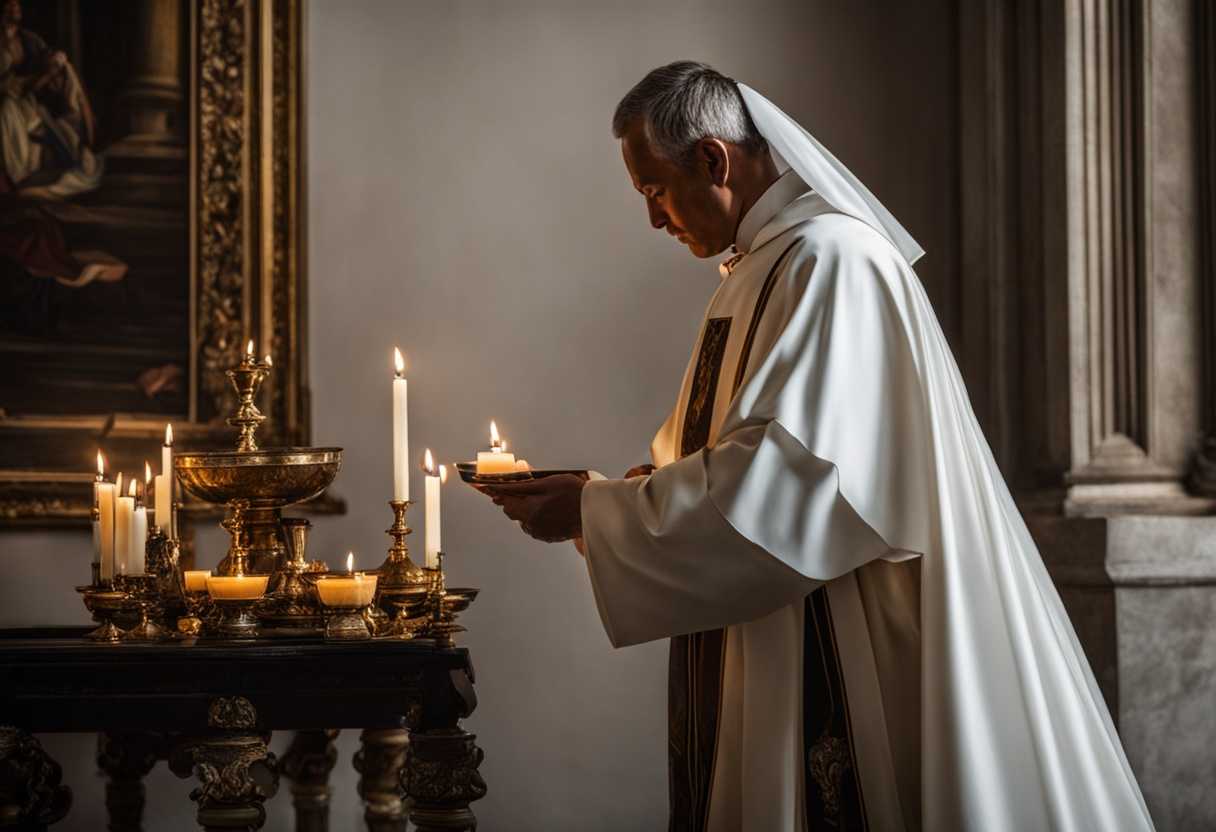
Setting the Scene for Leviticus 6:25-30
In the book of Leviticus, we find a detailed account of the laws and rituals that the Israelites were to follow in their worship of God. Leviticus 6:25-30 describes a scene in the Tabernacle where Aaron and his sons, the priests, are instructed on how to handle the sin offering. The sin offering was a sacrifice made to atone for the sins of the people, and it was a crucial part of the Israelites’ relationship with God.
In this particular scene, the Tabernacle is filled with the scent of burning flesh and incense, creating a solemn and sacred atmosphere. Aaron, the high priest, is dressed in his elaborate priestly garments, and his sons are assisting him in performing the rituals prescribed by God. The flickering light of the oil lamps casts a warm glow over the scene, illuminating the intricate details of the Tabernacle’s furnishings and decorations.
As the priests carry out the sin offering, they do so with reverence and precision, following God’s instructions to the letter. The blood of the sacrifice is sprinkled on the altar, symbolizing the atonement for the sins of the people. The scene is a powerful reminder of the Israelites’ need for forgiveness and the holiness of God, as well as the importance of following His commands with obedience and faith.
What is Leviticus 6:25-30 about?
The verse gives us specific instructions on how the priests were to handle sin offerings within the tabernacle. This guidance served to ensure that the process of atonement for the sins of the people was carried out in a precise and respectful manner. The verse underscores the importance of following prescribed rituals and procedures when seeking forgiveness and reconciliation with God.
Have you ever considered the significance of rituals and protocols in religious practices? These instructions highlight the idea that every action within the tabernacle had a specific purpose and symbolic meaning. The priests demonstrated their obedience to God and their commitment to upholding the sacred nature of their responsibilities by following these detailed guidelines. Through these practices, the community could seek forgiveness, acknowledge their wrongdoing, and strive for spiritual purity. Let us reflect on this verse and ponder the role of rituals in our own lives. Do we have set practices that help us navigate challenges, seek forgiveness, or express gratitude? We can benefit from establishing rituals that bring us closer to our beliefs and values, just as the priests in the tabernacle followed specific procedures to handle sin offerings. Let us consider how we can incorporate meaningful practices into our daily lives.
Understanding what Leviticus 6:25-30 really means
In the book of Leviticus, a compilation of laws given to the Israelites, we delve into the intricate details of holiness and worship. Leviticus 6:25-30 specifically delves into the regulations surrounding the sin offering, a pivotal component of the sacrificial system in ancient Israel. The instructions are directed to Aaron and his sons, the priests tasked with carrying out these sacred rituals. The sin offering, outlined in these verses, was to be conducted in the designated holy place where the burnt offering was slain, emphasizing the sanctity and order of worship in the Israelite community.
The phrase “It is most holy” underscores the sacred nature of the sin offering, highlighting its crucial role in atoning for sin within the community. Moreover, the directive that the priest who offers the sin offering shall partake of it symbolizes the priest’s involvement in bearing the sins of the people, emphasizing the communal aspect of this act of atonement. The concept that anything touching the flesh of the sin offering becomes holy illustrates the transfer of sanctity through contact, showcasing the contagious nature of holiness within the sacrificial system.
These verses in Leviticus find resonance in the New Testament, particularly in Hebrews 9:22, which underscores the necessity of bloodshed for the forgiveness of sins. This connection between the sacrificial system in Leviticus and the ultimate sacrifice of Jesus Christ is pivotal in understanding the depth of Jesus’ atonement for humanity. Additionally, passages like 1 Peter 2:9 and Romans 12:1 draw parallels between the priestly duties outlined in Leviticus and the call for believers to live lives dedicated to God, presenting themselves as living sacrifices.
The relevance of these ancient practices extends to contemporary times, reminding us of the gravity of sin and the need for atonement. The communal nature of the sin offering serves as a poignant reminder of our interconnectedness and responsibility towards one another within the body of Christ. While we may not engage in animal sacrifices today, the principles of supporting and uplifting one another, recognizing the impact of our actions on the community, remain vital aspects of our Christian walk.
In conclusion, Leviticus 6:25-30 prompts us to reflect on the seriousness of sin, the significance of atonement, and the imperative of living lives characterized by holiness and love. These verses not only point towards the ultimate sacrifice of Jesus but also challenge us to embody the priestly role of interceding for others and living sacrificially in a manner that reflects God’s holiness and grace.
How can we fully dedicate ourselves to God?
To fully dedicate ourselves to God, we can follow the example set in Leviticus 6:25-30, where the priests were instructed to handle the sin offering in a specific way. This passage highlights the importance of approaching God with reverence, purity, and obedience. We can demonstrate our full dedication to God by carefully following His commands and serving Him diligently.
One way to fully dedicate ourselves to God is by continually seeking His will in all aspects of our lives. We can align our thoughts, words, and actions with His teachings just as the priests were instructed to carry out the sin offering with attention to detail and adherence to the regulations set by God. Through prayer, studying the Scriptures, and seeking guidance from the Holy Spirit, we can stay connected to God’s purpose for our lives and strive to fulfill it wholeheartedly.
Lastly, dedicating ourselves to God involves a commitment to living a life of holiness and faithfulness. We can ensure that our hearts are pure and our motives are aligned with His by maintaining a close relationship with Him, confessing our sins, and seeking His forgiveness. This ongoing process of surrendering ourselves to God, seeking His guidance, and walking in His ways allows us to fully dedicate our lives to Him.
Application
Embrace the wisdom of Leviticus 6:25-30 and cleanse your heart with reverence and purity. Like the priests, let us perform the inner rituals of atonement and seek forgiveness for our wrongdoings. Do not underestimate the power of repentance in your journey towards God. Will you take a moment today to reflect, confess, and reconnect with the divine presence within you?

Reverend Michael Johnson is an experienced Church Minister with a profound expertise in spirituality and guidance. With a serene presence and a compassionate heart, he has faithfully served his congregation for over 20 years, leading them on a spiritual journey towards inner peace and enlightenment. Reverend Johnson’s extensive knowledge of religious philosophies and profound understanding of human nature have made him a trusted confidant and mentor to many, as he seamlessly weaves his profound wisdom into life teachings. Reverend Johnson’s calming demeanor and empathetic nature continue to uplift and heal souls, nurturing a sense of unity and tranquility within his community.