
Leviticus 7:1-10 is about the detailed instructions for the guilt offering, emphasizing the importance of specific ingredients, procedures, and the portion to be given to the priests, highlighting the seriousness of atonement for sin and reconciliation with God.
1 “This is the law of the guilt offering. It is most holy.”
2 In the place where they kill the burnt offering they shall kill the guilt offering, and its blood shall be thrown against the sides of the altar.
3 And all its fat he shall offer from it: the fat tail, the fat that covers the entrails,
4 Then he shall offer from it all its fat; the fat tail, the fat that covers the entrails,
5 Then the priest shall burn them on the altar as a food offering with a pleasing aroma. All fat is the Lord’s.
6 Every male among the priests may eat of it. It shall be eaten in a holy place. It is most holy.
7 The guilt offering is just like the sin offering; there is one law for them. The priest who makes atonement with it shall have it.
8 And the priest who offers any man’s burnt offering shall have for himself the skin of the burnt offering that he has offered.
9 And every grain offering baked in the oven and all that is prepared in a pan or on a griddle shall belong to the priest who offers it.
10 But the breast that is waved and the thigh that is contributed you shall eat in a clean place, you and your sons and your daughters with you, for they are given as your due and your sons’ due from the sacrifices of the peace offerings of the people of Israel.
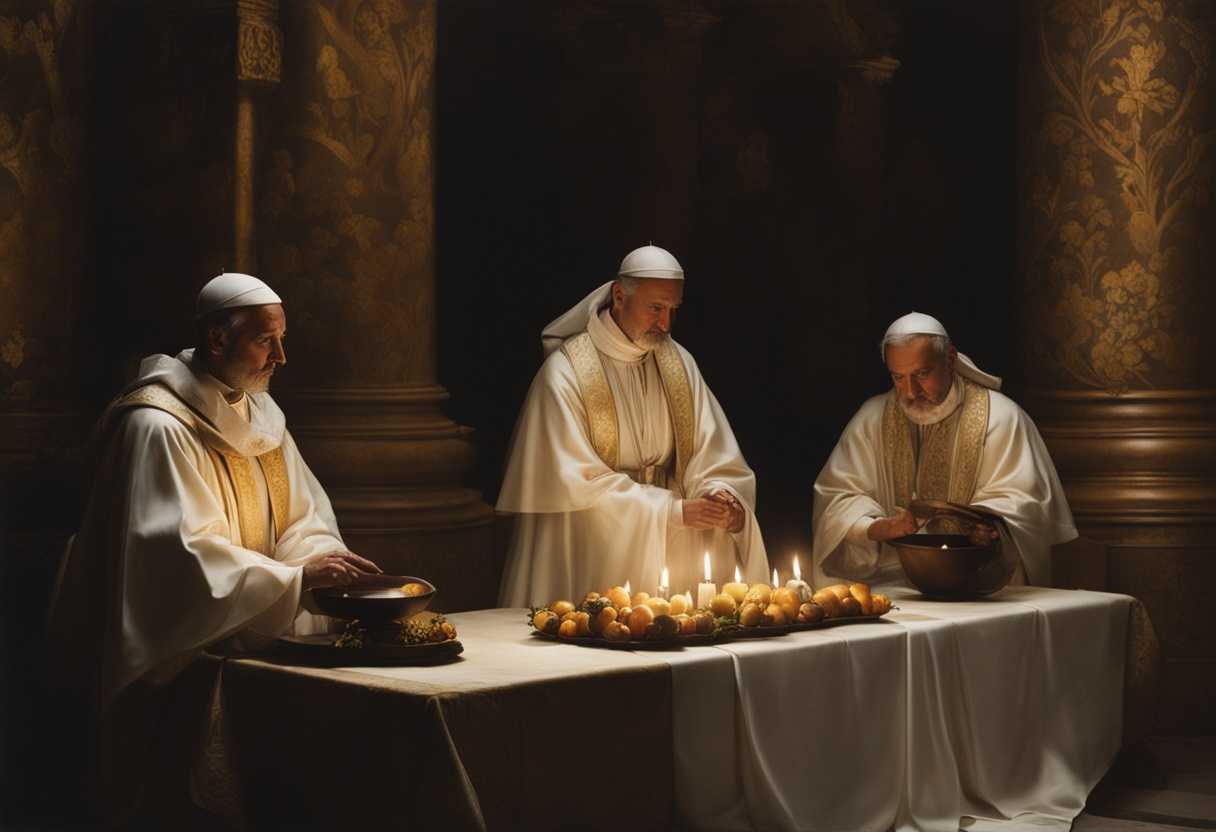
Setting the Scene for Leviticus 7:1-10
In the scene described in Leviticus 7:1-10, we find ourselves in the courtyard of the Tabernacle in the wilderness. The air is filled with the scent of burning incense and the sound of prayers being offered up to the Lord. The sun is shining brightly, casting a warm glow over the scene.
Inside the courtyard, we see Moses, Aaron, and the priests gathered around the altar. They are dressed in their sacred garments, ready to perform the rituals prescribed by God. The people of Israel have also gathered to witness the offering of sacrifices and to seek forgiveness for their sins.
As the priests begin to offer the sacrifices, the people bow their heads in reverence and repentance. The smoke from the burnt offerings rises up to the heavens, symbolizing the prayers of the people ascending to God. In this sacred space, the Israelites are reminded of their covenant with the Lord and the importance of following His commandments.
What is Leviticus 7:1-10 about?
This verse is part of the detailed instructions given by God to Moses regarding the various offerings that were to be made in the tabernacle. God is outlining the procedures for the guilt offering and the peace offering in this specific verse, which were significant rituals in ancient Israelite worship. The guilt offering was an act of atonement for unintentional sins committed by an individual, while the peace offering was a way to express gratitude and fellowship with God. We can see the importance of acknowledging our mistakes and seeking reconciliation with both God and others as we reflect on this verse. The guilt offering serves as a reminder that even unintentional wrongdoings require repentance and restoration. Additionally, the peace offering highlights the idea of building a harmonious relationship with God through acts of thanksgiving and celebration. These offerings were not only about following religious traditions but also about fostering a deep connection with the divine. Consider how these offerings are significant in your own life. How can you apply the principles of the guilt offering and the peace offering in your relationships with others and with God? Reflect on the importance of seeking forgiveness and expressing gratitude as essential aspects of spiritual growth and community well-being. Let these ancient practices inspire you to cultivate a heart of humility, repentance, and generosity in your own journey of faith.
Understanding what Leviticus 7:1-10 really means
Leviticus 7:1-10 delves into the regulations surrounding the guilt offering, a significant aspect of the sacrificial system in the Old Testament. This passage is part of the broader Levitical code, which meticulously outlines various offerings and their implications in the worship practices of ancient Israel. The guilt offering, also referred to as the trespass offering, was mandated for specific violations against God’s commandments, requiring the presentation of an unblemished ram along with restitution for the wrongdoing, often accompanied by an additional penalty.
“The guilt offering is most holy” underscores the sacred nature of this offering, highlighting its pivotal role in maintaining a harmonious relationship with God. The directive that the priest who presents the offering shall partake of it symbolizes the priest’s intermediary function between the people and God, with the communal sharing of the offering reflecting the collective involvement of the community in the sacrificial rituals. Furthermore, the provision that every male among the priests may partake in it emphasizes the communal responsibility and solidarity within the priesthood concerning the sacrificial ordinances.
In exploring related biblical passages, Isaiah 53:10 alludes to the suffering servant who serves as a guilt offering, pointing towards the ultimate fulfillment of sacrificial practices in the person of Jesus Christ. Hebrews 10:1-10 expounds on how the sacrificial system of the Old Testament prefigured the redemptive work of Christ, illustrating how His sacrifice transcended and perfected the offerings of the past. The relevance of the guilt offering resonates with contemporary audiences by underscoring the gravity of sin and the necessity for atonement, ultimately pointing to the profound sacrifice of Jesus, who bore the sins of humanity.
Consider a scenario where an individual inadvertently damages a neighbor’s property and not only apologizes but also takes steps to repair the harm and offer a gesture of goodwill. This act of restitution and reconciliation mirrors the principles encapsulated in the guilt offering, emphasizing the importance of acknowledging wrongdoing, seeking reconciliation, and extending grace. In our spiritual journey, acknowledging our transgressions, striving to make amends, and relying on the atoning work of Christ draw us closer to God and foster unity among believers.
In conclusion, Leviticus 7:1-10, though rooted in ancient customs, imparts enduring truths about sin, redemption, and reconciliation. It prompts introspection, urging individuals to acknowledge their need for forgiveness and embrace the unmerited grace extended through Jesus Christ. As we reflect on the principles embodied in the guilt offering, may we deepen our understanding of the gravity of sin, the magnitude of Christ’s sacrifice, and the transformative power of reconciliation in our lives and relationships.
How can we approach the Lord with sincere hearts?
To approach the Lord with sincere hearts, we must come before Him with humility and honesty. Sincerity involves being genuine and transparent in our communication with God, laying bare our thoughts, emotions, and desires before Him. It requires us to approach the Lord with a pure and open heart, devoid of any ulterior motives or deceit. We must come before Him with a genuine desire to seek His presence, guidance, and wisdom, without holding back or hiding anything from Him.
Furthermore, approaching the Lord with a sincere heart involves acknowledging our weaknesses and shortcomings, and seeking His forgiveness and grace. It requires us to come before Him in repentance, confessing our sins and asking for His mercy. Sincere hearts are willing to admit their faults and shortcomings, recognizing their need for God’s forgiveness and redemption. We demonstrate our trust in His unfailing love and mercy, and our willingness to be transformed and renewed by His grace by approaching the Lord with a humble and contrite spirit.
Application
Dear believer, embrace the significance of following the guidelines set by the Lord, like a skilled professional excelling at their job or a devoted parent caring for their family. Let us approach our worship with dedication and gratitude, offering our sacrifices in alignment with God’s directives. Just as commitment and respect strengthen our ties with our loved ones, our obedience and reverence can deepen our bond with the Almighty. Will you, in your journey with Him, commit to wholeheartedly honoring God’s instructions, fostering a closer connection and unwavering faith?

Reverend Michael Johnson is an experienced Church Minister with a profound expertise in spirituality and guidance. With a serene presence and a compassionate heart, he has faithfully served his congregation for over 20 years, leading them on a spiritual journey towards inner peace and enlightenment. Reverend Johnson’s extensive knowledge of religious philosophies and profound understanding of human nature have made him a trusted confidant and mentor to many, as he seamlessly weaves his profound wisdom into life teachings. Reverend Johnson’s calming demeanor and empathetic nature continue to uplift and heal souls, nurturing a sense of unity and tranquility within his community.