
Luke 10:30-35 is about demonstrating compassion and mercy through the parable of the Good Samaritan, teaching us to love our neighbors and show kindness regardless of social or cultural differences.
30 Jesus replied, “A man was going down from Jerusalem to Jericho, and he fell among robbers, who stripped him and beat him and departed, leaving him half dead.
31 Now by chance a priest was going down that road, and when he saw him he passed by on the other side.
32 So too, a Levite, when he came to the place and saw him, passed by on the other side.
33 But a Samaritan, as he journeyed, came to where he was, and when he saw him, he had compassion.
34 He went to him and bound up his wounds, pouring on oil and wine. Then he set him on his own animal and brought him to an inn and took care of him.
35 And the next day he took out two denarii and gave them to the innkeeper, saying, ‘Take care of him, and whatever more you spend, I will repay you when I come back.’
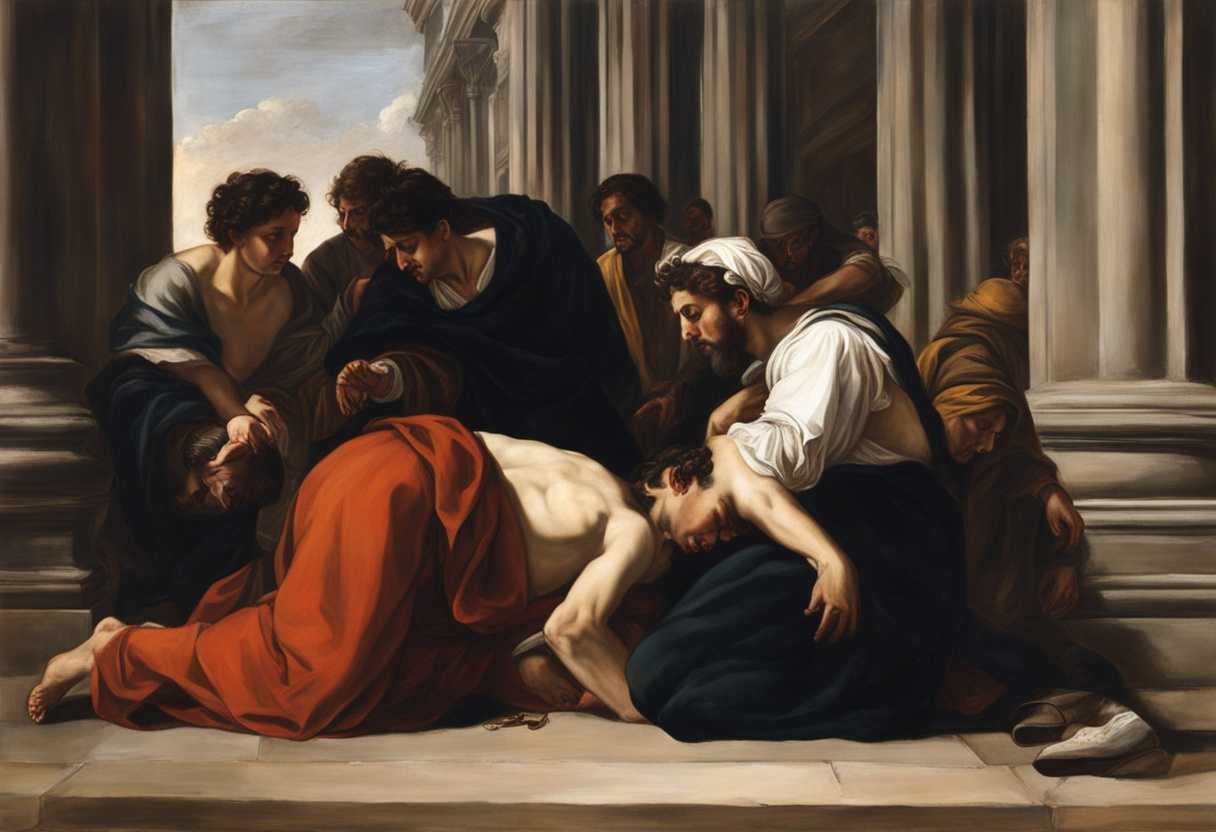
Setting the Scene for Luke 10:30-35
In Luke chapter 10, Jesus tells the parable of the Good Samaritan. The scene is set on a road leading from Jerusalem to Jericho, a route known for its dangers due to robbers and rough terrain. Jesus is surrounded by a crowd of people, including his disciples and other followers, who are gathered around him as he teaches.
As Jesus begins to tell the parable, the listeners are captivated by his words. He describes a man who was attacked by robbers, stripped of his clothes, beaten, and left half dead on the side of the road. A priest and a Levite pass by without helping the wounded man, but a Samaritan, who was despised by the Jews, stops to show compassion and care for him.
The Samaritan tends to the man’s wounds, bandages them, and takes him to an inn to recover, promising to cover any additional expenses upon his return. Through this powerful story, Jesus teaches about the importance of showing mercy and kindness to others, regardless of their background or social status. The scene is filled with tension and emotion as the listeners grapple with the radical message of love and compassion that Jesus is imparting to them.
What is Luke 10:30-35 about?
Ah, the Parable of the Good Samaritan, a timeless lesson in compassion and humanity. This powerful story, shared by Jesus in the Bible, teaches us the importance of showing kindness and helping those in need, regardless of their background or beliefs. The Samaritan, typically considered an outcast by society, goes above and beyond to care for a stranger who had been left beaten and abandoned on the side of the road. This parable challenges us to examine our own attitudes towards others and reminds us that true compassion knows no boundaries.
Imagine yourself on that dusty road, coming across someone in desperate need of help. Would you pass by, like the priest and the Levite in the story, or would you stop and offer a helping hand like the Samaritan did? The Parable of the Good Samaritan urges us to put aside our differences and prejudices, and instead, extend a hand of love and mercy to our fellow human beings. It calls us to be agents of positive change in our communities, showing empathy and compassion towards those who are suffering or marginalized. Let this parable be a guiding light in your journey towards greater understanding, empathy, and love for others.
Understanding what Luke 10:30-35 really means
The Parable of the Good Samaritan, found in Luke 10:30-35, is a powerful illustration of compassion and love transcending societal norms and prejudices. In this story, Jesus responds to a lawyer’s question about who his neighbor is by recounting the tale of a man who falls victim to robbers on a dangerous road. The priest and the Levite, who represent religious figures, pass by the wounded man, but it is the despised Samaritan who stops to help, showing true neighborly love and compassion.
The journey from Jerusalem to Jericho, known for its dangers, symbolizes life’s perilous paths where unexpected challenges can arise. The vulnerability and suffering of the wounded man highlight the harsh realities individuals may face. The priest’s and Levite’s indifference to the man’s plight serves as a stark reminder of the failure to act on one’s faith and the dangers of religious hypocrisy. Conversely, the Samaritan’s compassion and care exemplify the essence of true neighborly love, breaking down barriers of prejudice and demonstrating the importance of empathy and action.
This parable resonates with people today by challenging us to look beyond societal divisions and cultural biases to extend compassion and kindness to all. It urges us to translate our faith into action by helping those in need, regardless of their background or status. In a world often marked by division and indifference, the message of the Good Samaritan serves as a poignant reminder of the significance of showing love through tangible acts of kindness and mercy.
Imagine a bustling city street where a person collapses, ignored by many passersby. Amidst the apathy and fear of involvement, one individual stops, calls for help, and stays with the person until aid arrives. This modern-day Good Samaritan embodies the essence of the parable, illustrating the call to love and care for our neighbors, even when it may be inconvenient or risky. The story prompts us to reflect on our own lives and consider how we can emulate the Samaritan’s example by extending love and mercy to those in need around us.
In conclusion, the Parable of the Good Samaritan teaches us that genuine neighborly love knows no boundaries and is best expressed through compassionate action. It challenges us to examine our attitudes and behaviors, inspiring us to embody the spirit of the Samaritan by showing love and care to those we encounter in our daily lives.
What does it mean to show compassion to others?
Showing compassion to others means recognizing their suffering or need and taking action to alleviate it. A man in the verse mentioned stops to help a stranger who had been left beaten and injured on the side of the road. He doesn’t just pass by but goes out of his way to tend to the stranger’s wounds, take care of him, and ensure his well-being. This act of kindness and selflessness demonstrates a deep understanding of the suffering of another and a willingness to provide help and support.
Compassion involves empathy and a willingness to take action to help others in need, even if it inconveniences us or requires sacrifice. It means recognizing the humanity in others, regardless of their background or circumstances, and responding with kindness and generosity. The Samaritan in the story goes above and beyond to care for the stranger, showing that true compassion involves both feeling empathy for others and acting on that empathy to provide practical help and support. It is a powerful reminder of the importance of reaching out to those who are suffering and being a source of comfort and aid in their time of need.
Application
Let’s embody the spirit of the Good Samaritan and extend a helping hand to those in need, even when it’s not the easiest choice. Let’s be the beacon of light in someone’s darkness, showing compassion and care without reservation. In a world full of distractions, let’s prioritize kindness and generosity, making a difference in the lives of those around us. Will you rise to the occasion and be a source of hope and support for others who are struggling?

Reverend Michael Johnson is an experienced Church Minister with a profound expertise in spirituality and guidance. With a serene presence and a compassionate heart, he has faithfully served his congregation for over 20 years, leading them on a spiritual journey towards inner peace and enlightenment. Reverend Johnson’s extensive knowledge of religious philosophies and profound understanding of human nature have made him a trusted confidant and mentor to many, as he seamlessly weaves his profound wisdom into life teachings. Reverend Johnson’s calming demeanor and empathetic nature continue to uplift and heal souls, nurturing a sense of unity and tranquility within his community.