
22 And he said to his disciples, “Therefore I tell you, do not be anxious about your life, what you will eat, nor about your body, what you will put on.
23 For life is more than food, and the body more than clothing.
24 Consider the ravens: they neither sow nor reap, they have neither storehouse nor barn, and yet God feeds them. Of how much more value are you than the birds!
25 And which of you by being anxious can add a single hour to his span of life?
26 If then you are not able to do as small a thing as that, why are you anxious about the rest?
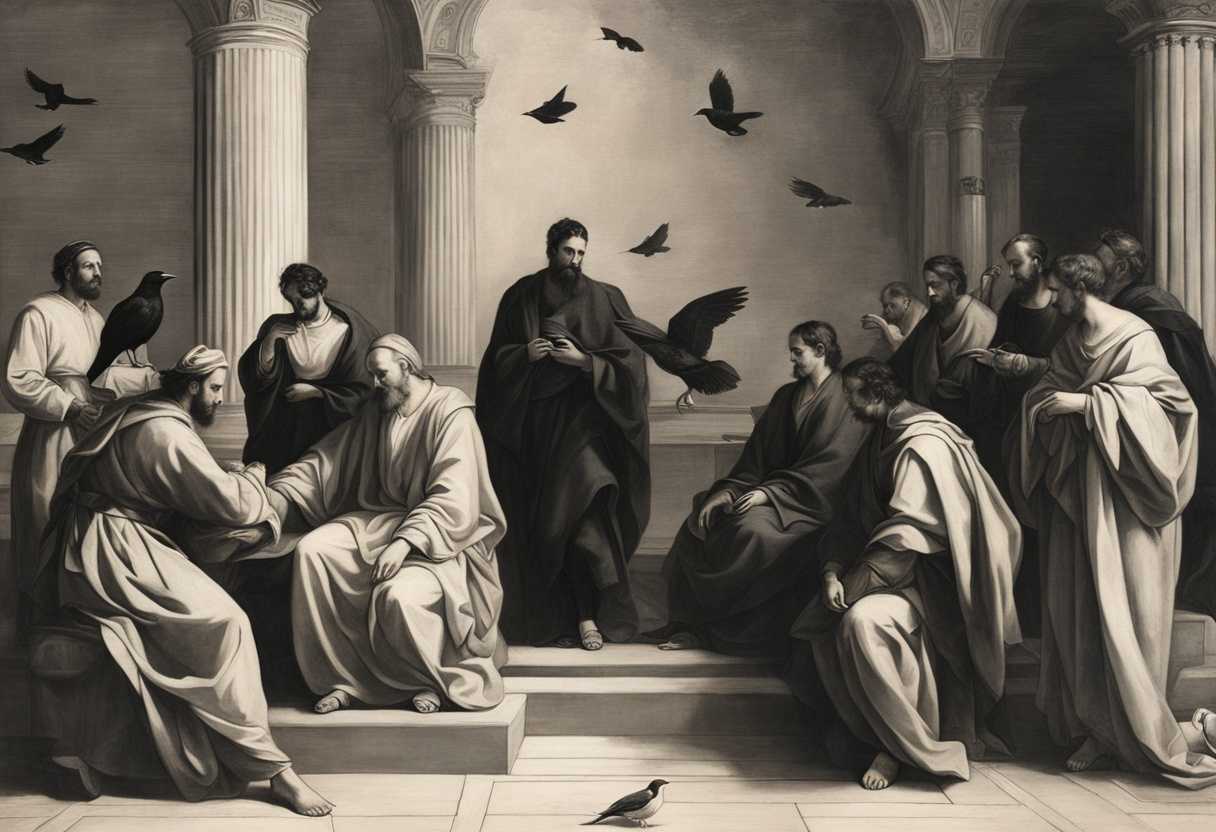
Setting the Scene for Luke 12:22-26
In Luke chapter 12, we find Jesus teaching a large crowd of people in a picturesque setting near the Sea of Galilee. The scene is set on a gentle hillside overlooking the sparkling waters, with the warm sun casting a golden glow over the landscape. The crowd is a mix of men, women, and children, gathered around Jesus, eager to hear his words of wisdom and guidance.
Among the crowd are Jesus’ disciples, including Peter, James, John, and others who have been following him closely and learning from his teachings. They sit attentively, hanging on every word that Jesus speaks, their faces reflecting a mix of awe and reverence for their beloved teacher.
As Jesus begins to speak about the importance of trusting in God’s provision and not worrying about material possessions, a sense of peace settles over the group. The gentle breeze rustles through the grass, and the sound of the waves lapping against the shore provides a soothing backdrop to Jesus’ message of faith and reliance on God’s care. The scene is one of tranquility and spiritual nourishment, as Jesus imparts timeless truths to his eager listeners.
What is Luke 12:22-26 about?
We are encouraged to trust in God’s provision for our needs in this verse. The idea is to have faith that God will take care of us and that worrying excessively about material things will not add anything positive to our lives. We can experience peace and contentment even in the midst of uncertainties by trusting in God and focusing on eternal matters. Worrying does no good for us. Does it change our circumstances or bring us closer to our goals? We acknowledge His sovereignty and control over all things, including our provision, by placing our trust in God. This verse challenges us to shift our focus from the temporal and material concerns of this world to the eternal and spiritual aspects of life, where true fulfillment and meaning can be found. Trusting in God’s provision allows us to live with a sense of peace and security, knowing that He will take care of us and meet our needs according to His will. So, let go of worries and anxieties, and trust in God’s provision for your life.
Understanding what Luke 12:22-26 really means
Structure for Commentary:
- Introduction
- Contextual Background
- Analysis of Key Phrases
- Cross-References to Other Bible Passages
- Relevance to Modern Life
- Anecdotal Illustration
- Jesus instructs His disciples in this passage to avoid anxiety about their basic needs, emphasizing trust in God’s provision. This teaching speaks directly to our everyday worries and invites us to reflect on the nature of faith and trust.
Contextual Background:
This part of Luke takes place during Jesus’ broader discourse about the Kingdom of God and material possessions. It follows parables and teachings that challenge societal norms, urging a shift from earthly concerns to heavenly priorities. Understanding this context helps us grasp the radical nature of Jesus’ message.
Analysis of Key Phrases:
The phrase “do not worry about your life” is central. Jesus is addressing fundamental human concerns—food and clothing. His message isn’t about neglecting these needs but about reorienting our focus. Jesus uses the examples of ravens and lilies to illustrate God’s care for His creation. This imagery emphasizes that if God cares for the birds and flowers, how much more will He care for us?
Cross-References to Other Bible Passages:
Matthew 6:25-34 parallels this teaching, reinforcing the call to trust in God’s provision. Philippians 4:6-7 also echoes this sentiment, advising believers to present their requests to God with thanksgiving instead of being anxious. These passages collectively underscore a consistent biblical theme of reliance on God rather than material security.
Relevance to Modern Life:
Today’s world is rife with stress and anxiety about financial stability, health, and future uncertainties. This passage challenges us to shift our perspective. It’s not a call to irresponsibility but to a profound trust in God’s provision. Reflect on your own life—how often do worries about daily needs overshadow your faith? Sarah, a member of our congregation, lost her job during the pandemic, as illustrated anecdotally. Initially, she was overwhelmed with anxiety about her future. However, she turned to this passage and began to trust in God’s provision. Over time, she found unexpected support from friends and a new job opportunity that aligned more closely with her passions. Sarah’s experience is a testament to the truth of Jesus’ words.
Conclusion:
Luke 12:22-26 invites us to a radical trust in God, challenging the pervasive anxiety of our times. We can find reassurance and peace by reflecting on God’s care for even the smallest creatures. Let this passage remind us that our value to God is immense, and His provision is sure. How will you let this truth transform your approach to life’s worries today?
How can we trust God’s provision fully?
We can fully trust in God’s provision by recognizing His sovereignty and care over every aspect of our lives. Jesus reminds us not to worry about our basic needs such as food and clothing because God knows what we need and will provide for us in these verses. We can rest in the assurance that God will take care of us and meet all our needs according to His wisdom and love by acknowledging Him as our provider.
Trusting in God’s provision fully involves letting go of our worries and anxieties, and instead, putting our faith in Him. We are called to prioritize seeking God’s kingdom and His righteousness, trusting that everything else will be added unto us. We can rely on His faithfulness to provide for us in ways that are perfect and timely by shifting our focus from our material needs to seeking God’s will and kingdom.
Furthermore, trusting in God’s provision involves surrendering our desires and plans to His will. When we release our control and trust in God’s sovereignty, we open ourselves up to experiencing His abundance and blessings in ways that are beyond what we can ask or imagine. God’s provision is not just about meeting our needs but also about bestowing His grace and favor upon us, showing His faithfulness and love in every circumstance.
Application
Think about it—just as you manage your family and work responsibilities, there’s a higher authority managing you. Christ’s words in Luke 12:22-26 remind us not to sweat the small stuff. The same way your job provides for you or your family supports one another, God provides for everything in your life, from the birds flying outside to the flowers blooming in your garden. Make a conscious decision to shift your focus from worry to trust. Prioritize your relationship with God like you would with someone you deeply care about. Will you let go of your worries and trust Him today?

Reverend Michael Johnson is an experienced Church Minister with a profound expertise in spirituality and guidance. With a serene presence and a compassionate heart, he has faithfully served his congregation for over 20 years, leading them on a spiritual journey towards inner peace and enlightenment. Reverend Johnson’s extensive knowledge of religious philosophies and profound understanding of human nature have made him a trusted confidant and mentor to many, as he seamlessly weaves his profound wisdom into life teachings. Reverend Johnson’s calming demeanor and empathetic nature continue to uplift and heal souls, nurturing a sense of unity and tranquility within his community.