
Luke 14:6 is about the Pharisees and their inability to answer Jesus when he questioned whether it was lawful to heal on the Sabbath, revealing their hypocrisy and lack of compassion.
6 And they could not reply to these things.
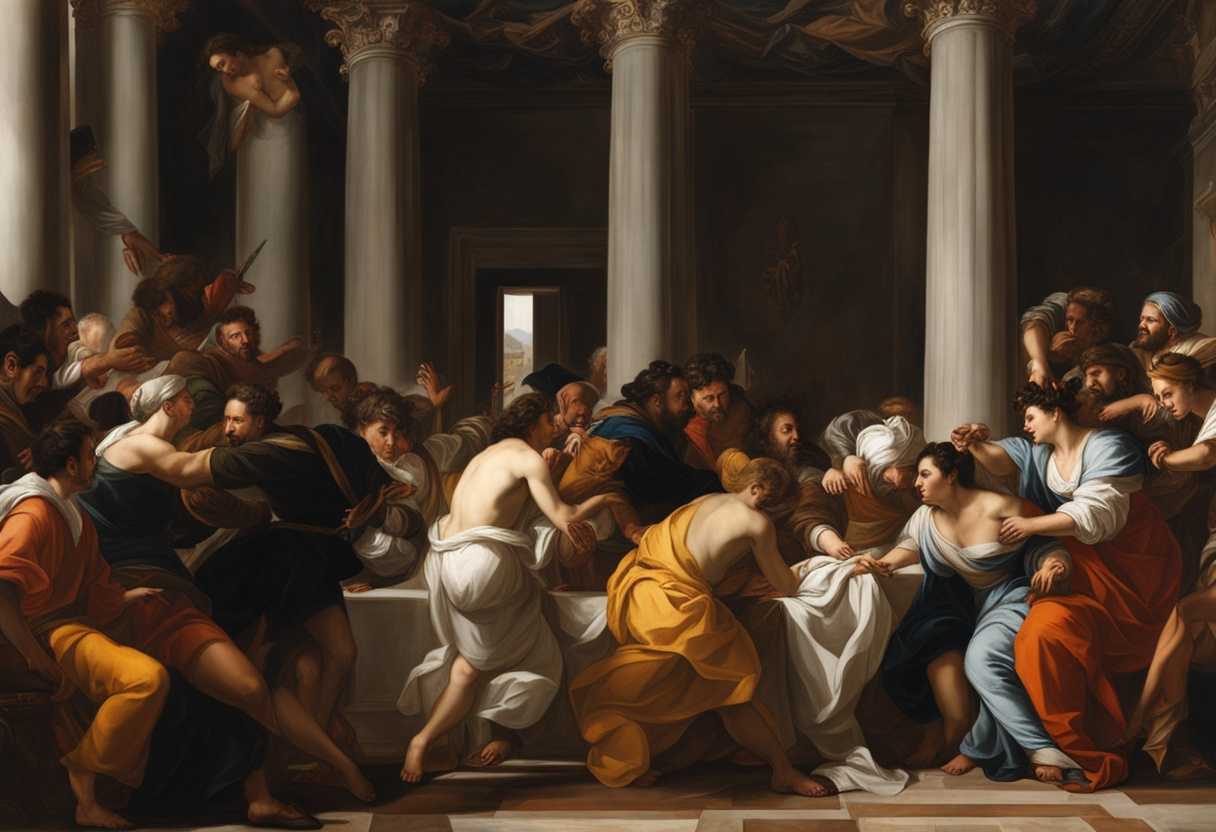
Setting the Scene for Luke 14:6
In Luke chapter 14, we find Jesus attending a meal at the home of a prominent Pharisee on the Sabbath. The Pharisees were known for their strict adherence to the Jewish law, and they were often critical of Jesus and his teachings. The scene is set in a large, opulent dining room with a long table adorned with fine linens and an array of sumptuous dishes.
As Jesus reclines at the table, surrounded by the Pharisees and other guests, a man suffering from dropsy suddenly appears before him. Dropsy was a condition characterized by abnormal swelling of the body due to fluid retention, and it was considered a sign of impurity in Jewish society. The man’s presence in the midst of the meal creates a tense atmosphere, as the Pharisees watch to see how Jesus will respond.
Despite the Pharisees’ silent scrutiny, Jesus takes the opportunity to challenge their legalistic attitudes and hypocrisy. He asks them whether it is lawful to heal on the Sabbath, knowing that they would remain silent due to their conflicting interpretations of the law. Jesus then proceeds to heal the man, demonstrating his compassion and his authority over the law. This encounter serves as a powerful lesson on the true meaning of mercy and the importance of prioritizing love and kindness over rigid adherence to rules.
What is Luke 14:6 about?
Jesus models compassion and challenges legalistic interpretations of the law in this passage. The healing of the man with dropsy on the Sabbath highlights Jesus’ prioritization of mercy and kindness over rigid adherence to religious rules. Jesus demonstrates that acts of love and compassion should not be restricted by legalistic boundaries by healing on the Sabbath, which was seen as a day of rest and observance under Jewish law.
This verse invites us to reflect on our own attitudes towards rules and regulations. Do we prioritize following laws at the expense of showing love and compassion to others? Are we more focused on outward appearances of religiosity rather than on genuine acts of kindness and mercy? Jesus’ actions serve as a reminder to align our hearts with the values of love and compassion, to not be bound by legalism but to act with grace towards others. Jesus challenges the legalistic attitudes of the religious leaders of his time, calling us to examine our own beliefs and actions. Are we being guided by a spirit of genuine care for others, or are we allowing rigid interpretations of rules to hinder our ability to show compassion? This verse urges us to cultivate a mindset of mercy and grace, following Jesus’ example of prioritizing love above all else. Let Jesus’ healing of the man with dropsy on the Sabbath inspire us to break free from legalistic confines and embrace a spirit of love and kindness in all that we do.
Understanding what Luke 14:6 really means
In Luke 14:6, we find Jesus in a situation where He challenges the Pharisees’ rigid interpretation of the Sabbath law. This verse is part of a larger narrative where Jesus heals a man with dropsy on the Sabbath, prompting criticism from the Pharisees. The Pharisees, known for their strict adherence to religious laws, often clashed with Jesus over His actions on the Sabbath, viewing them as violations of the law.
This passage echoes similar encounters in other Gospels, such as Matthew 12:10-12 and Mark 3:4, where Jesus emphasizes the importance of doing good and showing compassion, even on the Sabbath. Jesus’ question in Mark 3:4, “Is it lawful on the Sabbath to do good or to do harm, to save life or to kill?” cuts to the heart of the matter, highlighting the value of mercy and kindness over legalistic observance.
The relevance of this verse extends to our lives today, urging us to prioritize compassion and human need over rigid adherence to rules. It challenges us to examine our attitudes towards rules and regulations, reminding us that acts of kindness and mercy should not be hindered by legalistic mindsets. In a world that often values efficiency and productivity, this verse serves as a poignant reminder to focus on the spirit of the law rather than getting lost in the minutiae of regulations.
To illustrate the practical application of this teaching, consider a scenario where someone encounters a person in need on their way to a religious service. The lesson from Luke 14:6 would prompt them to prioritize helping the person in need, even if it means deviating from their planned schedule. This anecdote underscores the message of the verse – that acts of compassion should take precedence over strict adherence to rituals or traditions.
The phrase “They could not reply to this” in Luke 14:6 signifies the Pharisees’ inability to counter Jesus’ argument, highlighting the power of truth and compassion in silencing legalistic criticism. By performing acts of kindness on the Sabbath, Jesus challenges the traditional understanding of the day as solely a time of rest and worship. This challenges us to reconsider how we observe our own days of rest and worship, emphasizing the importance of incorporating acts of mercy and love into our spiritual practices.
In conclusion, Luke 14:6 and its surrounding context remind us of the paramount importance of compassion over legalism. It calls us to emulate Jesus’ example of showing kindness and mercy, even when it goes against societal norms or expectations. By reflecting on this verse and its implications, we are encouraged to live out our faith in a way that prioritizes love and compassion, mirroring the teachings and actions of Jesus during His earthly ministry.
How can we honor others above ourselves?
One way we can honor others above ourselves is by choosing to serve them rather than seeking recognition or praise for ourselves. We demonstrate humility and a genuine concern for others’ well-being by putting their needs and interests before our own. This attitude of selflessness reflects the love and compassion that Jesus exemplified in His own life.
Additionally, showing respect and appreciation for others through our words and actions is another way to honor them above ourselves. This can involve speaking kind words, offering encouragement, or simply taking the time to listen attentively to their thoughts and feelings. We demonstrate a heart of humility and a desire to build up and support others in a spirit of unity and love by valuing and affirming the worth of those around us.
Application
Dear friend, let us take a moment to embrace the wisdom of Luke 14:6. In the hustle of our daily lives, let us remember to hold steadfast in our beliefs, no matter the challenges that come our way. Let’s draw inspiration from Jesus’ unwavering commitment to kindness and empathy. It’s time we embody our beliefs with boldness and authenticity, shining brightly in a world that often feels dim. Will you rise with me, courageously embodying our faith in all we do?

Reverend Michael Johnson is an experienced Church Minister with a profound expertise in spirituality and guidance. With a serene presence and a compassionate heart, he has faithfully served his congregation for over 20 years, leading them on a spiritual journey towards inner peace and enlightenment. Reverend Johnson’s extensive knowledge of religious philosophies and profound understanding of human nature have made him a trusted confidant and mentor to many, as he seamlessly weaves his profound wisdom into life teachings. Reverend Johnson’s calming demeanor and empathetic nature continue to uplift and heal souls, nurturing a sense of unity and tranquility within his community.