
Luke 15:21-24 is about the profound joy and celebration that comes from the reunion and forgiveness between a father and his repentant son, illustrating God’s boundless love and grace towards those who truly seek reconciliation.
21 And the son said to him, ‘Father, I have sinned against heaven and before you. I am no longer worthy to be called your son.’
22 But the father said to his servants, ‘Bring quickly the best robe, and put it on him, and put a ring on his hand, and shoes on his feet.
23 And bring the fattened calf and kill it, and let us eat and celebrate.
24 For this my son was dead, and is alive again; he was lost, and is found.’ And they began to celebrate.
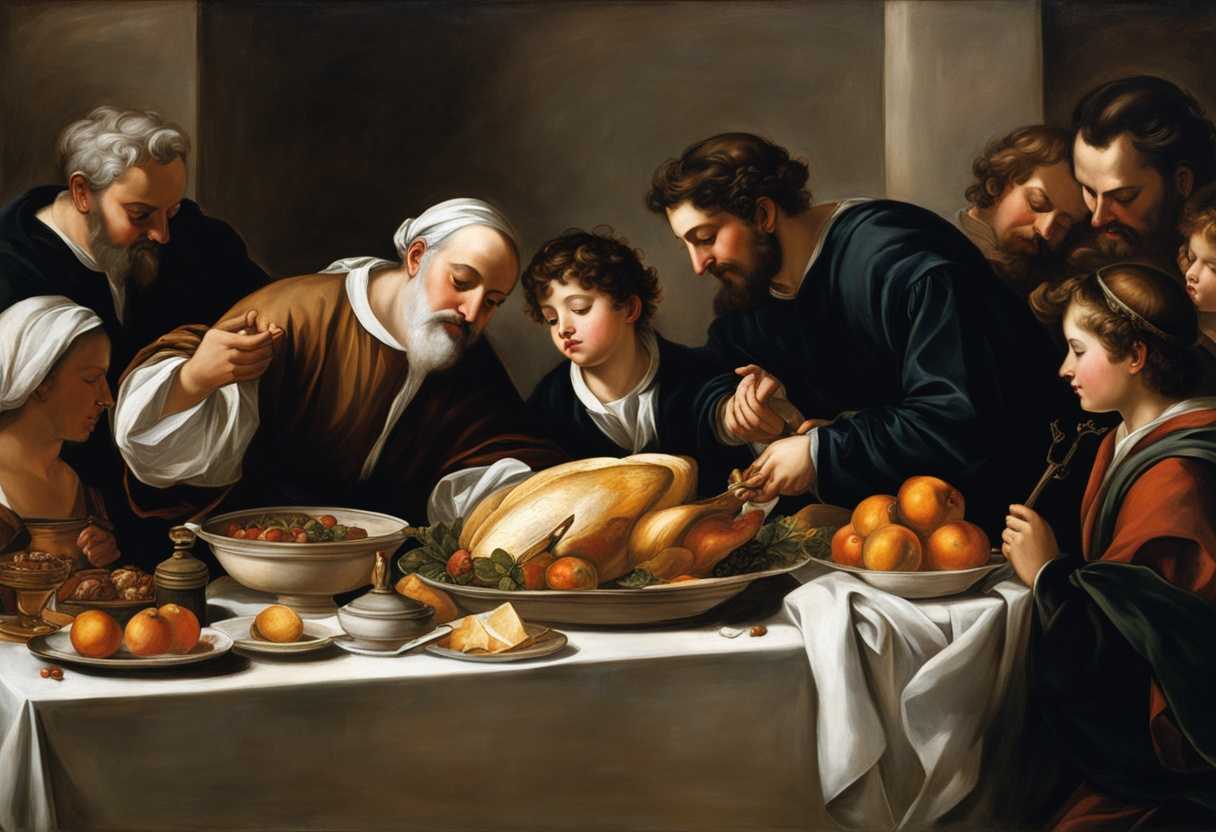
Setting the Scene for Luke 15:21-24
In Luke chapter 15, we find Jesus surrounded by a diverse crowd of people – tax collectors, sinners, Pharisees, and scribes. The Pharisees and scribes were grumbling about Jesus welcoming sinners and eating with them. In response, Jesus tells them the parables of the lost sheep, the lost coin, and the prodigal son.
In the specific scene of Luke 15:21-24, we see the prodigal son returning home to his father after squandering his inheritance. The son is ragged, humbled, and filled with remorse for his actions. The father, who represents God’s unconditional love and forgiveness, sees his son from a distance and runs to embrace him. The father orders his servants to bring the best robe, a ring, and sandals for his son, signifying his restoration to the family. A feast is prepared to celebrate the son’s return, much to the dismay of the older brother who feels slighted.
The setting is a humble yet welcoming homestead, with fields stretching out in the background. The scene is filled with emotion – the father’s joy at his son’s return, the son’s repentance and gratitude, and the tension between the older brother’s resentment and the father’s compassion. It is a powerful illustration of God’s boundless mercy and the importance of forgiveness and reconciliation.
What is Luke 15:21-24 about?
This verse from the Parable of the Prodigal Son exemplifies the boundless compassion and forgiveness that a loving father extends to his wayward son. It teaches us about the profound depth of a parent’s love, as the father not only welcomes back his son who had squandered his inheritance but also celebrates his return with open arms. This parable illustrates the timeless themes of redemption, reconciliation, and the power of forgiveness, emphasizing the concept of second chances and the importance of embracing those who seek to make amends.
Reflecting on this verse, we are prompted to consider the significance of forgiveness in our own lives. Are we capable of showing such unconditional love and acceptance to those who have wronged us? How do we respond to those who seek forgiveness and redemption? The father in this parable serves as a powerful example of grace and mercy, challenging us to reflect on our own capacity for forgiveness and compassion. This verse ultimately calls us to emulate the father’s actions, showing kindness, understanding, and forgiveness to those who may have strayed but are seeking to make amends.
Understanding what Luke 15:21-24 really means
In the Parable of the Prodigal Son, Jesus tells a story of a wayward son who squanders his inheritance, hits rock bottom, and then decides to return to his father in repentance. The verses in Luke 15:21-24 capture the heart of this parable, showcasing themes of repentance, unconditional love, celebration, and spiritual renewal.
When the son humbly admits, “Father, I have sinned against heaven and before you. I am no longer worthy to be called your son,” we witness true repentance and humility. This moment reflects the essence of recognizing our wrongdoings and seeking forgiveness, echoing the sentiment of Psalm 51:17, which emphasizes the value of a contrite heart before God. Have you ever witnessed someone owning up to their mistakes and experiencing a transformative change in their life as a result?
The father’s response, “Bring quickly the best robe, and put it on him, and put a ring on his hand, and shoes on his feet,” exemplifies God’s unconditional love and the restoration of our identity in Him. Just as the father in the parable lavishly clothes his son, God welcomes us back with open arms, as depicted in Isaiah 61:10, where God adorns us with the garments of salvation. Can you recall a story of someone who felt lost but found their way back to faith, encountering God’s love and acceptance in a profound way?
The father’s command to celebrate by feasting and rejoicing signifies the joy in heaven when a sinner repents. This celebration of redemption echoes the sentiment in Luke 15:7, where Jesus mentions the immense joy in heaven over one repentant sinner. It encourages us to not only celebrate but also support those who turn back to God. Have you been part of a community or family that joyously welcomed a loved one back to faith, embodying collective joy and support?
The proclamation, “For this my son was dead, and is alive again; he was lost, and is found,” symbolizes spiritual rebirth and renewal. The transformation from spiritual death to life illustrates the power of God’s grace to bring new hope and vitality, as seen in Ephesians 2:4-5. Can you share a story of someone who underwent a profound change through faith, embodying the concept of being ‘alive again’ in Christ?
In conclusion, the Parable of the Prodigal Son and the verses in Luke 15:21-24 remind us of the beauty of repentance, God’s unconditional love, the joy in heaven over a repentant sinner, and the transformative power of spiritual renewal. As you reflect on these themes, consider your own life and relationship with God. May you find the courage to seek forgiveness and restoration, knowing that God’s love is always ready to embrace you. Let us pray for all those on a journey of repentance and renewal, that they may experience the fullness of God’s grace and love.
How can we forgive others as God forgives us?
We can forgive others as God forgives us by extending grace and mercy without reservation. We can also forgive others without holding onto grudges or seeking retribution, just as God forgives us unconditionally when we repent and seek forgiveness. We emulate God’s all-encompassing forgiveness in our interactions with those who have wronged us by letting go of our anger and resentment towards others.
Furthermore, forgiving others as God forgives us involves showing compassion and understanding. We need to strive to see beyond the faults and mistakes of others, just as God sees beyond our own shortcomings and loves us unconditionally. We can approach forgiveness with a mindset of love and humility by practicing empathy and understanding towards those who have hurt us, mirroring God’s infinite compassion and mercy towards us. Forgiving others as God forgives us ultimately requires a willingness to let go of past grievances and look towards reconciliation and restoration. We too can seek to mend broken relationships and build bridges with those who have wronged us, just as God desires reconciliation with humanity and offers forgiveness as a pathway to healing and redemption. We align ourselves with God’s transformative power of love and redemption in our lives and in our relationships with others by embracing forgiveness as a means of growth and healing.
Application
Embrace forgiveness and compassion, like the father in Luke 15:21-24. Extend a hand to those who may have strayed from you. Let love guide your actions, just as the father’s love did. Will you be that beacon of forgiveness and love for someone today?

Reverend Michael Johnson is an experienced Church Minister with a profound expertise in spirituality and guidance. With a serene presence and a compassionate heart, he has faithfully served his congregation for over 20 years, leading them on a spiritual journey towards inner peace and enlightenment. Reverend Johnson’s extensive knowledge of religious philosophies and profound understanding of human nature have made him a trusted confidant and mentor to many, as he seamlessly weaves his profound wisdom into life teachings. Reverend Johnson’s calming demeanor and empathetic nature continue to uplift and heal souls, nurturing a sense of unity and tranquility within his community.