
Luke 15:23 is about the joyful celebration and restoration of the Prodigal Son by his father after returning home repentant, symbolizing God’s unwavering forgiveness and love for those who seek redemption.
23 And bring the fattened calf and kill it, and let us eat and celebrate.
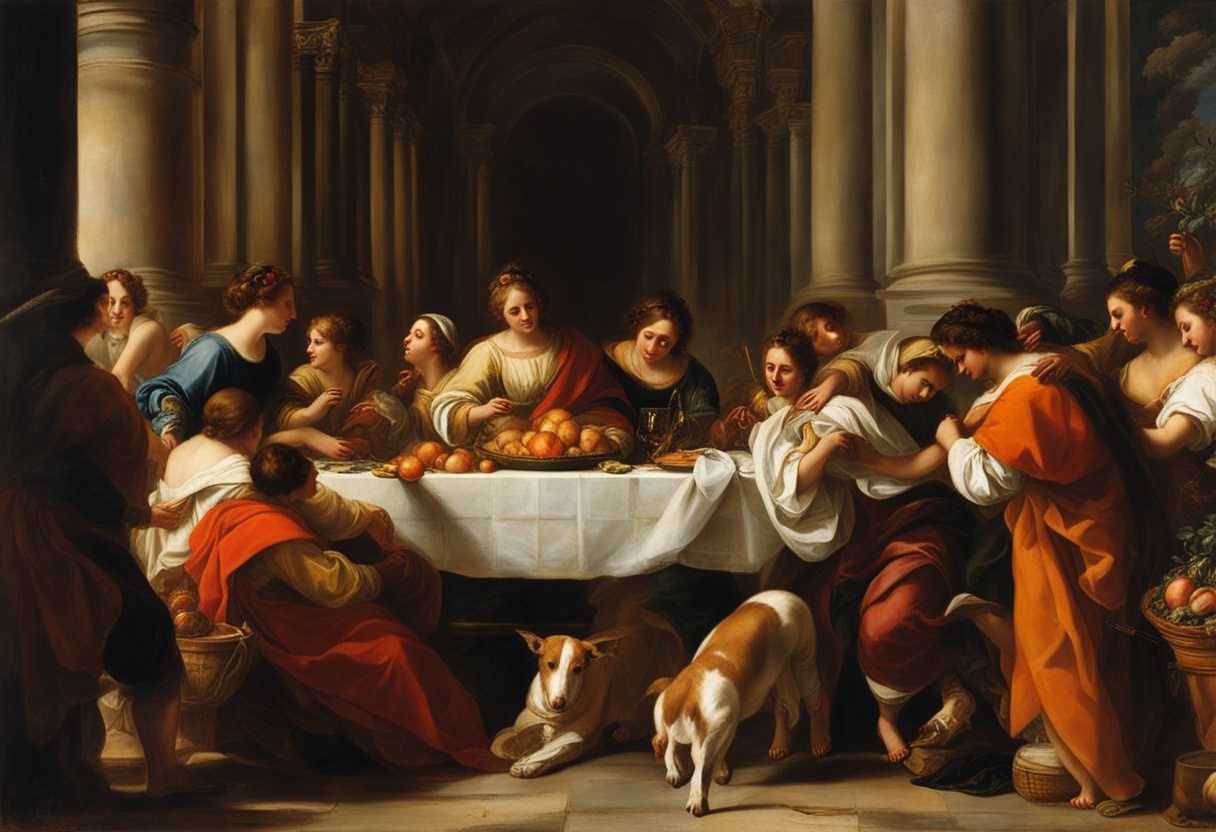
Setting the Scene for Luke 15:23
In Luke chapter 15, we find Jesus surrounded by a diverse crowd of people – tax collectors, sinners, Pharisees, and teachers of the law. The Pharisees and teachers of the law were grumbling about Jesus welcoming sinners and eating with them. Sensing the tension and the need to teach a valuable lesson about God’s love and forgiveness, Jesus begins to tell them a series of parables, including the parable of the lost sheep, the lost coin, and the prodigal son.
As Jesus continues to speak, he paints a vivid picture of a father eagerly awaiting the return of his wayward son. The scene is set in a humble village, with dusty roads and simple homes. The father, representing God’s unconditional love and mercy, stands at the edge of the village, scanning the horizon each day, hoping to catch a glimpse of his lost son returning home. The younger son, who had squandered his inheritance on reckless living, finally comes to his senses and decides to return to his father, seeking forgiveness and a place among the servants.
The moment of reconciliation and redemption is palpable as the father sees his son from a distance and runs to embrace him, showering him with love and grace. The onlookers, including the Pharisees and teachers of the law, witness this powerful display of forgiveness and are challenged to reflect on their own attitudes towards sinners and the depth of God’s love for all.
What is Luke 15:23 about?
The father in Luke 15:23 instructs his servants to bring the fattened calf to be slaughtered for a feast, painting a vivid picture of a joyous celebration. This verse comes from the parable of the Prodigal Son, where a wayward son returns home to his father, who welcomes him back with open arms and throws a grand celebration. It symbolizes the idea of forgiveness, redemption, and the overwhelming love of a father for his lost child. We can contemplate on the deep love and grace that God has for each of us as we reflect on this verse. Just like the father in the parable, God rejoices when we turn back to Him, no matter how far we may have strayed. The image of the fattened calf being killed for a feast represents the abundance of God’s love and the joy that comes with reconciliation and forgiveness. It challenges us to consider how we respond to those who have made mistakes or wronged us. Do we extend grace and forgiveness as freely as the father in the parable, or do we hold onto resentment and judgment?
Let this verse remind us of the power of forgiveness, the beauty of reconciliation, and the boundless love of our Heavenly Father. May it inspire us to reflect His love in our own lives, celebrating the return of the lost and embracing the opportunity for growth and renewal in our relationships.
Understanding what Luke 15:23 really means
In the Parable of the Prodigal Son, Jesus paints a vivid picture of God’s boundless grace and forgiveness through the characters of a loving father and a wayward son. The father’s response to the son’s return is marked by extravagant gestures of joy and celebration, symbolizing God’s overwhelming love for His children who repent and turn back to Him. The phrase “Bring the fattened calf and kill it” signifies a momentous occasion, as the fattened calf was reserved for special celebrations, underscoring the magnitude of the father’s joy at his son’s return.
“Let’s have a feast and celebrate” encapsulates the communal aspect of joy and the significance of coming together to rejoice in someone’s redemption. This call to celebration echoes throughout the Bible, emphasizing the importance of rejoicing over repentance. In Luke 15:7, Jesus speaks of the immense joy in heaven over one sinner who repents, highlighting the value of each individual’s return to God. Similarly, Psalm 23:5 portrays God’s abundant blessings and grace through a celebratory feast, symbolizing His overflowing love and provision for His children.
The relevance of this verse resonates deeply in today’s world, where many individuals feel isolated or estranged. It serves as a poignant reminder of the unconditional love and acceptance that await those who seek forgiveness and reconciliation. Encouraging communities to support and celebrate those who strive to mend relationships and return to a righteous path, the verse inspires a culture of forgiveness and restoration in a world often marked by division and judgment.
Consider a young man who, after years of poor choices and distance from his family, decides to return home seeking reconciliation. His family’s warm embrace and grand celebration upon his return mirror the father’s response in the parable, illustrating the transformative power of forgiveness and acceptance. This anecdote vividly portrays the joy and restoration that come with repentance and reconciliation, offering a tangible example of the verse’s message in action.
In conclusion, Luke 15:23 serves as a poignant reminder of God’s infinite mercy and the profound joy that accompanies repentance and reconciliation. It challenges us to embody these values in our own lives, extending forgiveness and celebrating the return of those who seek to make amends. Just as the father in the parable welcomed his son with open arms and a feast, may we too embrace others with love and grace, fostering a culture of forgiveness and restoration in our communities and beyond.
How can I show forgiveness and love like God?
To show forgiveness and love like God, one must be willing to let go of grudges and hold no resentment towards those who have wronged them. This means extending grace and mercy even when it may seem difficult or undeserved. We too must be ready to forgive others without conditions or expectations, just as God forgives us regardless of our faults and shortcomings.
Showing forgiveness and love like God also involves a willingness to reconcile and restore relationships that have been broken. This requires humility, empathy, and a genuine desire to mend the bond with the person who has caused hurt or harm. We mirror God’s desire for unity and harmony among His children by making the effort to reach out and make amends. Embodying forgiveness and love like God ultimately means embodying a selfless and unconditional love for others. This type of love goes beyond superficial feelings or emotions and requires a deep commitment to seeing the best in others, even when they may fall short. We reflect the profound and transformative love that God has for each of us by offering forgiveness and love in this way.
Application
Let’s dive into Luke 15:23 and allow its wisdom to guide our actions. Like the father’s embrace of his son, let’s open our hearts to forgiveness and compassion towards others. Prioritize reconciliation in your relationships and approach others with boundless love. Will you join in spreading forgiveness and grace to those in your life?

Reverend Michael Johnson is an experienced Church Minister with a profound expertise in spirituality and guidance. With a serene presence and a compassionate heart, he has faithfully served his congregation for over 20 years, leading them on a spiritual journey towards inner peace and enlightenment. Reverend Johnson’s extensive knowledge of religious philosophies and profound understanding of human nature have made him a trusted confidant and mentor to many, as he seamlessly weaves his profound wisdom into life teachings. Reverend Johnson’s calming demeanor and empathetic nature continue to uplift and heal souls, nurturing a sense of unity and tranquility within his community.