
Luke 18:18-19 is about a rich ruler who asks Jesus what he must do to inherit eternal life, and Jesus underscores the importance of recognizing God’s authority and the need to follow His commandments.
18 A ruler asked him, “Good Teacher, what must I do to inherit eternal life?”
19 And Jesus said to him, “Why do you call me good? No one is good except God alone.
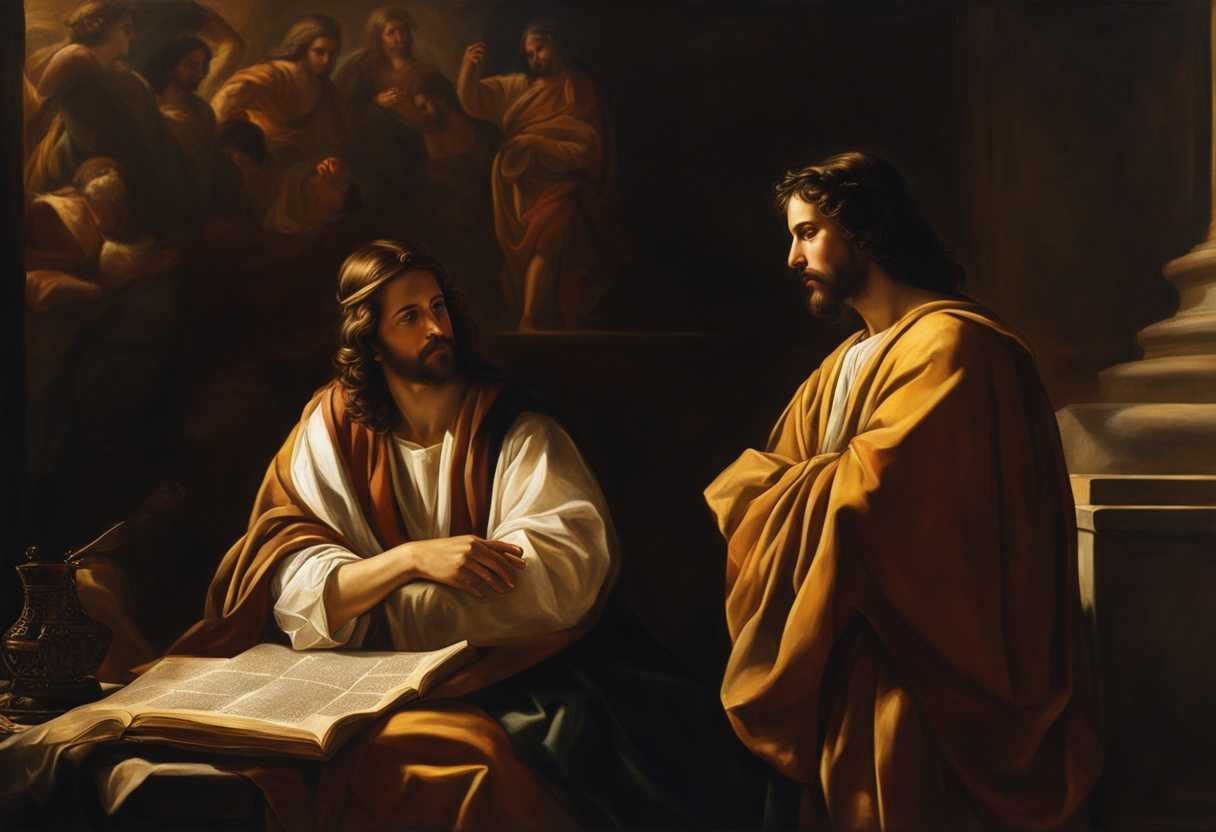
Setting the Scene for Luke 18:18-19
In Luke chapter 18, we find Jesus teaching a crowd of people who have gathered to hear Him speak. Among the crowd is a wealthy ruler, known as the rich young ruler, who approaches Jesus with a question. The scene is set in a bustling marketplace in a small town, with vendors selling their goods and people going about their daily activities.
The rich young ruler, dressed in fine robes and accompanied by his entourage, approaches Jesus with a sense of urgency and humility. He kneels before Jesus, seeking answers to his burning question about inheriting eternal life. Jesus, surrounded by His disciples and other followers, listens intently to the young man’s inquiry, knowing the inner turmoil and conflict within the ruler’s heart.
As the conversation unfolds, the rich young ruler’s sincerity and eagerness to learn from Jesus are evident. The atmosphere is charged with anticipation as everyone present waits to hear Jesus’ response to the ruler’s question about what he must do to inherit eternal life. The scene captures a moment of profound spiritual seeking and divine wisdom, as Jesus prepares to impart a timeless lesson on the true cost of discipleship.
What is Luke 18:18-19 about?
Jesus redirects the focus from strictly following commandments to recognizing the source of goodness when the rich ruler asks Him how to inherit eternal life in this verse. Jesus challenges the ruler to reflect on whether his pursuit of wealth and status aligns with God’s ultimate goodness by highlighting God’s goodness. This interaction serves as a reminder for us to evaluate our priorities and motivations in seeking eternal life. Are we solely focused on following rules and outward appearances, or are we genuinely seeking to embody God’s goodness in all aspects of our lives? Jesus emphasizes God’s goodness and invites the rich ruler to go beyond surface-level obedience to consider a deeper, more authentic way of living. This encounter prompts us to ponder how we can truly inherit eternal life by aligning our goals and actions with God’s goodness. Are we willing to let go of our attachments to worldly possessions and power in order to fully embrace the goodness and grace of God? Jesus’s response challenges us to reflect on the true essence of eternal life and how we can strive to live in alignment with God’s goodness in all that we do.
Understanding what Luke 18:18-19 really means
The passage in Luke 18:18-19 presents a thought-provoking conversation between Jesus and a rich young ruler seeking to inherit eternal life. The young ruler addresses Jesus as “Good Teacher,” a term that carries significant cultural weight as it was traditionally reserved for God alone in Jewish culture. Jesus’ response, “Why do you call me good? No one is good except God alone,” redirects the focus from human goodness to divine goodness. This statement challenges the ruler’s understanding of goodness, prompting reflection on the nature of goodness and the identity of Jesus.
In exploring related Bible passages, we find parallels that reinforce the message that true goodness originates from God alone. Mark 10:17-18 provides additional context, while Romans 3:10-12 and Psalm 14:3 emphasize the universal need for divine grace due to humanity’s inherent shortcomings. These passages collectively underscore the theme of divine goodness as the ultimate standard against which human goodness is measured.
The relevance of this passage to contemporary audiences is profound. In a world where societal norms often dictate standards of goodness, the passage serves as a reminder that true goodness is a divine attribute. It challenges individuals to seek God’s goodness rather than relying solely on their own efforts. Furthermore, the passage encourages humility and dependence on God, acknowledging that human attempts at goodness are incomplete without divine intervention.
To illustrate the transformative power of recognizing true goodness, consider the anecdote of a successful businessperson known for their charitable deeds but struggling with pride and self-reliance. Through a mentor’s challenge to reflect on the source of true goodness, this individual undergoes a profound shift towards humility and dependence on God. This anecdote highlights the potential for personal growth and transformation when one embraces the divine standard of goodness.
In conclusion, the passage from Luke 18:18-19 challenges individuals to reevaluate their understanding of goodness and acknowledge that true goodness emanates from God alone. It calls for humility and reliance on divine grace, emphasizing that human actions, no matter how commendable, are incomplete without God’s transformative influence. This timeless message invites us to align our values with the divine standard of goodness and embrace a life characterized by humility and dependence on God.
How can worldly wealth hinder us from entering heaven?
Worldly wealth can hinder us from entering heaven because it can lead us to rely too much on material possessions rather than on God. When we place our trust in money and possessions, we can become prideful, selfish, and overly focused on our own comfort and status. This can lead us away from the humility, compassion, and selflessness that are necessary for us to truly follow God and enter into His kingdom.
Additionally, worldly wealth can create a barrier between us and God by occupying our time, energy, and attention. The pursuit of wealth can become all-consuming, leaving little room for spiritual growth, prayer, and service to others. When we are preoccupied with accumulating more wealth and possessions, we may neglect our relationship with God and fail to prioritize the things that truly matter in the eyes of the Lord. Our attachment to worldly wealth can ultimately hinder us from fully surrendering to God and living according to His will, making it difficult for us to enter into the kingdom of heaven.
Application
Think of your life like a busy workday or a family gathering; priorities matter. In Luke 18:18-19, the rich ruler faced a choice, just like our daily decisions. Are you ready to put Christ above your biggest project or most treasured family time? Examine your heart’s true commitment—what truly leads your schedule and choices? If you had to choose now, what truly matters most to you?

Reverend Michael Johnson is an experienced Church Minister with a profound expertise in spirituality and guidance. With a serene presence and a compassionate heart, he has faithfully served his congregation for over 20 years, leading them on a spiritual journey towards inner peace and enlightenment. Reverend Johnson’s extensive knowledge of religious philosophies and profound understanding of human nature have made him a trusted confidant and mentor to many, as he seamlessly weaves his profound wisdom into life teachings. Reverend Johnson’s calming demeanor and empathetic nature continue to uplift and heal souls, nurturing a sense of unity and tranquility within his community.