
Luke 18:18-25 is about the encounter between Jesus and a rich young ruler, highlighting the challenge of prioritizing wealth over following God and the importance of recognizing the true cost of discipleship.
18 A ruler asked him, “Good Teacher, what must I do to inherit eternal life?”
19 And Jesus said to him, “Why do you call me good? No one is good except God alone.
20 You know the commandments: ‘Do not commit adultery, Do not murder, Do not steal, Do not bear false witness, Honor your father and mother.’”
21 And he said, “All these I have kept from my youth.”
22 When Jesus heard this, he said to him, “One thing you still lack. Sell all that you have and distribute to the poor, and you will have treasure in heaven; and come, follow me.”
23 But when he heard these things, he became very sad, for he was extremely rich.
24 Jesus, seeing that he had become sad, said, “How difficult it is for those who have wealth to enter the kingdom of God!
25 For it is easier for a camel to go through the eye of a needle than for a rich person to enter the kingdom of God.”
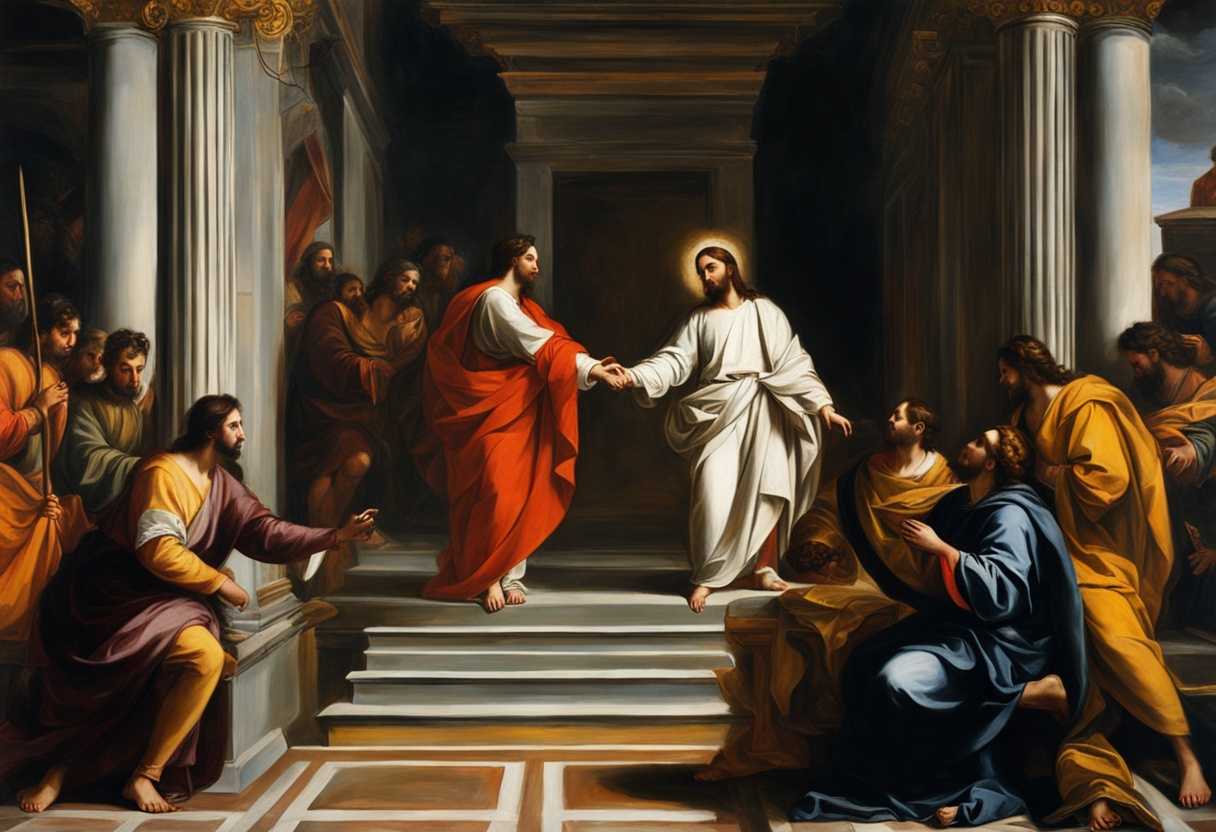
Setting the Scene for Luke 18:18-25
In Luke chapter 18, we find Jesus teaching a crowd of people who have gathered around Him. Among the crowd is a wealthy ruler, known as the rich young ruler, who approaches Jesus with a question about inheriting eternal life. The man is dressed in fine robes and exudes an air of authority and wealth. He is accompanied by his entourage, who stand a few steps behind him, observing the interaction with keen interest.
The scene takes place in a bustling marketplace in the town square, with merchants selling their wares and people going about their daily activities. The sun is shining brightly, casting a warm glow over the scene. Jesus, surrounded by His disciples and other followers, listens intently to the rich young ruler’s question, his gaze filled with compassion and wisdom. As the conversation unfolds, the crowd grows quiet, hanging on every word spoken by Jesus and the rich young ruler. The tension in the air is palpable as Jesus challenges the man to give up his wealth and follow Him, a test of true devotion and faith that will ultimately reveal the man’s heart.
What is Luke 18:18-25 about?
A rich ruler approaches Jesus in this verse and seeks guidance on how to inherit eternal life. This encounter demonstrates the struggle between worldly possessions and spiritual wealth. Jesus responds to the man by instructing him to sell all his possessions and give to the poor. This command challenges the rich ruler to look beyond his material wealth and prioritize his spiritual well-being. Jesus is not only pointing out the importance of generosity and compassion but also testing the ruler’s commitment to following Him wholeheartedly.
This verse prompts us to reflect on our own attachments to material possessions and the extent to which they may hinder our spiritual growth. It compels us to question if we are willing to make sacrifices in order to deepen our relationship with God. Jesus highlights the value of putting our trust in Him above all else by challenging the rich ruler to let go of his riches. It urges us to consider what truly holds significance in our lives and how we can align our actions with our faith. Jesus’ response to the rich ruler serves as a powerful reminder that our ultimate treasure lies in our connection to God and our willingness to follow His teachings.
Understanding what Luke 18:18-25 really means
In the Gospel of Luke, we encounter a poignant moment where Jesus engages with a rich young ruler, highlighting the profound challenge of wealth in the context of entering the Kingdom of God. The central theme revolves around the tension between earthly riches and spiritual inheritance, inviting us to ponder the true treasures we seek in life.
As Jesus is approached by a wealthy young man inquiring about eternal life, we are transported to a scene where societal norms often equated wealth with divine favor. The young man’s question, “Good Teacher, what must I do to inherit eternal life?” reveals both his recognition of Jesus’ authority and his earnest quest for something beyond material possessions. The concept of “inheriting” eternal life underscores the idea of a gift freely given rather than something that can be achieved through personal merit.
Jesus’s response to the young man’s inquiry is striking: “You still lack one thing. Sell everything you have and give to the poor, and you will have treasure in heaven.” This radical challenge to relinquish earthly wealth in exchange for heavenly treasure forces us to confront our attachments to material possessions and the true source of lasting fulfillment. The notion of “treasure in heaven” serves as a stark contrast to the fleeting nature of earthly riches, urging us to consider where our ultimate priorities lie.
The famous analogy Jesus employs, “It is easier for a camel to go through the eye of a needle than for someone who is rich to enter the kingdom of God,” employs hyperbole to underscore the immense difficulty for the wealthy to prioritize God’s kingdom over their abundance. This vivid imagery prompts us to reflect on the potential barriers that wealth can erect in our spiritual journey and the necessity of wholehearted devotion to God.
Drawing connections to related biblical passages such as Matthew 6:19-21, which admonishes against storing up treasures on earth, and 1 Timothy 6:10, warning about the dangers of the love of money, we are reminded of the timeless wisdom regarding the perils of materialism and the pursuit of wealth at the expense of spiritual well-being. James 2:5 further reinforces the idea that true richness lies in faith rather than worldly possessions, challenging our contemporary obsession with material wealth.
In today’s society, where the allure of wealth and consumerism often overshadow spiritual values, this passage resonates deeply, calling us to reevaluate our priorities and consider the impact of our choices on others. By emphasizing the importance of generosity and caring for the less fortunate, we are prompted to embody the selfless love exemplified by Jesus and to seek treasures that endure beyond this temporal realm.
Consider the story of an individual who, inspired by the teachings of Jesus, chose to forsake material wealth in pursuit of a higher calling or to aid those in need. Through their sacrificial actions, they discovered a profound sense of purpose and fulfillment, illustrating the transformative power of letting go of earthly attachments in favor of eternal values.
In conclusion, the encounter between Jesus and the rich young ruler serves as a poignant reminder of the challenge of wealth, the call to generosity, and the imperative to prioritize eternal values over temporary riches. May we all reflect on our own relationship with material possessions and the ways in which we can align our lives more closely with the teachings of Christ. Let us pray for wisdom and courage to navigate the complexities of wealth and faith, choosing to invest in the treasures of heaven that truly endure.
How can we let go of our worldly possessions?
To let go of our worldly possessions, we must recognize that our attachment to material things can hinder our spiritual growth. The story in this verse demonstrates that a rich ruler was unable to enter the kingdom of God because he was too attached to his possessions. It teaches us that letting go of our worldly wealth and possessions is essential for embracing the values of the kingdom of God.
We can start by shifting our perspective from earthly treasures to eternal treasures. Instead of finding our security and worth in material wealth, we can invest in acts of kindness, generosity, and service that align with God’s will. We can create space in our hearts to prioritize spiritual growth, relationships, and the well-being of others over material wealth by letting go of our attachment to possessions. We should practice gratitude for what we have rather than focusing on what we lack. Recognizing that everything we own ultimately belongs to God can help us detach ourselves from an excessive love of possessions. We can experience the freedom and joy that come from living a life of generosity and detachment from worldly wealth by holding our belongings with open hands and using them to bless others.
Application
Think of your life like balancing work and family. Jesus challenges us to put our relationship with Him first, above all our material gains. The rich ruler couldn’t let go of his wealth, but Jesus shows us true wealth is living fully for Him. What holds you back from committing your heart to God? Examine your life today and align your priorities with Christ’s. Will you take that step of faith now?

Reverend Michael Johnson is an experienced Church Minister with a profound expertise in spirituality and guidance. With a serene presence and a compassionate heart, he has faithfully served his congregation for over 20 years, leading them on a spiritual journey towards inner peace and enlightenment. Reverend Johnson’s extensive knowledge of religious philosophies and profound understanding of human nature have made him a trusted confidant and mentor to many, as he seamlessly weaves his profound wisdom into life teachings. Reverend Johnson’s calming demeanor and empathetic nature continue to uplift and heal souls, nurturing a sense of unity and tranquility within his community.