
Luke 19:1-27 is about a parable where Jesus illustrates the importance of using the resources and opportunities given to us by God wisely and faithfully.
10 For the Son of Man came to seek and to save the lost.
2 And behold, there was a man named Zacchaeus. He was a chief tax collector and was rich.
3 And he was seeking to see who Jesus was, but on account of the crowd he could not, because he was small in stature.
4 So he ran on ahead and climbed up into a sycamore tree to see him, for he was about to pass that way.
5 And when Jesus came to the place, he looked up and said to him, “Zacchaeus, hurry and come down, for I must stay at your house today.”
6 So he hurried and came down and received him joyfully.
7 And when they saw it, they all grumbled, “He has gone in to be the guest of a man who is a sinner.”
8 And Zacchaeus stood and said to the Lord, “Behold, Lord, the half of my goods I give to the poor. And if I have defrauded anyone of anything, I restore it fourfold.”
10 For the Son of Man came to seek and to save the lost.
10 For the Son of Man came to seek and to save the lost.
11 As they heard these things, he proceeded to tell a parable, because he was near to Jerusalem, and because they supposed that the kingdom of God was to appear immediately.
He said therefore, “A nobleman went into a far country to receive for himself a kingdom and then return.
13 Calling ten of his servants, he gave them ten minas, and said to them, ‘Engage in business until I come.’
14 But his citizens hated him and sent a delegation after him, saying, ‘We do not want this man to reign over us.’
15 When he returned, having received the kingdom, he ordered these servants to whom he had given the money to be called to him, that he might know what they had gained by doing business.
19 He said therefore, “A nobleman went into a far country to receive for himself a kingdom and then return.
17 And he said to him, ‘Well done, good servant! Because you have been faithful in a very little, you shall have authority over ten cities.’
18 And the second came, saying, ‘Lord, your mina has made five minas.’
19 He said to him, ‘And you are to be over five cities.’
20 Then another came, saying, ‘Lord, here is your mina, which I kept laid away in a handkerchief;
21 for I was afraid of you, because you are a severe man. You take what you did not deposit, and reap what you did not sow.’
22 He said to him, ‘I will condemn you with your own words, you wicked servant! You knew that I was a severe man, taking what I did not deposit and reaping what I did not sow.
23 Why then did you not put my money in the bank, and at my coming I might have collected it with interest?’
24 And he said to those who stood by, ‘Take the mina from him, and give it to the one who has the ten minas.’
25 ‘And they said to him, “Lord, he has ten minas!”‘
26 ‘I tell you that to everyone who has, more will be given, but from the one who has not, even what he has will be taken away.’
27 But as for these enemies of mine, who did not want me to reign over them, bring them here and slaughter them before me.’”
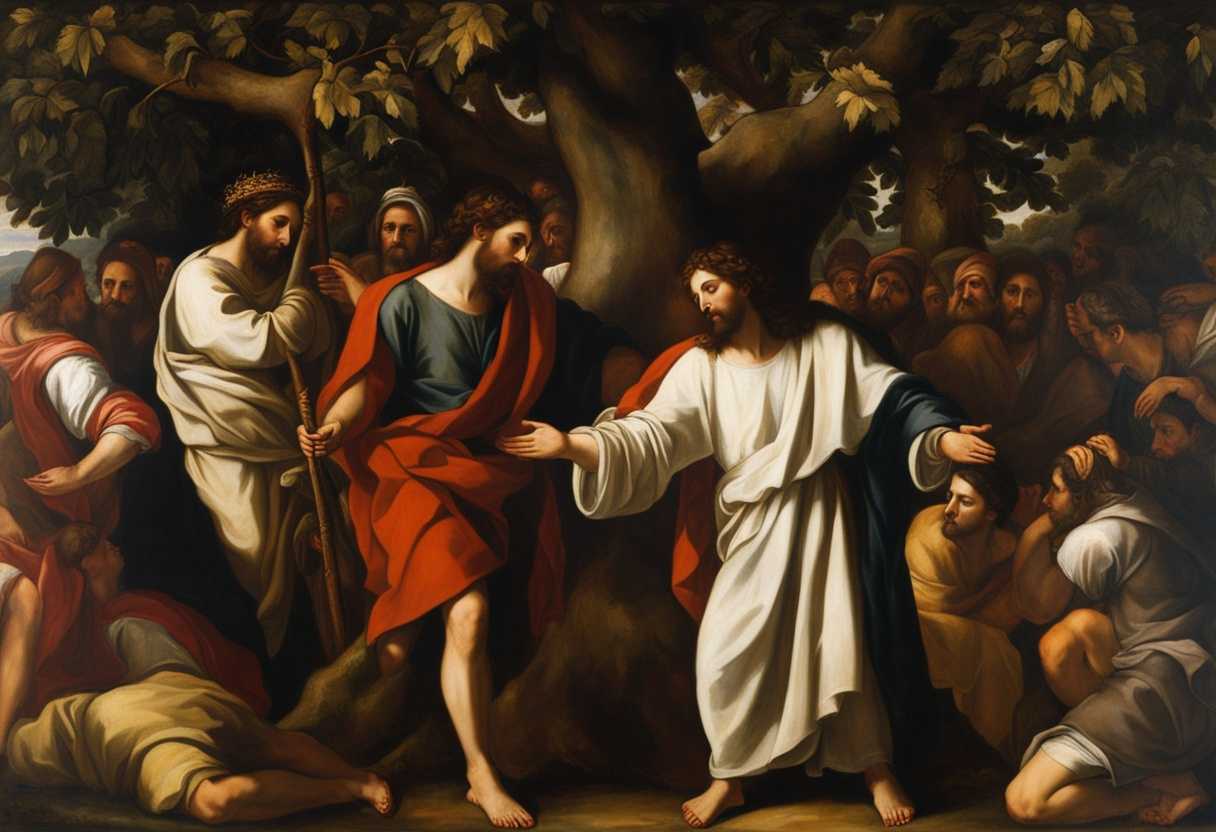
Setting the Scene for Luke 19:1-27
In Luke chapter 19, we find Jesus entering the city of Jericho. As He walks through the bustling streets, a crowd begins to gather around Him, eager to catch a glimpse of the renowned teacher and healer. Among the crowd is a man named Zacchaeus, a chief tax collector who is despised by his fellow Jews for collaborating with the Roman authorities and extorting money from his own people.
Curious to see Jesus, but unable to see over the crowd due to his short stature, Zacchaeus climbs a sycamore-fig tree to get a better view. As Jesus passes by, He looks up and calls out to Zacchaeus by name, surprising the tax collector. Jesus then invites Himself to Zacchaeus’ house, causing a stir among the crowd who are shocked that Jesus would associate with a sinner like Zacchaeus.
The scene is set in the dusty streets of Jericho, with the warm sun casting long shadows as Jesus and Zacchaeus make their way to the tax collector’s home. The air is filled with a mix of curiosity, judgment, and hope as Zacchaeus prepares to host the Son of God in his humble abode. This encounter between Jesus and Zacchaeus serves as a powerful reminder of God’s grace and the transformative power of encountering Jesus in our lives.
What is Luke 19:1-27 about?
Jesus tells a story of a nobleman who goes away to receive kingship and entrusts ten minas to his servants in the Parable of the Ten Minas (Luke 19:11-27). When he returns, he finds that some have faithfully traded and gained more minas, while one servant feared his master and hid the mina, resulting in no gain. This parable teaches us about stewardship, faith, and accountability. How are we using the resources and talents that God has given us? Are we investing them wisely and making a positive impact on the world, or are we squandering them out of fear or negligence?
It is important for us to reflect on this parable and consider how we are stewarding the blessings and opportunities in our lives. Are we faithful and diligent in our responsibilities, or are we held back by fear or insecurity? Just like the servants in the story, we are all entrusted with gifts and resources that should be used for good purposes. The parable reminds us that faithfulness leads to reward, while unfaithfulness results in loss. We should strive to be faithful stewards of all that we have been given, using our talents and resources to cultivate growth, make a positive impact, and ultimately bring glory to God.
Understanding what Luke 19:1-27 really means
In Luke 19:1-27, we encounter two powerful narratives that delve into themes of repentance, stewardship, and the Kingdom of God. The first story unfolds with Jesus’ encounter with Zacchaeus, a tax collector who is considered an outcast in society. Jesus’ deliberate choice to dine at Zacchaeus’ house sends a profound message of inclusivity, showcasing that no one is beyond the reach of God’s grace. This act mirrors Jesus’ mission to seek out the lost and offer them a chance for redemption, as highlighted in Matthew 9:12-13.
Zacchaeus’ immediate response to Jesus’ acceptance is striking; he pledges to give half of his possessions to the poor, demonstrating genuine repentance through tangible actions. This act of restitution echoes the call for fruits in keeping with repentance, as emphasized by John the Baptist in Luke 3:8. It serves as a poignant reminder that true repentance involves a transformation of heart that manifests in deeds, not just words.
Transitioning to the Parable of the Ten Minas, we witness the master entrusting his servants with resources and expecting them to be productive stewards. This narrative echoes the Parable of the Talents in Matthew 25:14-30, emphasizing the importance of using our God-given resources wisely for His glory. Just as the faithful servants are commended for their diligence, 1 Corinthians 4:2 reminds us of the faithfulness required in stewarding what we have been given.
However, the parable also includes a sobering element with the master’s severe judgment on his enemies who rejected his authority. This harsh consequence underscores the gravity of rejecting God’s kingdom, as echoed in John 3:36. It serves as a stark reminder of the eternal consequences of turning away from God’s grace and sovereignty, urging us to heed wise counsel and align our lives with His will.
In conclusion, the stories of Zacchaeus and the Parable of the Ten Minas intertwine to convey profound truths about redemption, stewardship, and accountability. They challenge us to reflect on our own lives, prompting us to seek repentance, utilize our resources wisely, and acknowledge the weight of our decisions in relation to God’s kingdom. These timeless lessons invite us to embrace transformation, live faithfully, and recognize the eternal significance of our choices in light of God’s grace and authority.
How am I using the resources God has given me?
Jesus tells a story about a nobleman who entrusts his servants with minas before going on a journey in the parable of the ten minas. When he returns, he assesses how each servant used the mina they were given. The nobleman commends those who multiplied their minas, while he rebukes the servant who did nothing with his. This parable teaches us the importance of stewarding the resources and opportunities that God has given us.
We can reflect on this parable and examine how we are utilizing the resources God has entrusted to us. Are we wisely investing our time, talents, and finances for His kingdom, or are we neglecting or squandering them? God desires us to be faithful stewards who use our gifts and resources to bring glory to Him and further His kingdom on earth. Let us strive to be like the servants who faithfully multiplied what they were given, rather than like the servant who buried his mina and was complacent.
Application
Dear reader, it’s time to take stock of the unique skills and blessings you’ve been given. Like a savvy entrepreneur in today’s fast-paced world, invest your talents wisely, just like the servants in Luke 19:1-27. Don’t keep your gifts locked away—let them flourish and grow, making a real impact in the world around you. Make choices that echo through eternity. So, how will you choose to make your mark today?

Reverend Michael Johnson is an experienced Church Minister with a profound expertise in spirituality and guidance. With a serene presence and a compassionate heart, he has faithfully served his congregation for over 20 years, leading them on a spiritual journey towards inner peace and enlightenment. Reverend Johnson’s extensive knowledge of religious philosophies and profound understanding of human nature have made him a trusted confidant and mentor to many, as he seamlessly weaves his profound wisdom into life teachings. Reverend Johnson’s calming demeanor and empathetic nature continue to uplift and heal souls, nurturing a sense of unity and tranquility within his community.