
Luke 19:2-8 is about the transformative power of encountering Jesus, which leads to repentance, restitution, and the restoration of relationships.
2 And behold, there was a man named Zacchaeus. He was a chief tax collector and was rich.
3 And he was seeking to see who Jesus was, but on account of the crowd he could not, because he was small in stature.
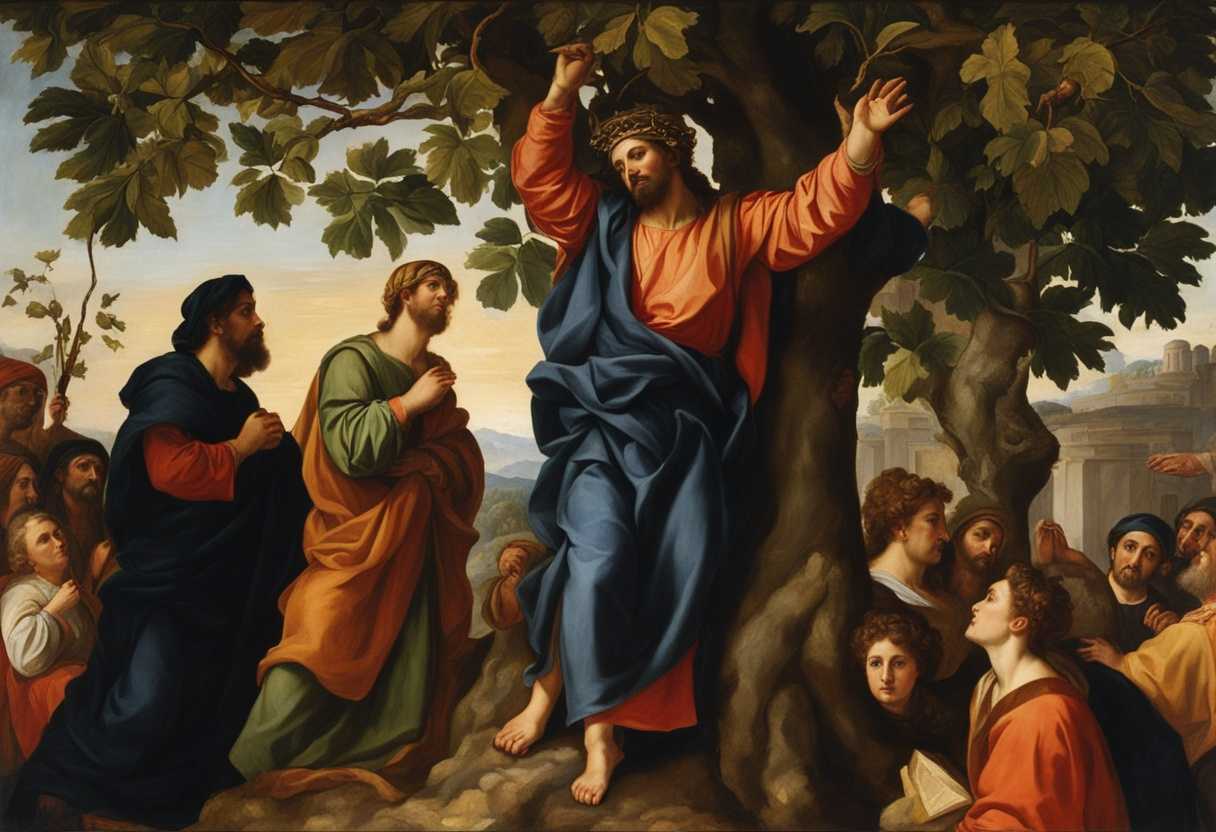
4 So he ran on ahead and climbed up into a sycamore tree to see him, for he was about to pass that way.
5 And when Jesus came to the place, he looked up and said to him, “Zacchaeus, hurry and come down, for I must stay at your house today.”
6 So he hurried and came down and received him joyfully.
7 And when they saw it, they all grumbled, “He has gone in to be the guest of a man who is a sinner.”
8 And Zacchaeus stood and said to the Lord, “Behold, Lord, the half of my goods I give to the poor. And if I have defrauded anyone of anything, I restore it fourfold.”
Setting the Scene for Luke 19:2-8
In Luke chapter 19, we find Jesus entering the city of Jericho. As he walks through the bustling streets, a man named Zacchaeus, a chief tax collector and wealthy individual, becomes curious about Jesus. Being of short stature, Zacchaeus climbs a sycamore-fig tree to get a better view of Jesus as he passes by.
The crowd surrounding Jesus is abuzz with excitement and curiosity, as they have heard of the miracles and teachings he has performed. As Jesus reaches the tree where Zacchaeus is perched, he looks up and calls him by name, surprising Zacchaeus. Jesus then invites himself to Zacchaeus’ home, causing a stir among the crowd who disapprove of Jesus associating with a tax collector, known for their corruption and greed.
Despite the murmurs of disapproval, Zacchaeus joyfully welcomes Jesus into his home, and in the presence of Jesus, he is transformed. Zacchaeus declares his intention to give half of his possessions to the poor and repay four times the amount to anyone he has cheated. This encounter between Jesus and Zacchaeus serves as a powerful example of Jesus’ transformative love and the impact it can have on individuals, regardless of their past actions.
What is Luke 19:2-8 about?
Ah, the story of Zacchaeus is truly one of transformation and redemption. Society saw Zacchaeus as a sinner and outcast because he was a tax collector. However, when he encountered Jesus and experienced His love and forgiveness, Zacchaeus was moved to repentance. He not only acknowledged his wrongdoings but also took concrete actions to make amends. Zacchaeus demonstrated true repentance and a genuine heart change by giving to the poor and restoring what he had taken dishonestly.
This verse reminds us of the power of forgiveness and the transformative impact it can have on a person’s life. It challenges us to reflect on our own actions and attitudes, prompting us to ask ourselves if we are willing to admit our mistakes, seek forgiveness, and make right what we have wronged. Zacchaeus’ story serves as a powerful example of the possibility of change and renewal, showing us that it is never too late to turn our lives around and seek reconciliation with both others and with God.
Understanding what Luke 19:2-8 really means
In the passage from Luke 19:2-8, we witness a remarkable encounter between Jesus and Zacchaeus, a wealthy tax collector in Jericho. Zacchaeus, driven by curiosity and perhaps a deeper spiritual longing, climbs a sycamore tree to catch a glimpse of Jesus passing through the city. The choice of Zacchaeus as a tax collector, a position associated with corruption and sin in that era, adds depth to the narrative, highlighting the societal norms and prejudices prevalent at the time.
Jesus’ direct and personal call to Zacchaeus to come down from the tree and the subsequent invitation to stay at his house signify acceptance and the urgency of salvation. Zacchaeus’ immediate response, where he pledges to give half of his possessions to the poor, showcases his repentance and transformation in the presence of Jesus. This interaction between Jesus and Zacchaeus serves as a powerful illustration of how encountering Christ can lead to profound personal change and a redirection of one’s life towards righteousness.
The passage resonates with other biblical accounts, such as Matthew 9:10-13, where Jesus dines with tax collectors and sinners, emphasizing His mission to call sinners to repentance. Similarly, in Luke 5:27-32, the calling of Levi (Matthew) underscores Jesus’ outreach to those marginalized by society, breaking down social barriers and extending grace to all. The Parable of the Lost Sheep in Luke 15:1-7 further reinforces the theme of God’s joy over one sinner who repents, emphasizing the inclusive nature of God’s love and redemption.
Zacchaeus’ story continues to hold relevance for people today, serving as a reminder of the transformative power of encountering Jesus. It challenges us to reflect on our own lives, prompting us to seek repentance, embrace change, and extend generosity and restitution where needed. The narrative also underscores the importance of inclusivity and acceptance, urging us to break down societal barriers and reach out to those who may be marginalized or in need of love and grace.
To illustrate the enduring impact of Zacchaeus’ story, consider a modern-day scenario where a successful but ethically questionable businessperson attends a community event out of curiosity. Through a message of hope and acceptance, they experience a profound transformation, leading them to redirect their wealth towards charitable causes and adopt ethical business practices. This transformation not only changes their life but also brings about positive ripple effects in the community, echoing the transformative power of encountering Jesus in our lives.
In conclusion, Zacchaeus’ encounter with Jesus serves as a poignant reminder of the transformative power of Christ’s love and acceptance. It challenges us to seek Him earnestly, embrace change, and live out our faith through acts of generosity, justice, and inclusivity. Just as Zacchaeus’ life was changed by encountering Jesus, may we too be inspired to seek transformation and extend grace to those around us, embodying the love and acceptance that Christ exemplified.
How can I demonstrate genuine repentance and transformation?
To demonstrate genuine repentance and transformation, one must first acknowledge and take responsibility for one’s wrongdoings. This involves reflecting on past actions and attitudes, recognizing the harm they may have caused, and feeling remorse for the impact of those actions. Genuine repentance also includes a sincere desire to make amends and seek forgiveness from those who have been affected by our actions.
Transformation comes about when repentance is manifested through a change in behavior and mindset. This involves actively working to rectify past mistakes, striving to live in a way that aligns with one’s values and beliefs, and making a conscious effort to avoid repeating the same harmful patterns. Additionally, true transformation involves a commitment to personal growth and self-improvement, as well as a willingness to learn from past mistakes and strive to be a better person. Demonstrating genuine repentance and transformation ultimately requires a genuine change of heart and a commitment to living a life that reflects this change. It involves humility, self-awareness, and a willingness to take decisive action to repair relationships, make amends, and seek reconciliation with others. One can show true repentance and transformation in the eyes of others and in the eyes of the divine by embodying these qualities and actively working towards personal growth and positive change.
Application
In the hustle and bustle of our modern lives, it’s easy to get caught up in our work and responsibilities, neglecting what truly matters. Let’s take a page out of Zacchaeus’ book and actively seek out Jesus with genuine sincerity and a desire for change. It’s never too late to turn a new leaf and seek forgiveness for our past mistakes. Will you take the leap and embrace a life-changing encounter with Jesus, leaving behind any hesitations or doubts?

Reverend Michael Johnson is an experienced Church Minister with a profound expertise in spirituality and guidance. With a serene presence and a compassionate heart, he has faithfully served his congregation for over 20 years, leading them on a spiritual journey towards inner peace and enlightenment. Reverend Johnson’s extensive knowledge of religious philosophies and profound understanding of human nature have made him a trusted confidant and mentor to many, as he seamlessly weaves his profound wisdom into life teachings. Reverend Johnson’s calming demeanor and empathetic nature continue to uplift and heal souls, nurturing a sense of unity and tranquility within his community.