
Luke 19:22 is about being accountable for the gifts and opportunities given by God and the consequences of neglecting or misusing them.
22 He said to him, ‘I will condemn you with your own words, you wicked servant! You knew that I was a severe man, taking what I did not deposit and reaping what I did not sow.
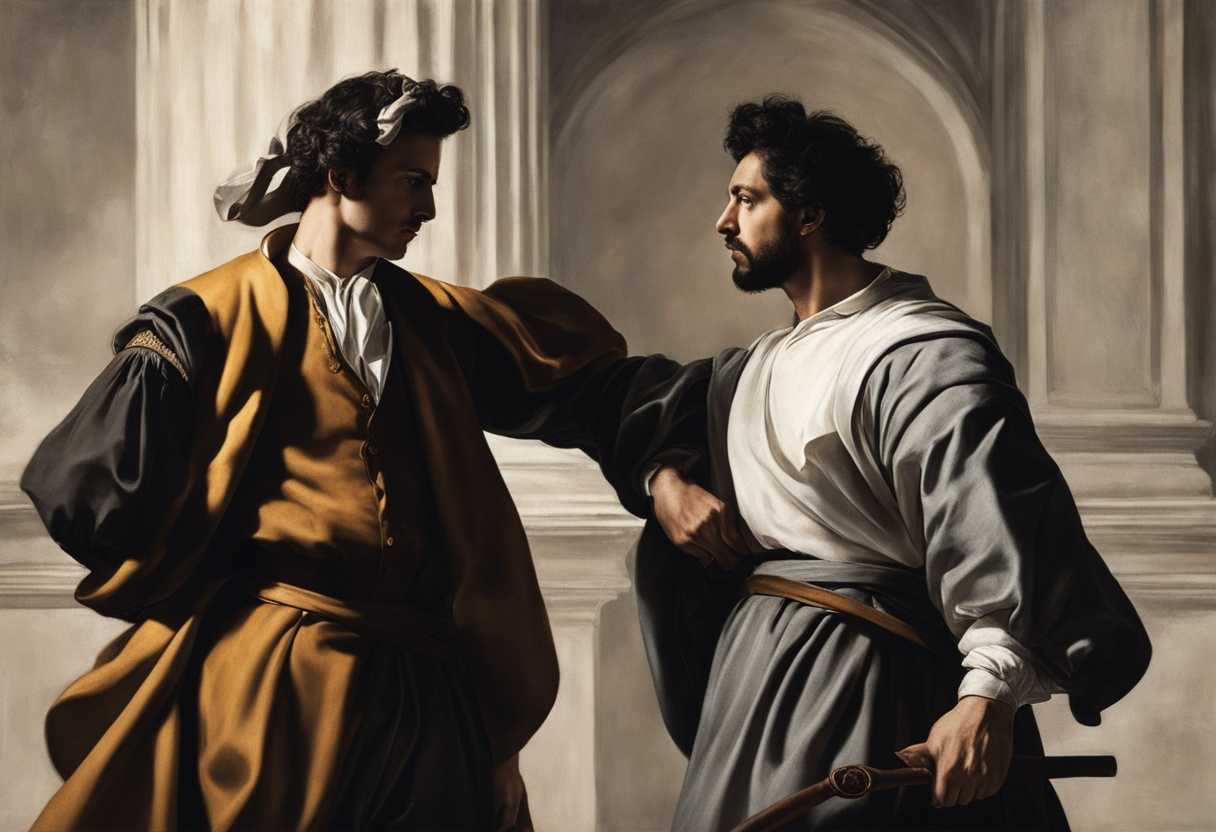
Setting the Scene for Luke 19:22
In Luke chapter 19, we find Jesus telling the parable of the ten minas. The scene is set in Jericho, a city known for its lush vegetation and being a major trade route. Jesus is passing through Jericho and a man named Zacchaeus, a chief tax collector and wealthy but despised by the people, is eager to see Jesus. Being short in stature, Zacchaeus climbs a sycamore-fig tree to get a better view of Jesus as he passes by.
As Jesus walks through the bustling streets of Jericho, a crowd follows him, curious about this man who has been performing miracles and teaching with authority. The crowd includes disciples, Pharisees, and curious onlookers. When Jesus reaches the tree where Zacchaeus is perched, he looks up and calls him by name, surprising Zacchaeus and the crowd. Jesus then invites himself to Zacchaeus’ house, causing a stir among the people who are shocked that Jesus would associate with a tax collector known for his corruption.
The scene is filled with tension and anticipation as Zacchaeus eagerly welcomes Jesus into his home, and the crowd murmurs in disapproval. This encounter sets the stage for a transformative moment in Zacchaeus’ life as he repents and promises to give half of his possessions to the poor and repay anyone he has cheated four times over. Jesus declares that salvation has come to Zacchaeus’ house, highlighting the power of redemption and the transformative impact of encountering Jesus.
What is Luke 19:22 about?
Jesus uses the story in the Parable of the Ten Minas to illustrate the importance of being accountable for the gifts and abilities that God has given us. Just like the servants in the parable were entrusted with minas by their master, we are entrusted with various talents, skills, and resources by God. The way we use these gifts determines our faithfulness in stewardship and our readiness for the kingdom of God.
Imagine if you were given a valuable gift by someone you deeply respect. How would you feel? What would you do with that gift? This parable challenges us to reflect on how we are utilizing the gifts and opportunities that God has blessed us with. Are we nurturing and growing these gifts, or are we burying them out of fear or laziness? The parable reminds us that we are called to be wise and faithful stewards, using our gifts to bring glory to God and further His kingdom. The Parable of the Ten Minas ultimately teaches us that we will be held accountable for how we have used our God-given gifts. It urges us to be diligent, intentional, and faithful in developing and using our talents for the benefit of others and the glory of God. Let us strive to be like the faithful servants in the parable, who wisely invested their minas and were rewarded for their faithfulness. May we all be inspired to live purposefully and responsibly, knowing that our actions have eternal significance.
Understanding what Luke 19:22 really means
The Parable of the Ten Minas in Luke 19:22 presents us with a powerful lesson on stewardship and accountability. In this narrative, a nobleman entrusts his servants with money before embarking on a journey. Upon his return, he assesses how each servant managed the resources they were given. The verse in focus addresses the servant who chose to do nothing with the money, citing fear as the rationale behind his inaction.
“Out of your own mouth I will judge you” is a poignant phrase from the verse, indicating that the servant’s own words and excuses serve as the basis for his judgment. This highlights the principle that our actions and words are ultimately what we are held accountable for. The term “wicked servant” used in the passage denotes the failure of the servant to act responsibly and productively with the resources entrusted to him.
Drawing parallels, the Parable of the Talents in Matthew 25:14-30 conveys a similar message about stewardship and accountability. James 2:17 emphasizes the necessity of active faith accompanied by deeds, while Proverbs 12:24 underscores the value of diligence and the repercussions of laziness.
In the context of contemporary society, this verse resonates with the importance of stewardship and responsibility. It prompts us to reflect on how we utilize the resources, talents, and opportunities bestowed upon us. Whether in our personal endeavors, professional pursuits, or community engagements, we are called to exercise wisdom and productivity in managing what we have been given.
Furthermore, the verse serves as a stark reminder of our accountability for both our actions and inactions. Excuses will not exempt us from the obligation to make the most of the blessings we have received. Just as the servant’s fear and inaction led to his condemnation, our failure to act diligently and responsibly can have consequences.
To illustrate this point, consider a scenario where a young professional is entrusted with a crucial project at work. Instead of taking proactive steps and working diligently, they succumb to procrastination and minimal effort due to fear of failure. When the project inevitably falters, their excuses fall short, and they are judged based on their lack of initiative and commitment. This narrative mirrors the servant’s predicament in the parable, emphasizing the significance of overcoming fear and taking decisive action.
In conclusion, Luke 19:22 challenges us to evaluate how we are utilizing the gifts and opportunities bestowed upon us. Are we actively investing and multiplying our talents like the diligent servants, or are we allowing fear and inaction to hinder our progress like the wicked servant? The imperative is clear – to be proactive, responsible, and faithful stewards in every facet of our lives.
How are we stewarding our God-given resources?
We, as stewards of our God-given resources, must manage and utilize them wisely according to the will of our Creator. This means that we are held accountable for the way we handle the blessings and gifts we have been given. Just like the servant in the parable who was expected to invest the money wisely, we are called to make good use of our time, talents, and treasures for the glory of God and the benefit of others.
It is important for us to remember that everything we have ultimately belongs to God, and we are simply responsible for managing these resources for a time. Our stewardship should reflect a heart that is focused on building God’s kingdom and serving others, rather than on selfish gain or personal ambitions. We demonstrate our love and obedience to God by being faithful and diligent stewards of what we have been given, as He has entrusted us with these blessings in the first place.
Application
Don’t wait around for the next promotion at work or the next big family event to start living a fulfilling life. Take the opportunity now to connect with God and follow His path for your life. Reflect on whether you are truly aligned with your faith and embracing your purpose. Will you answer His call and take decisive steps towards a meaningful and purposeful life that honors Him?

Reverend Michael Johnson is an experienced Church Minister with a profound expertise in spirituality and guidance. With a serene presence and a compassionate heart, he has faithfully served his congregation for over 20 years, leading them on a spiritual journey towards inner peace and enlightenment. Reverend Johnson’s extensive knowledge of religious philosophies and profound understanding of human nature have made him a trusted confidant and mentor to many, as he seamlessly weaves his profound wisdom into life teachings. Reverend Johnson’s calming demeanor and empathetic nature continue to uplift and heal souls, nurturing a sense of unity and tranquility within his community.