
Luke 19:29-38 is about Jesus’ triumphant entry into Jerusalem, fulfilling the prophecy in Zechariah 9:9 and affirming his identity as the long-awaited Messiah.
29 When he drew near to Bethphage and Bethany, at the mount that is called Olivet, he sent two of the disciples,
30 saying, “Go into the village in front of you, where on entering you will find a colt tied, on which no one has ever yet sat. Untie it and bring it here.
31 If anyone asks you, ‘Why are you untying it?’ you shall say this: ‘The Lord has need of it.’
32 So those who were sent went away and found it just as he had told them.
33 And as they were untying the colt, its owners said to them, “Why are you untying the colt?”
34 They said, “The Lord needs it.”
35 And they brought it to Jesus, and throwing their cloaks on the colt, they set Jesus on it.
36 And as he rode along, they spread their cloaks on the road.
37 As he was drawing near—already on the way down the Mount of Olives—the whole multitude of his disciples began to rejoice and praise God with a loud voice for all the mighty works that they had seen,
38 saying, “Blessed is the King who comes in the name of the Lord! Peace in heaven and glory in the highest!”
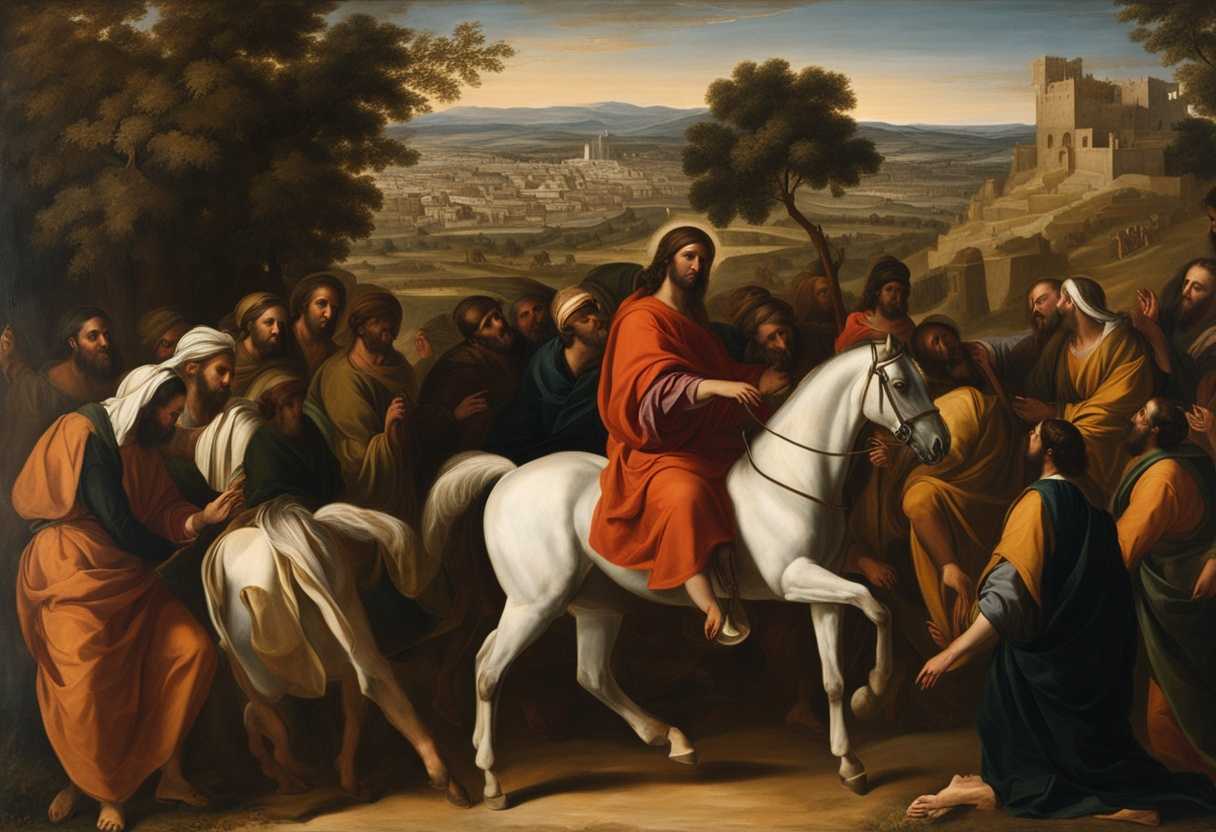
Setting the Scene for Luke 19:29-38
In Luke chapter 19, we find Jesus and his disciples approaching Jerusalem. As they near the city, Jesus instructs two of his disciples to go ahead and find a colt tied up, which no one has ever ridden. The disciples follow Jesus’ directions and find the colt just as Jesus had said. They untie it and bring it to Jesus, laying their cloaks on the colt’s back for Jesus to sit on.
The scene is filled with anticipation and excitement as Jesus prepares to enter Jerusalem. The disciples are filled with awe and wonder at the unfolding events, knowing that something significant is about to happen. The people around them begin to spread their cloaks on the road, while others cut branches from the trees and spread them on the road as well. The atmosphere is charged with a sense of expectation and hope as the crowd begins to shout, “Blessed is the king who comes in the name of the Lord!” The disciples and the crowd are caught up in the moment, recognizing Jesus as the long-awaited Messiah.
What is Luke 19:29-38 about?
Jesus is demonstrating His authority and divinity by instructing His disciples to bring Him a colt for His entry into Jerusalem in this verse. Jesus is showcasing his prophetic knowledge and control over all things by requesting a specific animal and knowing that it would be available for Him to use.
Have you ever thought about the significance of Jesus choosing a colt for his entry into Jerusalem? It is a symbol of humility and peace, as a colt was a young, gentle creature often used by common people. Jesus conveys a message of meekness and accessibility by riding a colt instead of a grand horse, showing that he is the humble servant king who comes in peace.
Furthermore, this event also fulfills the prophecy from the Old Testament in Zechariah 9:9, further solidifying Jesus’ role as the promised Messiah. It is a powerful moment that highlights Jesus’ authority, humility, and fulfillment of prophecy all at once, setting the stage for the events that will follow during His time in Jerusalem.
Understanding what Luke 19:29-38 really means
The passage in Luke 19:29-38 captures the momentous occasion of Jesus’ triumphal entry into Jerusalem, a pivotal event in the Christian narrative. Just before the Passover, with Jerusalem bustling with pilgrims, Jesus instructs His disciples to fetch a colt, fulfilling the prophecy in Zechariah 9:9. This act not only showcases Jesus’ divine knowledge but also symbolizes purity and the sacred nature of His mission, as the colt had never been ridden before.
As Jesus sends His disciples to retrieve the colt, His simple directive, “The Lord needs it,” underscores His authority and the people’s readiness to serve Him. The crowd’s exclamation, “Blessed is the king who comes in the name of the Lord!” acknowledges Jesus as the Messiah and King, echoing the messianic psalm 118:26 and linking Him to Old Testament prophecies. These key phrases highlight the significance of Jesus’ entry and the recognition of His divine role by the people.
The fulfillment of Zechariah’s prophecy in Jesus’ choice to ride on a colt emphasizes His messianic role, while the crowd’s reference to Psalm 118:26 further solidifies Jesus’ divine mission. This passage serves as a poignant reminder for us today to welcome Jesus into our lives, recognizing Him as the fulfillment of God’s promises and trusting in His divine plan. Jesus’ humble mode of transportation on a colt teaches us valuable lessons about true leadership and servanthood, urging us to emulate His humility in our own lives.
To illustrate the profound impact of humility and leadership, consider a small town eagerly awaiting the arrival of a beloved leader. When the leader arrives not in a grand car but on a humble bicycle, the townspeople are initially surprised but soon realize that the leader’s humility endears them even more. This anecdote mirrors Jesus’ entry into Jerusalem, where His choice of a colt over a grand chariot speaks volumes about His character and mission.
In conclusion, Jesus’ triumphal entry into Jerusalem signifies His kingship, humility, and the fulfillment of God’s promises. It beckons us to acknowledge His authority in our lives and to welcome Him with open hearts, mirroring the response of the people in Jerusalem. By delving into the deeper meanings and connections within this passage, we can deepen our relationship with Jesus and live out our faith with unwavering conviction and humility.
What does it mean to truly worship Jesus?
To truly worship Jesus means to acknowledge Him as the Messiah, the Son of God, and the Savior of the world. It involves recognizing His authority, power, and love, and submitting to Him as Lord of our lives. Worshiping Jesus goes beyond mere lip service or outward rituals; it requires a genuine heart connection and a life that reflects His teachings and commands. True worship involves surrendering our will, desires, and ambitions to Jesus, and wholeheartedly following His ways with humility, gratitude, and obedience. The people acknowledge Jesus as the long-awaited King who comes in the name of the Lord in the passage from Luke 19:29-38. They laid down their cloaks and palm branches, symbols of honor and submission, as an act of worship and recognition of His authority. This gesture symbolized their willingness to surrender to Jesus as their King and to worship Him with reverence and joy. Likewise, true worship of Jesus involves offering ourselves as living sacrifices, surrendering our lives to Him in sincere devotion and adoration. It is about honoring Him not only with our words but also with our actions and attitudes, as we strive to live in accordance with His will and bring glory to His name.
Application
Let’s journey to our hearts, open the gates for Jesus just like the crowd opened their arms for him. Have we witnessed His wonders and are we ready to acknowledge His greatness? Will we join the chorus of praise for the miracles He has bestowed upon us? Let’s not just read the story, let it ignite a flame within us, urging us to welcome Jesus with open arms. Will you heed this profound call with a gratitude-filled heart?

Reverend Michael Johnson is an experienced Church Minister with a profound expertise in spirituality and guidance. With a serene presence and a compassionate heart, he has faithfully served his congregation for over 20 years, leading them on a spiritual journey towards inner peace and enlightenment. Reverend Johnson’s extensive knowledge of religious philosophies and profound understanding of human nature have made him a trusted confidant and mentor to many, as he seamlessly weaves his profound wisdom into life teachings. Reverend Johnson’s calming demeanor and empathetic nature continue to uplift and heal souls, nurturing a sense of unity and tranquility within his community.