
Luke 19:29-40 is about Jesus’ triumphal entry into Jerusalem, symbolizing his fulfillment of Old Testament prophecies as the long-awaited Messiah and King.
29 When he drew near to Bethphage and Bethany, at the mount that is called Olivet, he sent two of the disciples,
30 saying, “Go into the village in front of you, where on entering you will find a colt tied, on which no one has ever yet sat. Untie it and bring it here.
31 If anyone asks you, ‘Why are you untying it?’ you shall say this: ‘The Lord has need of it.’
32 So those who were sent went away and found it just as he had told them.
33 And as they were untying the colt, its owners said to them, “Why are you untying the colt?”
34 They said, “The Lord needs it.”
35 And they brought it to Jesus, and throwing their cloaks on the colt, they set Jesus on it.
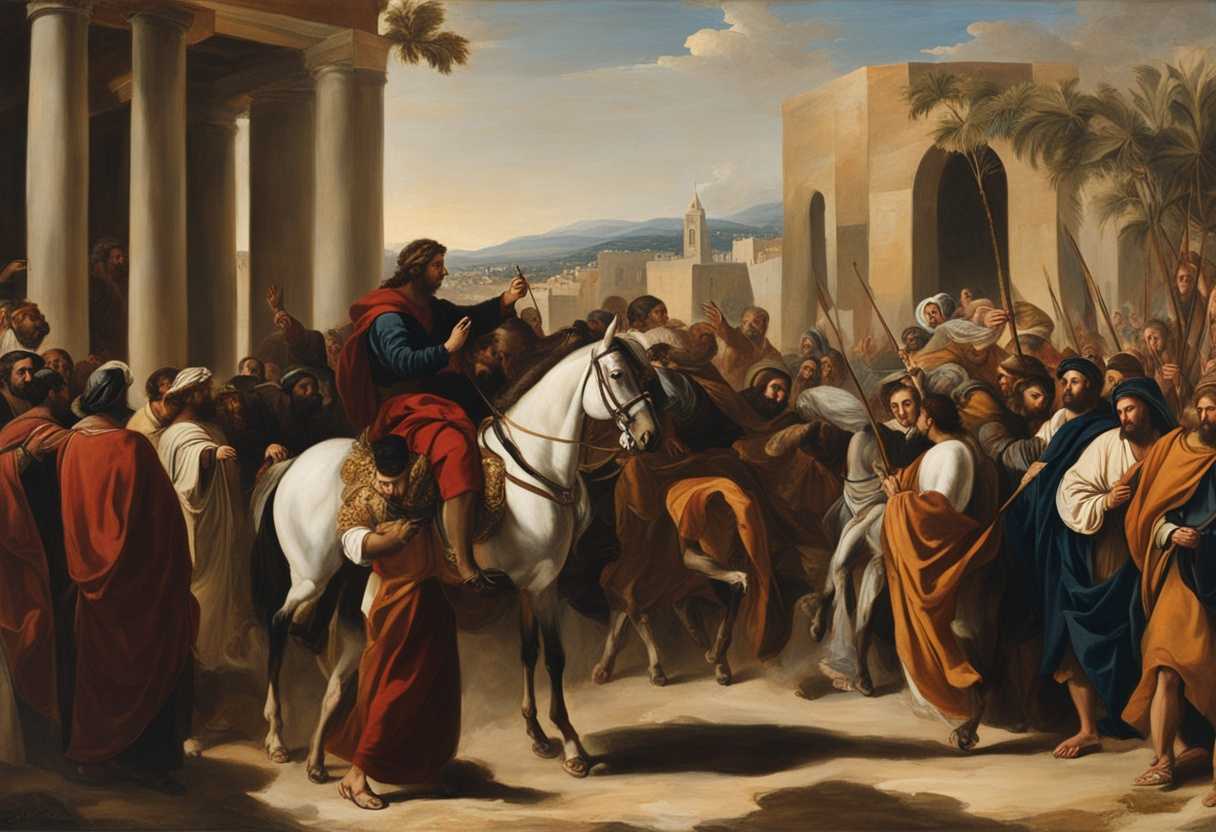
36 And as he rode along, they spread their cloaks on the road.
37 As he was drawing near—already on the way down the Mount of Olives—the whole multitude of his disciples began to rejoice and praise God with a loud voice for all the mighty works that they had seen,
38 saying, “Blessed is the King who comes in the name of the Lord! Peace in heaven and glory in the highest!”
39 And some of the Pharisees in the crowd said to him, “Teacher, rebuke your disciples.”
40 He answered, “I tell you, if these were silent, the very stones would cry out.”
Setting the Scene for Luke 19:29-40
In Luke chapter 19, we find Jesus and his disciples approaching Jerusalem. As they near the city, Jesus instructs two of his disciples to go ahead and find a colt tied up, which no one has ever ridden. He tells them that if anyone asks why they are untying it, they should say, “The Lord needs it.” The disciples follow Jesus’ instructions and find the colt just as he had described.
The disciples bring the colt to Jesus, and they lay their cloaks on it for him to sit on. As they continue on their journey, a large crowd begins to gather, spreading their cloaks on the road and waving palm branches in the air. The people are filled with joy and excitement, shouting praises to God for the miracles they have seen Jesus perform. The atmosphere is charged with anticipation and celebration as Jesus rides into Jerusalem on the colt, fulfilling the prophecy of Zechariah 9:9. Among the crowd are also Pharisees and religious leaders who are not pleased with the commotion and the people’s declarations of Jesus as the Messiah. They ask Jesus to rebuke his disciples, but Jesus responds that if they were silent, even the stones would cry out in praise. This scene sets the stage for the events that will unfold in the days to come, leading up to Jesus’ crucifixion and resurrection.
What is Luke 19:29-40 about?
This verse captures a profound moment in the life of Jesus, where he enters Jerusalem riding on a donkey. The act of riding a donkey was symbolic as it fulfilled the prophecy from the Old Testament that the Messiah would enter Jerusalem in such a way. It signified Jesus’s humility and kingship, contrasting the image of a conquering military leader on a horse. The crowds recognized this significance and hailed Jesus as their King, demonstrating their belief in him as the long-awaited Savior.
Have you ever thought about the powerful symbolism behind Jesus riding a donkey into Jerusalem? It’s incredible to see how every detail of his life was intricately connected to fulfilling prophecies and demonstrating important truths. Imagine being in the midst of that crowd, witnessing the humility and majesty of Jesus as he rode into the city. This moment serves as a reminder of the profound depth of Jesus’s mission and the significance of his role as the King of kings.
Understanding what Luke 19:29-40 really means
The passage in Luke 19:29-40 captures a pivotal moment in Jesus’ ministry – His triumphal entry into Jerusalem. Picture this: Jesus, aware of His divine mission, instructs His disciples to fetch a colt, fulfilling the prophecy of Zechariah 9:9. The colt, never ridden, symbolizes purity and a new beginning, reflecting Jesus’ role as the Messiah. As Jesus enters Jerusalem on the colt, the crowd exclaims, “Blessed is the king who comes in the name of the Lord!” This declaration acknowledges Jesus as the long-awaited Messiah and King, echoing the words of Psalm 118:26.
The phrases in this passage hold profound meanings. When Jesus tells His disciples, “The Lord needs it,” He asserts His authority and the divine purpose behind His actions. The crowd’s proclamation of “Peace in heaven and glory in the highest!” not only celebrates Jesus’ arrival but also connects back to the angels’ message at His birth in Luke 2:14, emphasizing themes of peace and divine glory throughout His ministry.
The fulfillment of prophecies in Zechariah 9:9 and the echoes of Psalm 118:26 emphasize Jesus’ messianic role and the recognition of His kingship. These passages link Jesus to the anticipated deliverer, reinforcing the continuity of God’s plan throughout history. The consistent themes of peace and glory from His birth to His entry into Jerusalem underscore the divine nature of Jesus’ mission and the fulfillment of God’s promises.
In our contemporary context, this passage challenges us to reflect on the qualities of true leadership. Jesus’ humble entry on a donkey amidst a crowd expecting a triumphant king serves as a poignant reminder of the value of humility and service. Imagine a modern-day leader choosing to walk among the people, engaging personally, embodying humility and approachability. Such actions inspire admiration and respect, much like Jesus’ entry into Jerusalem.
Personal anecdotes further illustrate the impact of humility and service. A friend’s choice to serve and clean up at a community event instead of seeking the spotlight mirrors Jesus’ humility. These acts leave lasting impressions, reminding us of the power of humble service. As we contemplate this passage, we are called to acknowledge Jesus’ kingship in our lives, embracing humility and service as He did. Let us reflect on the significance of Jesus’ entry into Jerusalem, recognizing His lordship and the enduring lessons of humility and divine purpose it conveys.
Do I truly recognize and honor Jesus as King?
Truly recognizing and honoring Jesus as King involves celebrating His presence and proclaiming His glory when reflecting on the passage from Luke 19:29-40. We are called to acknowledge His Kingship with reverence and exaltation, just as the people in the passage laid their cloaks on the road and joyfully praised Him with shouts of “Hosanna.” Recognizing Jesus as King means acknowledging His sovereignty over our lives and submitting ourselves to His authority.
It also entails a heartfelt acknowledgment of Jesus’ divine nature and a willingness to follow Him faithfully. We are called to walk in His ways, obey His commandments, and spread His message of love and salvation to others, just as the crowd in the passage followed Jesus with enthusiasm and adoration. Truly recognizing and honoring Jesus as King requires a personal transformation of heart and a commitment to live out His teachings in our daily lives. May we echo the praises of the crowd in the passage and declare with joy that Jesus is our King and Savior.
Application
Embrace the spirit of jubilation and devotion as Jesus enters your heart like a victorious leader. Lay down your doubts and fears, welcoming Him with open arms. Let your faith shine brightly, like a beacon guiding you through the challenges of life. Will you join the chorus of believers, honoring Jesus as your eternal King?

Reverend Michael Johnson is an experienced Church Minister with a profound expertise in spirituality and guidance. With a serene presence and a compassionate heart, he has faithfully served his congregation for over 20 years, leading them on a spiritual journey towards inner peace and enlightenment. Reverend Johnson’s extensive knowledge of religious philosophies and profound understanding of human nature have made him a trusted confidant and mentor to many, as he seamlessly weaves his profound wisdom into life teachings. Reverend Johnson’s calming demeanor and empathetic nature continue to uplift and heal souls, nurturing a sense of unity and tranquility within his community.