
Luke 19:29-44 is about Jesus’ triumphal entry into Jerusalem, signifying the fulfillment of prophetic scriptures and highlighting the missed opportunity for recognizing the coming of the Messiah.
29 When he drew near to Bethphage and Bethany, at the mount that is called Olivet, he sent two of the disciples,
30 saying, “Go into the village in front of you, where on entering you will find a colt tied, on which no one has ever yet sat. Untie it and bring it here.
31 If anyone asks you, ‘Why are you untying it?’ you shall say this: ‘The Lord has need of it.’
32 So those who were sent went away and found it just as he had told them.
33 And as they were untying the colt, its owners said to them, “Why are you untying the colt?”
34 They said, “The Lord needs it.”
35 And they brought it to Jesus, and throwing their cloaks on the colt, they set Jesus on it.
36 And as he rode along, they spread their cloaks on the road.
37 As he was drawing near—already on the way down the Mount of Olives—the whole multitude of his disciples began to rejoice and praise God with a loud voice for all the mighty works that they had seen,
38 saying, “Blessed is the King who comes in the name of the Lord! Peace in heaven and glory in the highest!”
39 And some of the Pharisees in the crowd said to him, “Teacher, rebuke your disciples.”
40 He answered, “I tell you, if these were silent, the very stones would cry out.”
41 And when he drew near and saw the city, he wept over it,
42 saying, “Would that you, even you, had known on this day the things that make for peace! But now they are hidden from your eyes.
43 For the days will come upon you, when your enemies will set up a barricade around you and surround you and hem you in on every side.
44 and tear you down to the ground, you and your children within you. And they will not leave one stone upon another in you, because you did not know the time of your visitation.”
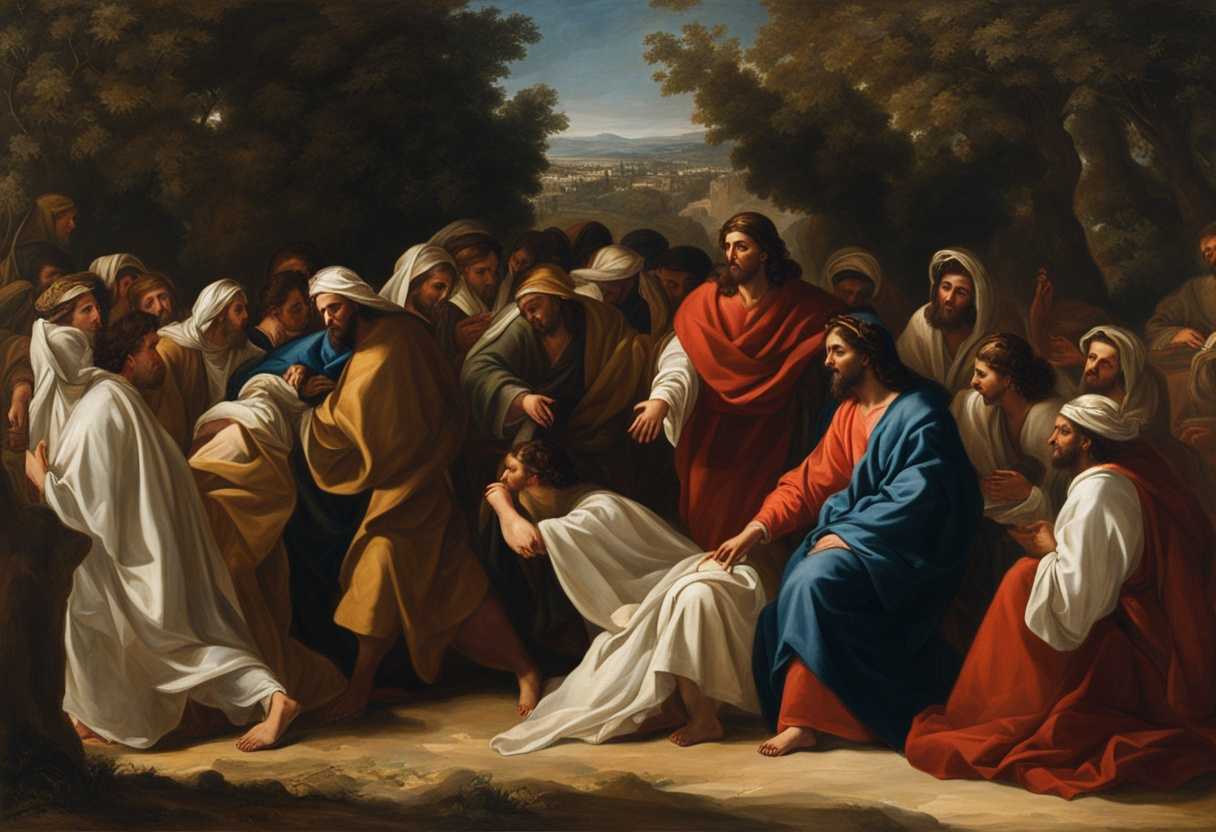
Setting the Scene for Luke 19:29-44
In Luke chapter 19, we find Jesus and his disciples approaching Jerusalem. As they near the city, Jesus instructs two of his disciples to go ahead and find a colt tied up, which no one has ever ridden. He tells them that if anyone asks why they are untying it, they should say, “The Lord needs it.” The disciples follow Jesus’ instructions and find the colt just as he had described. They bring it to Jesus, and he mounts the colt, preparing to enter Jerusalem.
The scene is filled with excitement and anticipation as Jesus, riding on the colt, is surrounded by a crowd of his disciples and followers. They begin to spread their cloaks on the road ahead of him, while others cut branches from the trees and spread them on the road. The atmosphere is charged with a sense of expectation and celebration as the people recognize Jesus as their long-awaited Messiah, the one who comes in the name of the Lord.
As they approach Jerusalem, the whole multitude of disciples begins to praise God joyfully with a loud voice for all the deeds of power that they had seen. The Pharisees in the crowd express their disapproval, asking Jesus to rebuke his disciples for their exuberant praise. Jesus responds by saying that if they were silent, the stones would shout out. This moment marks the triumphal entry of Jesus into Jerusalem, a significant event that foreshadows the events to come in the days ahead.
What is Luke 19:29-44 about?
Jesus’ entrance into Jerusalem on a donkey carries significant symbolism in this verse. A donkey was traditionally seen as a humble and peaceful mode of transportation, in contrast to a war horse, which symbolized power and aggression. Jesus was demonstrating his humility and peaceful nature by entering on a donkey, revealing himself as a servant rather than a conquering king. This act also fulfilled a prophecy from the Old Testament, further affirming Jesus’ identity as the promised Messiah.
Furthermore, Jesus weeping over the city of Jerusalem shows his deep compassion and sorrow for the people. He foresaw the destruction and suffering that would come upon Jerusalem due to their rejection of him and their continued disobedience. His tears reflect his heart of love and his desire for the people to turn towards him and find salvation. It is a poignant moment that highlights Jesus’ humanity and his genuine concern for the well-being of others, even in the face of their rejection and impending judgment.
Reflecting on this verse, we are reminded of Jesus’ humility, compassion, and prophetic insight. It challenges us to consider our own attitudes towards power, humility, and the consequences of our choices. How do we respond to Jesus’ invitation to follow him in humility and peace? Are we moved with compassion for those who are lost and in need of redemption? This verse invites us to ponder these questions and to emulate Jesus’ example of humility, love, and compassion in our own lives.
Understanding what Luke 19:29-44 really means
The passage in Luke 19:29-44 recounts the triumphant entry of Jesus into Jerusalem, where He is welcomed with jubilation by the crowds. It sets the stage for a poignant moment where Jesus weeps over the city, foreseeing its impending destruction due to the people’s failure to recognize Him as the long-awaited Messiah. This scene is rich in symbolism and significance, shedding light on Jesus’ identity and mission.
One key phrase in this passage is when Jesus instructs His disciples to find a colt for Him to ride into Jerusalem, fulfilling the prophecy in Zechariah 9:9 of the Messiah coming humbly on a donkey. This act underscores Jesus’ fulfillment of Old Testament prophecies, affirming His role as the promised Savior. The crowd’s proclamation of “Blessed is the king who comes in the name of the Lord!” echoes Psalm 118:26, acknowledging Jesus as the rightful King sent by God.
The statement “If they keep quiet, the stones will cry out” emphasizes the inevitability of Jesus’ recognition as the Messiah. It conveys the idea that all creation recognizes and responds to the presence of the Son of God. Furthermore, Jesus’ tears over Jerusalem reveal His deep compassion and sorrow for the city’s inhabitants, knowing the tragic consequences of their spiritual blindness.
This passage resonates with contemporary audiences by prompting reflection on several key themes. Firstly, it challenges us to acknowledge Jesus’ kingship in our lives, just as the people of Jerusalem had the opportunity to do. Secondly, it serves as a reminder of the faithfulness of God’s Word and the fulfillment of His promises through Jesus. Lastly, Jesus’ compassion for the lost inspires us to cultivate a heart of empathy towards those who have yet to encounter Him.
In a modern context, envision a community preparing for the arrival of a revered leader, with varying reactions ranging from excitement to indifference or hostility. This scenario mirrors the diverse responses to Jesus today, urging us to share His love with those who have not yet embraced Him. Like Jesus weeping over Jerusalem, we are called to demonstrate genuine concern for the spiritual well-being of others.
Practical applications of this passage include introspection on our recognition of Jesus as King, evangelistic efforts to share the Gospel with others, and finding hope in the fulfillment of God’s promises. By reflecting on our response to Jesus, embodying His compassion for the lost, and trusting in His prophetic assurances, we can deepen our faith and actively participate in His redemptive work in the world.
How can we recognize and respond to God’s presence?
One way we can recognize and respond to God’s presence is by being attentive to our surroundings and the events happening in our lives. When we are open to seeing the signs and listening to the messages God may be sending our way, we can gain a deeper understanding of His presence in our lives. It is important to be aware of the ways in which God speaks to us, whether it be through Scripture, prayer, the people we encounter, or the experiences we have. Jesus is entering Jerusalem in this verse, and the people are celebrating His arrival. They recognize Him as the long-awaited Messiah and respond by laying down their cloaks and palm branches before Him. We can recognize God’s presence in our lives by acknowledging His sovereignty and surrendering ourselves to Him. We can respond to His presence with humility, gratitude, and reverence by welcoming Him into our hearts and praising Him in our actions.
Application
Just like a leader humbly enters a new venture, let us welcome Jesus into our daily lives, embracing His teachings with open arms. Let His compassion ignite a fire within us to serve others with kindness, just like how we strive to excel in our work and care for our families. Let’s actively share His love and mercy with those around us, embodying His message in all we do. Will you seize this opportunity to make a difference in the world today?

Reverend Michael Johnson is an experienced Church Minister with a profound expertise in spirituality and guidance. With a serene presence and a compassionate heart, he has faithfully served his congregation for over 20 years, leading them on a spiritual journey towards inner peace and enlightenment. Reverend Johnson’s extensive knowledge of religious philosophies and profound understanding of human nature have made him a trusted confidant and mentor to many, as he seamlessly weaves his profound wisdom into life teachings. Reverend Johnson’s calming demeanor and empathetic nature continue to uplift and heal souls, nurturing a sense of unity and tranquility within his community.