
Luke 19:36-40 is about the triumphal entry of Jesus into Jerusalem where the multitudes praised Him as the King who brings peace, and even though some Pharisees told Jesus to rebuke His disciples, Jesus stated that if they were silent, the stones would cry out, emphasizing the inevitability of acknowledging Jesus as Lord and King.
36 And as he rode along, they spread their cloaks on the road.
37 As he was drawing near—already on the way down the Mount of Olives—the whole multitude of his disciples began to rejoice and praise God with a loud voice for all the mighty works that they had seen,
38 saying, “Blessed is the King who comes in the name of the Lord! Peace in heaven and glory in the highest!”
39 And some of the Pharisees in the crowd said to him, “Teacher, rebuke your disciples.”
40 He answered, “I tell you, if these were silent, the very stones would cry out.”
Setting the Scene for Luke 19:36-40
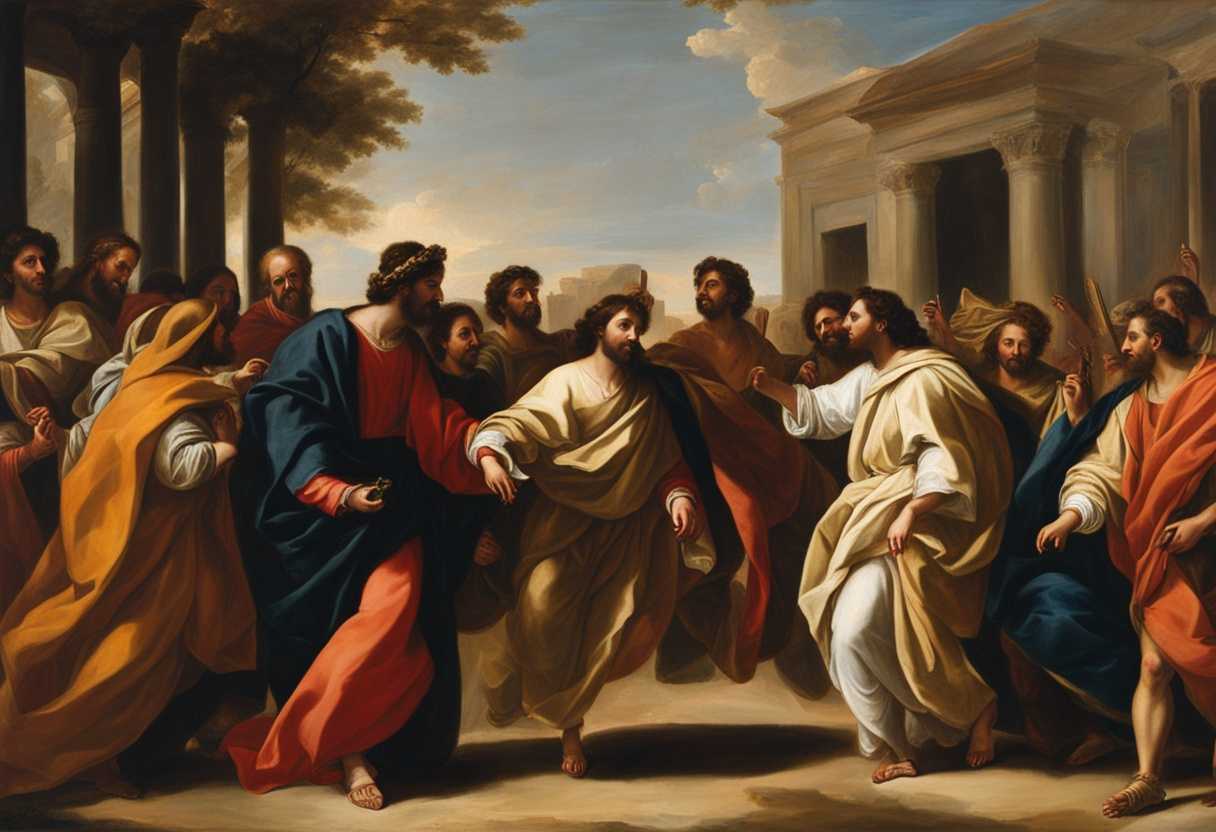
In Luke chapter 19, we find Jesus nearing Jerusalem, riding on a donkey as he approaches the city. A crowd of his disciples and followers are with him, filled with excitement and joy as they witness this significant moment. The atmosphere is charged with anticipation as they believe Jesus is the long-awaited Messiah who will bring salvation to Israel.
Among the crowd are people who have witnessed Jesus perform miracles, heal the sick, and preach with authority. They have seen his compassion and love for the marginalized and downtrodden. As they spread their cloaks on the road and wave palm branches, they shout, “Blessed is the king who comes in the name of the Lord!” The scene is one of jubilation and reverence, with the people acknowledging Jesus as their King and Savior.
The setting is a dusty road leading into Jerusalem, lined with palm trees and bustling with activity as pilgrims gather for the upcoming Passover festival. The sun is shining brightly, casting a warm glow on the scene unfolding before them. Jesus, humble yet powerful, rides on the donkey, embodying the prophecy of the coming Messiah. The disciples and followers around him are caught up in the moment, their faith and hope in Jesus shining through as they proclaim his glory for all to hear.
What is Luke 19:36-40 about?
This verse captures a powerful moment in Jesus’ life – his triumphal entry into Jerusalem, riding on a donkey as crowds of people praised and honored him. The Pharisees, who were religious leaders at the time, were critical of the disciples for praising Jesus, showing their disbelief and lack of faith. Jesus’ response that even the stones would cry out if the people did not praise him highlights the significance of this moment and the inevitability of the praise and recognition due to him. This verse reminds us of the divinity of Jesus and the importance of acknowledging and honoring him for who he is as we reflect on it. It challenges us to consider our own beliefs and attitudes towards Jesus – are we willing to praise and honor him wholeheartedly, or do we hold back out of fear or doubt? Jesus’ statement about the stones crying out serves as a powerful reminder that all of creation recognizes and acknowledges his glory, and we are called to do the same with reverence and humility.
Understanding what Luke 19:36-40 really means
The passage in Luke 19:36-40 captures the momentous occasion of Jesus’ triumphal entry into Jerusalem, where He is greeted with exuberant joy and celebration by His followers. This event fulfills the prophecy in Zechariah 9:9, depicting a humble king riding on a donkey, symbolizing Jesus’ humility and kingship. As Jesus proceeded, people laid their cloaks on the road, a gesture of honor and respect, signifying their recognition of Him as a king worthy of reverence.
The crowd of disciples erupted in praise, acknowledging God for the miracles they had witnessed, underscoring Jesus’ divine power and the gratitude of the people for His works. Their shouts of “Blessed is the king who comes in the name of the Lord!” echo Psalm 118:26, affirming Jesus as the long-awaited Messiah. The proclamation of “Peace in heaven and glory in the highest!” harks back to the angels’ announcement at Jesus’ birth in Luke 2:14, emphasizing the peace and glory He brings to humanity.
However, amidst the jubilation, some Pharisees objected, asking Jesus to silence His disciples. This opposition from religious leaders highlights the resistance Jesus faced from those who failed to acknowledge His authority. Jesus’ response, “if they keep quiet, the stones will cry out,” underscores the inevitability of His praise and the recognition of His divine nature by all creation. This interaction serves as a poignant reminder that even in the face of opposition, the truth and glory of Jesus will prevail.
The relevance of this passage to people today is profound. It prompts us to reflect on the importance of honoring and recognizing Jesus in our lives, openly expressing gratitude for the blessings and miracles we experience. Just as the disciples praised Jesus despite opposition, we are called to boldly proclaim His kingship and goodness, knowing that His truth transcends all challenges. The scene of Jesus’ triumphant entry into Jerusalem serves as a timeless reminder of His sovereignty and the uncontainable joy He brings to those who acknowledge Him.
To illustrate this point further, envision a small town eagerly anticipating the arrival of a beloved leader. The townspeople, filled with gratitude and excitement, lay out a red carpet and cheer as the leader approaches. Despite dissenting voices, the overwhelming joy and recognition from the majority cannot be stifled. This mirrors the scene of Jesus’ entry into Jerusalem, emphasizing the universal call to honor and praise Him, regardless of opposition.
In conclusion, the triumphal entry of Jesus into Jerusalem encapsulates His kingship and the unparalleled joy He brings to those who embrace Him. It urges us to vocalize our praise and stand firm in our faith, knowing that the truth of Jesus’ divine nature will always shine brightly, even in the face of adversity.
Are we intentionally and joyfully praising God daily?
The people joyfully praise God as Jesus enters Jerusalem in Luke 19:36-40. This passage serves as a reminder for us to intentionally and joyfully praise God daily. Just like the crowd in the passage, we should celebrate God’s goodness and faithfulness in our lives with a thankful heart.
Our praise and worship should not be limited to certain occasions or situations but should be a regular part of our daily lives. We acknowledge His sovereignty over our lives and express our gratitude for His blessings by praising God daily. This act of praise also strengthens our faith and reminds us of the power and greatness of our God. The people in the passage enthusiastically praised God without reservation. May we lift our voices in worship, give thanks for His goodness, and celebrate His faithfulness each day. Praising God daily with intention and joy will fill our hearts with joy, refresh our spirits, and deepen our relationship with Him.
Application
Embrace the call to lift your voice like a symphony in the bustling orchestra of life. Show up for Jesus, just like you do for your loved ones and your obligations at work. Let every action and word be a tribute, shining His light in the busy world. Will you heed the call to honor Him with all your being and ignite a flame of worship within you?

Reverend Michael Johnson is an experienced Church Minister with a profound expertise in spirituality and guidance. With a serene presence and a compassionate heart, he has faithfully served his congregation for over 20 years, leading them on a spiritual journey towards inner peace and enlightenment. Reverend Johnson’s extensive knowledge of religious philosophies and profound understanding of human nature have made him a trusted confidant and mentor to many, as he seamlessly weaves his profound wisdom into life teachings. Reverend Johnson’s calming demeanor and empathetic nature continue to uplift and heal souls, nurturing a sense of unity and tranquility within his community.