
Luke 19:37-38 is about Jesus’ triumphal entry into Jerusalem, where the crowd joyfully praises him as the coming King, fulfilling prophecies of the Messiah.
37 As he was drawing near—already on the way down the Mount of Olives—the whole multitude of his disciples began to rejoice and praise God with a loud voice for all the mighty works that they had seen,
38 saying, “Blessed is the King who comes in the name of the Lord! Peace in heaven and glory in the highest!”
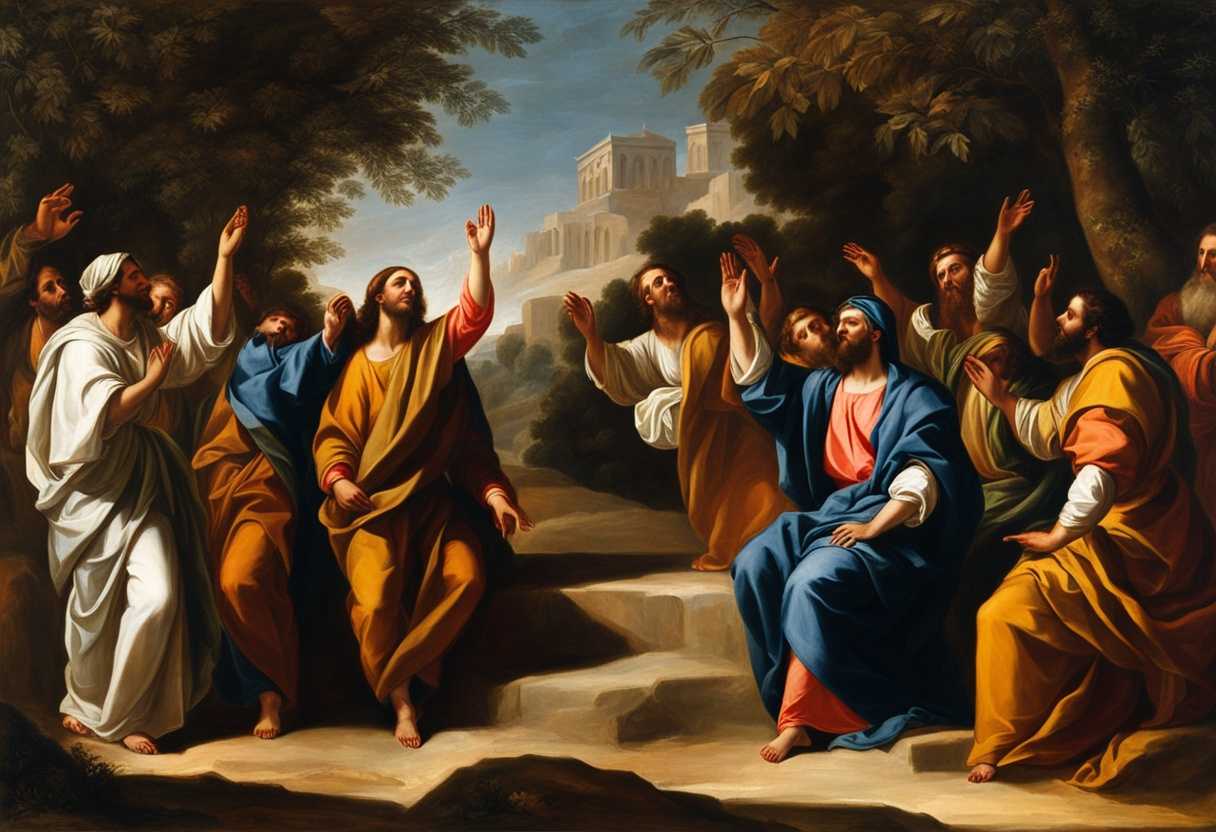
Setting the Scene for Luke 19:37-38
In Luke chapter 19, we find Jesus nearing Jerusalem, riding on a donkey as he approaches the city. A crowd of disciples and followers accompany him on this journey, spreading their cloaks on the road before him. The atmosphere is charged with excitement and anticipation as they believe Jesus to be the long-awaited Messiah.
Among the crowd are the twelve disciples, including Peter, James, and John, who have been with Jesus throughout his ministry. They have witnessed his miracles, heard his teachings, and now find themselves caught up in the fervor of the moment as they enter Jerusalem with their beloved teacher. The city is bustling with activity as people gather for the Passover celebration, adding to the energy and anticipation of the scene.
As Jesus rides into Jerusalem, the crowd begins to shout praises, declaring, “Blessed is the king who comes in the name of the Lord!” The disciples are swept up in the emotion of the moment, joining in the jubilant cries of the crowd. The tension is palpable as they sense that something significant is about to happen, unaware of the events that will soon unfold in the days to come.
What is Luke 19:37-38 about?
This powerful scene captures the essence of Jesus’ humble and triumphant entry into Jerusalem. Riding on a donkey was a symbol of peace and humility, contrasting the usual image of a conquering king on a horse. Jesus was making a statement about his mission on Earth as a bringer of peace and salvation rather than a traditional ruler or warrior by choosing this mode of transportation. The crowds welcoming him with praises and blessings recognized him as the promised Messiah, acknowledging his divine authority and kingship.
This verse holds deep significance by foreshadowing Jesus’ ultimate sacrifice on the cross for humanity’s salvation. It prompts believers to reflect on the humility and love embodied by Jesus, as well as the importance of recognizing and accepting his role as the King of Kings in their lives. Why did Jesus choose a donkey as his mode of entry? What does it teach us about humility and service? How can we honor Jesus as our King in our daily lives? Reflecting on these questions can deepen our understanding of this verse and its profound implications for our faith journey.
Understanding what Luke 19:37-38 really means
The scene depicted in Luke 19:37-38 captures the essence of Jesus’ triumphal entry into Jerusalem, a momentous event celebrated on Palm Sunday. As Jesus approaches the city, a large crowd of His disciples erupts in exuberant praise, joyfully acknowledging His divine authority and the miraculous works they had witnessed. The collective worship of the disciples underscores their communal recognition of Jesus as the promised Messiah, the King who comes in the name of the Lord.
The disciples’ proclamation of “Blessed is the king who comes in the name of the Lord!” echoes the prophetic words of Psalm 118:26, affirming Jesus’ messianic role and royal identity. Their declaration of “Peace in heaven and glory in the highest!” harkens back to the angelic announcement at Jesus’ birth, linking His arrival in Jerusalem to the divine peace and glory proclaimed at His nativity. These phrases not only honor Jesus as King but also highlight the continuity of God’s redemptive plan from the Old Testament prophecies to the fulfillment in Christ.
The relevance of these verses extends to believers today, calling us to recognize Jesus’ kingship in our lives and to worship Him with the same joy and gratitude displayed by the disciples. While we may not witness the same miracles as those who walked with Jesus, we can still see God’s hand at work in our lives and the lives of others, prompting us to offer heartfelt praise and thanksgiving. Just as the disciples’ praise was rooted in their firsthand experiences of Jesus’ power and grace, our worship should flow from a deep awareness of God’s presence and provision in our daily lives.
Consider a community celebrating a significant blessing, such as the recovery of a loved one from illness. The shared joy and gratitude among family and friends mirror the disciples’ praise, as they gather to recount the ways they have seen God’s faithfulness and intervention. Their collective worship becomes a powerful testimony of faith and thanksgiving, illustrating the impact of recognizing and celebrating God’s work in our midst.
In conclusion, Luke 19:37-38 invites us to join in the disciples’ joyful worship, acknowledging Jesus as our King and Savior. By embracing a posture of gratitude and praise, we not only honor God but also strengthen our faith and bear witness to His transformative power in our lives. May we, like the disciples, proclaim with exuberance and conviction the blessedness of our King who comes in the name of the Lord, bringing peace and glory to all who receive Him.
How can we truly recognize and acknowledge Jesus’ presence?
One way to truly recognize and acknowledge Jesus’ presence is by actively participating in praising and worshipping Him. The people in this particular verse laid their cloaks on the road as Jesus rode into Jerusalem on a colt. This was a symbolic gesture of honor and respect, acknowledging Jesus as their King. When we worship and praise Jesus with sincerity and reverence, we are acknowledging His divine presence in our lives.
Another way to recognize Jesus’ presence is by spreading the good news of His teachings and miracles. We can also share our experiences of encountering Jesus in our lives with others, just as the people in this verse shouted praises and shared the good news of Jesus’ arrival in Jerusalem. We acknowledge the impact of His presence in our hearts and in the world by proclaiming His greatness and spreading His message of love and salvation.
Furthermore, we can recognize Jesus’ presence by humbly submitting ourselves to His will and guidance. The people followed Jesus with joy and excitement in this verse, showing their willingness to follow Him as their Lord and Savior. When we surrender our lives to Jesus and allow Him to lead us, we are acknowledging His presence as the ultimate authority in our lives. Through prayer, meditation on His word, and obedience to His commands, we can truly recognize and acknowledge Jesus’ presence in a meaningful and transformative way.
Application
Let’s take a moment to remember the power of worship and praise in our lives. Just as we devote our time and energy to our work and family, let’s also dedicate ourselves to honoring and thanking our Lord. Let’s not hold back our gratitude for the countless miracles and blessings we receive each day. Can we unite in lifting our voices and hearts in celebration of His presence?

Reverend Michael Johnson is an experienced Church Minister with a profound expertise in spirituality and guidance. With a serene presence and a compassionate heart, he has faithfully served his congregation for over 20 years, leading them on a spiritual journey towards inner peace and enlightenment. Reverend Johnson’s extensive knowledge of religious philosophies and profound understanding of human nature have made him a trusted confidant and mentor to many, as he seamlessly weaves his profound wisdom into life teachings. Reverend Johnson’s calming demeanor and empathetic nature continue to uplift and heal souls, nurturing a sense of unity and tranquility within his community.