
Luke 19:37-44 is about Jesus’ entry into Jerusalem, where he weeps over the city’s impending destruction, emphasizing the missed opportunity for peace and recognizing the consequences of rejecting God’s offer of salvation.
37 As he was drawing near—already on the way down the Mount of Olives—the whole multitude of his disciples began to rejoice and praise God with a loud voice for all the mighty works that they had seen,
38 saying, “Blessed is the King who comes in the name of the Lord! Peace in heaven and glory in the highest!”
39 And some of the Pharisees in the crowd said to him, “Teacher, rebuke your disciples.”
40 He answered, “I tell you, if these were silent, the very stones would cry out.”
41 And when he drew near and saw the city, he wept over it,
42 saying, “Would that you, even you, had known on this day the things that make for peace! But now they are hidden from your eyes.
43 For the days will come upon you, when your enemies will set up a barricade around you and surround you and hem you in on every side.
44 and tear you down to the ground, you and your children within you. And they will not leave one stone upon another in you, because you did not know the time of your visitation.”
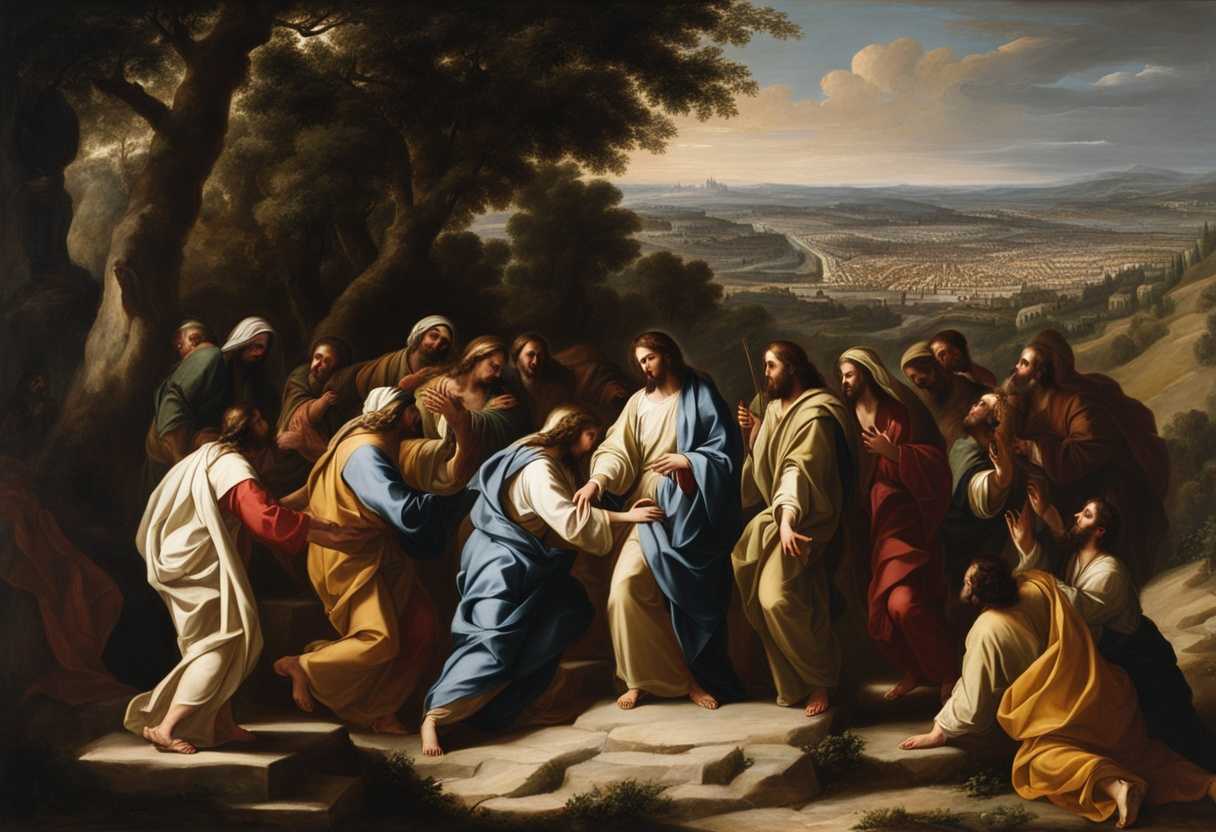
Setting the Scene for Luke 19:37-44
In Luke chapter 19, we find Jesus nearing Jerusalem, riding on a donkey as he approaches the city. A crowd of disciples and followers accompany him on this journey, spreading their cloaks on the road before him. The atmosphere is charged with excitement and anticipation as they believe Jesus is the long-awaited Messiah who will bring salvation to Israel.
Among the crowd are the twelve disciples, including Peter, James, and John, who have been with Jesus throughout his ministry. They have witnessed his miracles, heard his teachings, and now find themselves caught up in the fervor of the moment as they enter Jerusalem with their beloved teacher. The city is bustling with activity as people gather for the Passover festival, adding to the energy and tension in the air.
As they approach Jerusalem, Jesus weeps over the city, foreseeing its destruction because they did not recognize the time of God’s coming to them. The scene is a mix of celebration and sorrow, with the disciples and the crowd jubilant in their welcome of Jesus, yet Jesus himself burdened by the knowledge of what is to come. The contrast between the joy of the crowd and the tears of Jesus sets the stage for the dramatic events that will unfold in the days ahead.
What is Luke 19:37-44 about?
Jesus’ deep sorrow and compassion for the people of Jerusalem are powerfully displayed in this verse. Despite knowing the impending destruction that awaits the city due to their rejection of Him, Jesus still grieves over the loss and devastation that will befall them. This verse serves as a poignant reminder of the profound love and empathy that Jesus has for all of humanity, even those who turn away from Him.
Can you imagine the heartache Jesus must have felt knowing that despite His love and offer of salvation, the people of Jerusalem chose to reject Him? It highlights the importance of accepting Jesus as our Savior and following His teachings to avoid the consequences of rejecting His love. Jesus’ tears over Jerusalem also serve as a poignant reminder of the consequences of turning away from God’s grace and the ultimate destruction that can result from rejecting His offer of salvation. Jesus’ love and compassion for us, even in the face of rejection, should be remembered as we reflect on this verse. May it inspire us to accept Him as our Savior, follow His teachings, and spread His love and grace to all those around us.
Understanding what Luke 19:37-44 really means
The passage in Luke 19:37-44 captures the poignant moment of Jesus’ triumphal entry into Jerusalem, a scene filled with praise and recognition of His divine nature. The disciples and the crowd joyfully praised God for the miracles they had witnessed, acknowledging Jesus’ power and authority through their spontaneous worship. This act of celebration fulfilled Old Testament prophecies, such as Zechariah 9:9, which foretold the Messiah’s humble arrival on a donkey, symbolizing righteousness and victory.
Jesus’ response to the Pharisees’ rebuke, “If they keep quiet, the stones will cry out,” underscores the inevitability of His praise. Creation itself would testify to His glory if humanity failed to recognize and acknowledge Him. As Jesus wept over Jerusalem, His tears revealed a deep compassion for the city and its people. His sorrow stemmed from knowing their rejection of Him and the impending destruction that awaited them due to their failure to recognize the time of God’s visitation.
The passage serves as a poignant reminder for us today to be attuned to God’s presence in our lives. Just as the people of Jerusalem missed the opportunity to embrace their Messiah, we are urged to discern the divine moments and invitations for spiritual growth that God places before us. The imagery of “the stones will cry out” challenges us to live lives that naturally reflect worship and gratitude, not missing the chance to honor and glorify God in all we do.
Consider a small town visited by a renowned artist, yet the residents were too preoccupied to notice. Years later, they regretted missing the chance to engage with someone who could have enriched their lives. Similarly, we may overlook the divine encounters and blessings God presents amidst our daily routines. Reflect on a personal account of someone who, after years of spiritual neglect, had a transformative experience during a church service. His newfound recognition of God’s presence altered the course of his life, akin to the crowd’s acknowledgment of Jesus’ miracles.
In conclusion, the passage from Luke prompts us to be vigilant in perceiving God’s hand at work in our lives and to respond with gratitude and praise. Let us not allow the distractions of life to obscure the divine moments and opportunities for spiritual growth that God graciously provides. May we emulate the disciples’ joyful worship and avoid the tragic fate of those who failed to recognize the time of God’s coming.
Are we recognizing the time of God’s visitation?
The passage in Luke 19:37-44 speaks to the importance of recognizing the time of God’s visitation. Jesus weeps over Jerusalem because they did not recognize the day of their visitation, a missed opportunity to experience the presence and salvation of God. The people in Jerusalem were unable to see and appreciate the work of God in their midst, paving the way for their own destruction. We must be attuned to the times when God is moving and working in our midst in our own lives. We must be mindful and discerning of the moments when God is reaching out to us, offering us opportunities for growth, redemption, and transformation. We can fully experience the blessings and guidance that God is extending to us by recognizing and seizing these divine visitations. The inhabitants of Jerusalem missed the significance of God’s visitation; let us not be like them. Instead, let us open our hearts and minds to the working of God in our lives, embracing the opportunities for grace and salvation that He presents to us.
Application
In the hustle of our modern lives, are we missing the signs of God’s presence around us? Let’s not let distractions blind us from the peace and guidance He offers. Like overlooking family in our pursuit of work, are we missing out on what truly matters? Take a moment today, to pause, reflect and connect with the divine presence in your life. Are you ready to open your heart and walk alongside God’s will for you?

Reverend Michael Johnson is an experienced Church Minister with a profound expertise in spirituality and guidance. With a serene presence and a compassionate heart, he has faithfully served his congregation for over 20 years, leading them on a spiritual journey towards inner peace and enlightenment. Reverend Johnson’s extensive knowledge of religious philosophies and profound understanding of human nature have made him a trusted confidant and mentor to many, as he seamlessly weaves his profound wisdom into life teachings. Reverend Johnson’s calming demeanor and empathetic nature continue to uplift and heal souls, nurturing a sense of unity and tranquility within his community.