
Luke 19:37 is about the account of Jesus’ triumphal entry into Jerusalem, symbolizing his role as the long-awaited Messiah bringing salvation and peace to humanity.
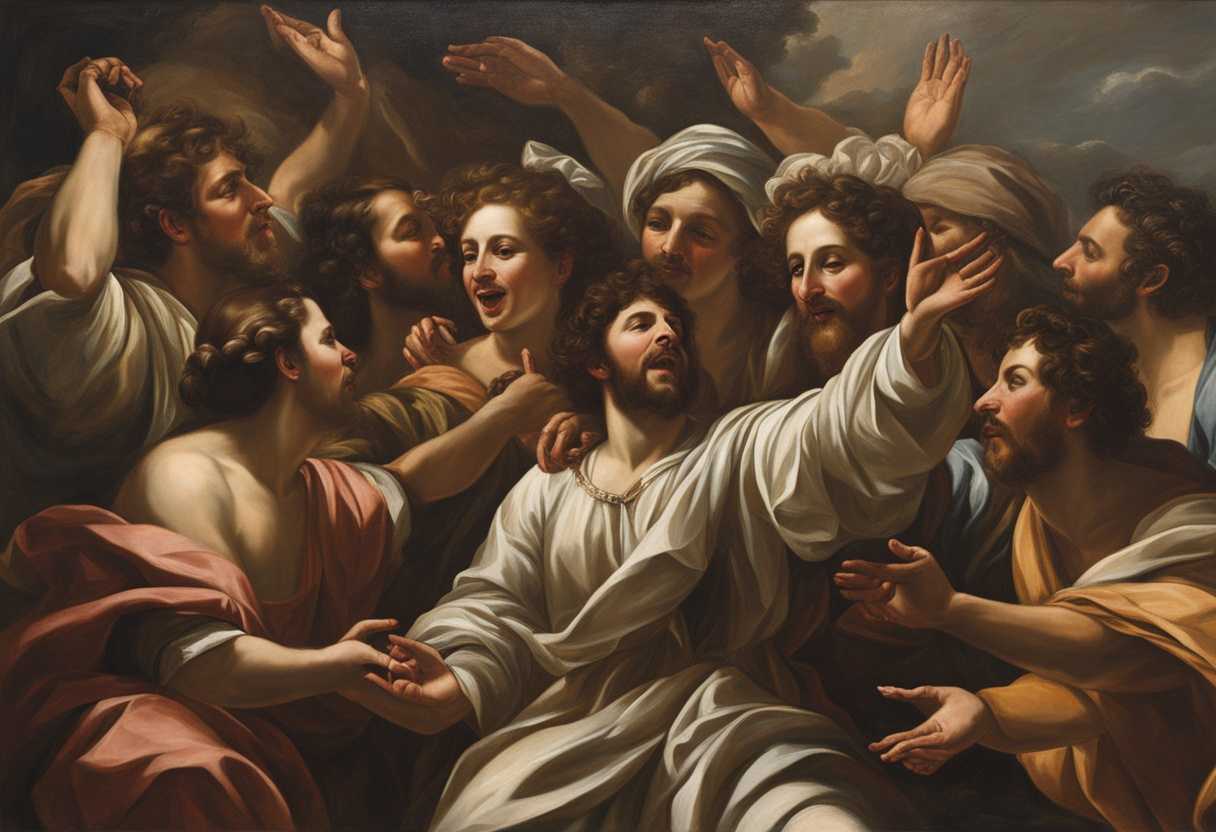
37 As he was drawing near—already on the way down the Mount of Olives—the whole multitude of his disciples began to rejoice and praise God with a loud voice for all the mighty works that they had seen,
Setting the Scene for Luke 19:37
In Luke chapter 19, we find Jesus nearing Jerusalem, approaching the Mount of Olives. A large crowd has gathered to welcome Him as He rides into the city on a colt, fulfilling the prophecy in Zechariah 9:9. The people are filled with excitement and anticipation, spreading their cloaks on the road and waving palm branches, shouting, “Blessed is the king who comes in the name of the Lord!”
Among the crowd are Jesus’ disciples, who have been following Him throughout His ministry, witnessing His miracles and teachings. They are in awe of the scene unfolding before them, recognizing the significance of Jesus’ entry into Jerusalem. The atmosphere is charged with emotion as the people celebrate the arrival of their long-awaited Messiah, unaware of the events that will soon transpire leading to Jesus’ crucifixion.
The setting is vibrant and bustling, with the city of Jerusalem in the background and the Mount of Olives providing a picturesque backdrop to the momentous occasion. The air is filled with the sounds of cheering and singing, creating a sense of joy and jubilation among the crowd. Jesus, riding humbly on a colt, embodies both royalty and humility, fulfilling the prophecy and setting the stage for the events that will soon unfold in the days to come.
What is Luke 19:37 about?
Imagine witnessing a grand and significant moment like Jesus’ triumphal entry into Jerusalem. It is a powerful image that expresses fulfillment of ancient prophecy. This verse encapsulates the idea of Jesus’ purpose and role as a Messiah, fulfilling the prophecies that foretold his arrival in a humble and symbolic manner, riding on a colt.
Reflecting on this verse, we can see the divine plan unfolding with precision and forethought. Jesus’ choice to enter on a colt rather than a majestic horse symbolizes humility and a message of peace, contrasting with the expectations of a conquering king. This event set the stage for the events that followed, leading to Jesus’ ultimate sacrifice for humanity’s sins. It prompts us to ponder the significance of fulfillment, prophecies, and the inevitability of divine will in our lives and the world around us.
Understanding what Luke 19:37 really means
In the context of Jesus’ triumphant entry into Jerusalem, Luke 19:37 captures a pivotal moment where a large crowd of disciples joyfully praises God for the miracles they had witnessed. The phrase “the whole crowd of disciples” underscores the unity and collective joy among Jesus’ followers, signifying that it wasn’t just a few individuals but a significant number who were filled with exuberance. Their praise was not subdued but rather expressed in loud voices, emphasizing the overwhelming nature of their joy that couldn’t be contained. This public display of praise was a testament to the impact of Jesus’ miraculous works on their hearts and minds.
The key phrases in this verse shed light on the reasons behind the disciples’ jubilant praise. They were not merely caught up in the moment but were genuinely moved by the miracles they had seen Jesus perform. The phrase “for all the miracles they had seen” points to the tangible evidence of Jesus’ divine authority and compassion that had deeply impacted their lives. Their praise was a natural response to the undeniable power and goodness they had witnessed in Jesus.
Parallel passages like Matthew 21:9 and references to Psalm 118:26 further enrich the significance of Luke 19:37. The cries of “Hosanna” in Matthew’s account highlight the crowd’s recognition of Jesus as the Messiah, while the Old Testament reference in Psalm 118:26 underscores the fulfillment of God’s plan in Jesus. These connections emphasize the continuity of God’s redemptive work and the acknowledgment of Jesus as the promised Savior.
Today, Luke 19:37 serves as a poignant reminder for believers to engage in joyful praise, even amidst a world filled with challenges and uncertainties. Just as the disciples praised God for the miracles they had seen, we are encouraged to seek and acknowledge the miraculous works of God in our own lives, whether they are grand or seemingly insignificant. The disciples’ public declaration of faith challenges us to boldly express our gratitude and belief in God, not shying away from sharing our joy with others.
To illustrate the communal joy and gratitude depicted in Luke 19:37, imagine a community coming together after surviving a natural disaster against all odds. The shared relief and joy would lead to spontaneous celebrations and expressions of gratitude, mirroring the disciples’ response to Jesus’ miracles. This collective recognition of divine intervention and the ensuing expressions of praise are experiences we can aspire to cultivate in our own lives, fostering a deeper sense of unity and gratitude within our communities.
In conclusion, Luke 19:37 encapsulates the essence of joyful praise and gratitude in response to God’s miraculous works. It prompts us to be vocal and public in our expressions of praise, acknowledging the wonders we witness in our lives and sharing that joy with others. May this verse inspire us to cultivate a spirit of thankfulness and celebration, recognizing the hand of God at work in our midst.
How can we daily praise and honor God?
We can daily praise and honor God by acknowledging His greatness, expressing gratitude for His blessings, and proclaiming His goodness to others. We magnify His name and glorify Him in our daily lives. We show our reverence and awe for the Lord by recognizing His sovereignty and power, affirming His rightful place as the Creator and sustainer of all things.
Additionally, living a life obedient to God’s commandments and walking in His ways is a way to daily praise and honor Him. When we follow His guidance, we demonstrate our trust in His wisdom and faithfulness. We can also praise God through prayer, worship, and acts of service, showing our love and devotion to Him in all that we do. Each day, we bring honor and glory to His name by aligning our thoughts, words, and actions with His will.
Application
Let the victory parade of Jesus entering Jerusalem ignite a fire in your soul to honor and worship Him ceaselessly. Share His love and redemption with your community, echoing the jubilation of the crowds welcoming Him. Carry this fervor for Christ within you daily, spreading His light in your family, workplace, and beyond. How will you let His triumph inspire and guide your actions today?

Reverend Michael Johnson is an experienced Church Minister with a profound expertise in spirituality and guidance. With a serene presence and a compassionate heart, he has faithfully served his congregation for over 20 years, leading them on a spiritual journey towards inner peace and enlightenment. Reverend Johnson’s extensive knowledge of religious philosophies and profound understanding of human nature have made him a trusted confidant and mentor to many, as he seamlessly weaves his profound wisdom into life teachings. Reverend Johnson’s calming demeanor and empathetic nature continue to uplift and heal souls, nurturing a sense of unity and tranquility within his community.