
Luke 1:1-25 is about the miraculous announcement of the birth of John the Baptist, demonstrating the fulfillment of divine promises and the coming of the long-awaited Messiah.
1 Inasmuch as many have undertaken to compile a narrative of the things that have been accomplished among us,
2 just as those who from the beginning were eyewitnesses and ministers of the word have delivered them to us,
3 it seemed good to me also, having followed all things closely for some time past, to write an orderly account for you, most excellent Theophilus,
4 that you may have certainty concerning the things you have been taught.
5 In the days of Herod, king of Judea, there was a priest named Zechariah, of the division of Abijah. And he had a wife from the daughters of Aaron, and her name was Elizabeth.
6 And they were both righteous before God, walking blamelessly in all the commandments and statutes of the Lord.
7 But they had no child, because Elizabeth was barren, and both were advanced in years.
8 Now while he was serving as priest before God when his division was on duty,
9 according to the custom of the priesthood, he was chosen by lot to enter the temple of the Lord and burn incense.
10 And the whole multitude of the people were praying outside at the hour of incense.
11 And there appeared to him an angel of the Lord standing on the right side of the altar of incense.
12 And Zechariah was troubled when he saw him, and fear fell upon him.
13 But the angel said to him, “Do not be afraid, Zechariah, for your prayer has been heard, and your wife Elizabeth will bear you a son, and you shall call his name John.
14 And you will have joy and gladness, and many will rejoice at his birth.
15 for he will be great before the Lord. And he must not drink wine or strong drink, and he will be filled with the Holy Spirit, even from his mother’s womb.
16 And he will turn many of the children of Israel to the Lord their God,
17 and he will go before him in the spirit and power of Elijah, to turn the hearts of the fathers to the children, and the disobedient to the wisdom of the just, to make ready for the Lord a people prepared.”
18 And Zechariah said to the angel, “How shall I know this? For I am an old man, and my wife is advanced in years.”
19 And the angel answered him, “I am Gabriel. I stand in the presence of God, and I was sent to speak to you and to bring you this good news.
20 And behold, you will be silent and unable to speak until the day that these things take place, because you did not believe my words, which will be fulfilled in their time.”
21 And the people were waiting for Zechariah, and they were wondering at his delay in the temple.
22 And when he came out, he was unable to speak to them, and they realized that he had seen a vision in the temple. And he kept making signs to them and remained mute.
23 And when his time of service was ended, he went to his home.
24 After these days his wife Elizabeth conceived, and for five months she kept herself hidden, saying,
25 “Thus the Lord has done for me in the days when he looked on me, to take away my reproach among people.”
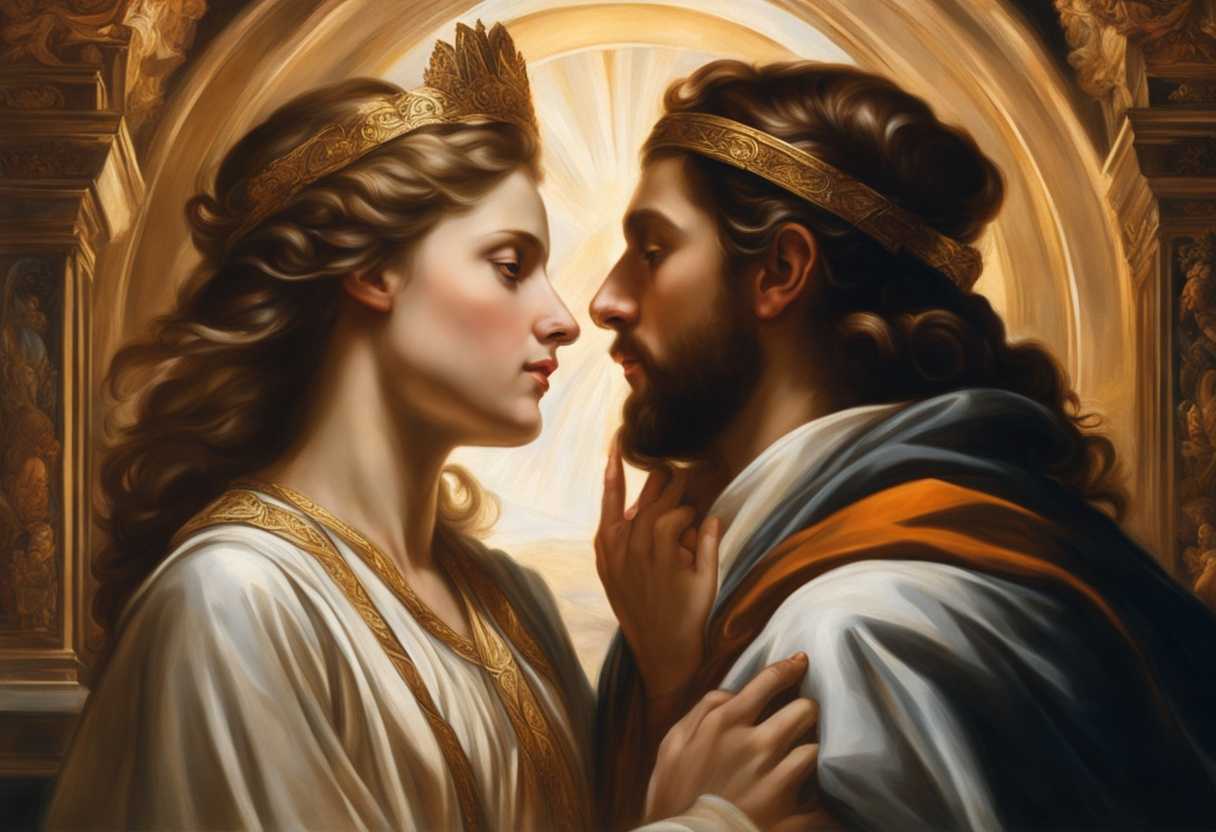
Setting the Scene for Luke 1:1-25
The scene in Luke chapter 1 opens with a priest named Zechariah serving in the temple of the Lord in Jerusalem. Zechariah was married to Elizabeth, who was also from a priestly lineage. They were both righteous in the sight of God, following all the commandments and regulations blamelessly. However, they were childless, and Elizabeth was unable to conceive, which was a source of great sorrow for them.
One day, as Zechariah was chosen by lot to enter the temple and burn incense, an angel of the Lord appeared to him, standing at the right side of the altar of incense. Zechariah was startled and afraid, but the angel reassured him, telling him not to be afraid because his prayer had been heard. The angel announced that Elizabeth would bear a son, and they were to name him John. This child would bring them joy and gladness, and he would be great in the sight of the Lord.
Zechariah was filled with disbelief due to their old age, and he questioned the angel’s words. As a result, the angel Gabriel told him that he would be unable to speak until the day these things happened because he did not believe the angel’s message. The scene is set in the sacred and solemn atmosphere of the temple, with Zechariah encountering the divine in a miraculous and unexpected way, setting the stage for the miraculous birth of John the Baptist.
What is Luke 1:1-25 about?
An angel appears to Zechariah in this verse to announce the upcoming birth of John the Baptist, a remarkable moment that we witness. This event is not just about the birth of a child, but about the fulfillment of a divine plan and promise. It is a moment of great significance, as John the Baptist’s role will be crucial in preparing the way for the coming of Jesus Christ. The angel’s announcement is a sign that God’s plan is unfolding and that John’s birth will be accompanied by divine blessings and purpose.
Reflecting on this verse, we are reminded of the power of God’s timing and the faithfulness of His promises. We see how God chooses ordinary individuals like Zechariah and Elizabeth to play extraordinary roles in His plan of salvation. This verse invites us to ponder on the ways in which God may be working in our own lives, using us for His purposes and bringing new beginnings and blessings into our world. It challenges us to trust in God’s plans, even when they seem unlikely or impossible, knowing that He is always at work behind the scenes to bring about His purposes.
Understanding what Luke 1:1-25 really means
In the opening verses of Luke 1:1-25, we are introduced to the context that sets the stage for the miraculous events surrounding the birth of John the Baptist and the coming of Jesus Christ. Luke, a physician and companion of Paul, meticulously penned this Gospel to provide an orderly account of the life and ministry of Jesus. Addressing his Gospel to Theophilus, Luke aimed to assure him of the certainty of the teachings he had received, emphasizing the importance of documenting and sharing the works of God.
The passage begins with the statement, “Many have undertaken to draw up an account of the things that have been fulfilled among us,” highlighting the significance of recording God’s deeds. Luke’s commitment to accuracy is evident as he states, “I too decided to write an orderly account for you, most excellent Theophilus,” emphasizing the meticulous nature of his narrative. The righteousness of Zechariah and Elizabeth in the sight of God underscores the importance of living faithfully and obediently before the Lord.
The angel’s proclamation to Zechariah, “Your prayer has been heard. Your wife Elizabeth will bear you a son, and you are to call him John,” showcases the power of prayer and God’s faithfulness in answering the cries of His people. The promise that John would bring joy and delight to many reflects the blessings that come from God’s intervention in our lives. This narrative intertwines with prophecies from Malachi 4:5-6 and Isaiah 40:3, linking John the Baptist’s role to the preparation for the coming of the Lord.
The timeless themes of faithfulness, prayer, and God’s promises resonate with people today, reminding us that just as Zechariah and Elizabeth experienced God’s miraculous intervention, we too can trust in His timing and faithfulness. A modern-day anecdote of a couple struggling with infertility but remaining steadfast in prayer mirrors Zechariah and Elizabeth’s story, highlighting the importance of patience, faith, and reliance on God’s plan. As we reflect on this passage, may we consider how we can live righteously, persevere in prayer, and trust in God’s promises in our own lives, following the example set by Zechariah and Elizabeth.
Can my doubts coexist with faith in God’s promises?
Yes, your doubts can coexist with faith in God’s promises. Zechariah initially responds with doubt when the angel Gabriel shares the promise of a child in the account of Zechariah and Elizabeth in the Gospel of Luke. Despite his doubts, God remains faithful to his promise and fulfills it in His perfect timing. This passage shows us that it’s natural for doubts to arise, but it’s important to ultimately trust in God’s promises.
Faith is not the absence of doubts, but rather the decision to trust in God despite them. It’s about choosing to believe in God’s faithfulness and power even when circumstances or our own thoughts may cause us to question. Just like Zechariah’s initial doubts did not prevent God from fulfilling His promise, our doubts do not have to hinder our faith in God’s promises. Through prayer, seeking counsel, and studying God’s word, we can navigate our doubts while holding fast to our faith in the Lord.
Application
Think of Zechariah and Elizabeth’s story in Luke 1:1-25. They were blessed with a child against all odds, showing that God keeps His promises, no matter how impossible things seem. In your daily grind, amidst work and family chaos, remember that faith isn’t just for others—it’s for you too. Take that leap today. Trust that God can work miracles in your life, even when you can’t see a way forward. So, will you take a step in faith and trust God’s promises today?

Reverend Michael Johnson is an experienced Church Minister with a profound expertise in spirituality and guidance. With a serene presence and a compassionate heart, he has faithfully served his congregation for over 20 years, leading them on a spiritual journey towards inner peace and enlightenment. Reverend Johnson’s extensive knowledge of religious philosophies and profound understanding of human nature have made him a trusted confidant and mentor to many, as he seamlessly weaves his profound wisdom into life teachings. Reverend Johnson’s calming demeanor and empathetic nature continue to uplift and heal souls, nurturing a sense of unity and tranquility within his community.