
Luke 1:28-35 is about the angel Gabriel announcing to Mary that she will conceive and give birth to Jesus, who will be called the Son of God, emphasizing the miraculous conception and divine nature of Jesus.
28 And he came to her and said, “Greetings, O favored one, the Lord is with you!”
29 But she was greatly troubled at the saying, and tried to discern what sort of greeting this might be.
30 And the angel said to her, “Do not be afraid, Mary, for you have found favor with God.
31 And behold, you will conceive in your womb and bear a son, and you shall call his name Jesus.
32 He will be great and will be called the Son of the Most High. And the Lord God will give to him the throne of his father David,
33 and he will reign over the house of Jacob forever, and of his kingdom there will be no end.”
34 And Mary said to the angel, “How will this be, since I am a virgin?”
35 And the angel answered her, “The Holy Spirit will come upon you, and the power of the Most High will overshadow you; therefore the child to be born will be called holy—the Son of God.
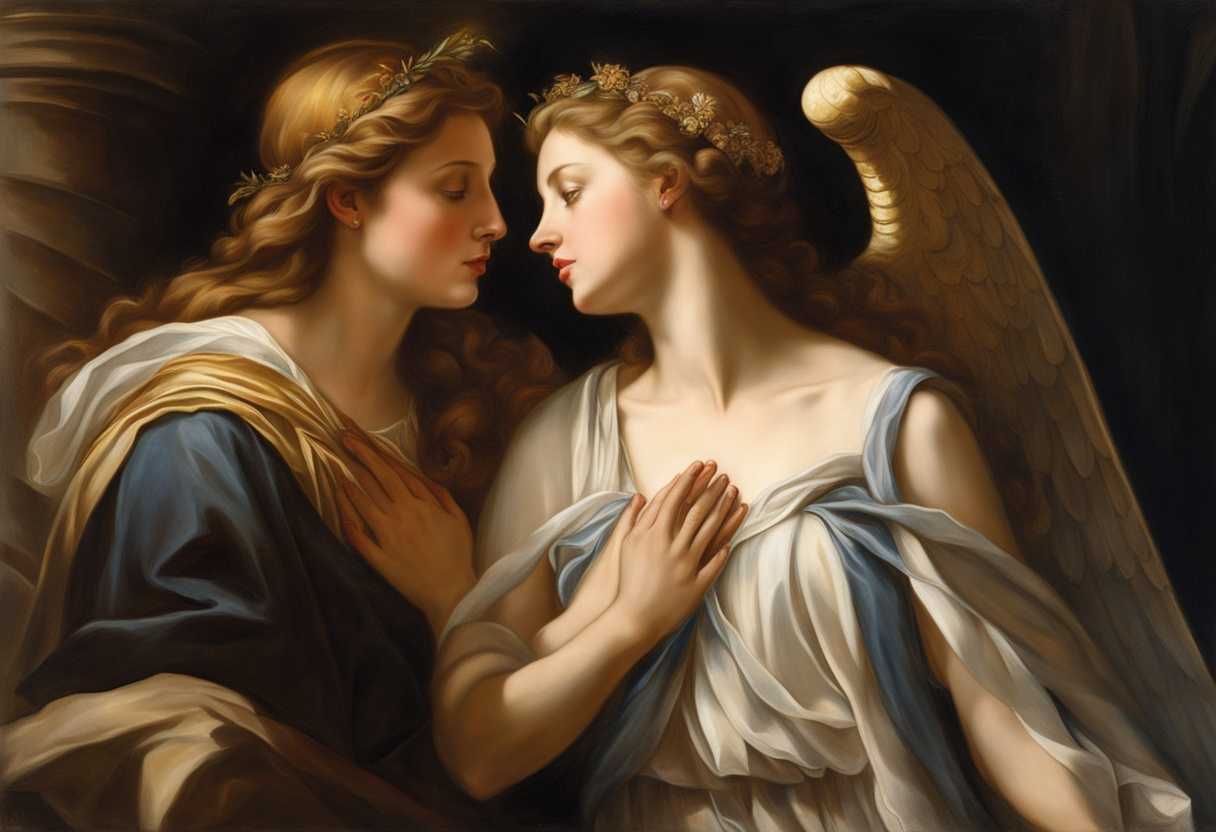
Setting the Scene for Luke 1:28-35
In Luke chapter 1, we find the scene where the angel Gabriel visits the young virgin Mary in the town of Nazareth. Mary, a humble and devout woman, is going about her daily routine when suddenly the angel appears before her. The room is filled with a heavenly light, and Mary is both terrified and awestruck by the divine presence before her.
Gabriel, with a gentle and reassuring voice, delivers the incredible news that Mary has found favor with God and will conceive a child by the Holy Spirit. Mary, initially perplexed by the angel’s words, listens as Gabriel explains that she will give birth to the Son of God, whom she is to name Jesus. The room is filled with a sense of peace and wonder as Mary grapples with the magnitude of the news she has just received.
Surrounded by the simple furnishings of her home, Mary’s faith and obedience shine through as she humbly accepts the role that God has chosen for her. The scene is one of profound significance, marking the beginning of the fulfillment of God’s plan for the salvation of humanity through the birth of Jesus Christ.
What is Luke 1:28-35 about?
This verse captures the pivotal moment when the angel Gabriel brings the incredible news to Mary that she will conceive and give birth to Jesus, the son of God. Imagine the awe and wonder Mary must have felt at that moment, being chosen for such a profound and sacred task. This event signifies the beginning of the earthly journey of Jesus, who would later bring salvation and hope to humanity.
Reflecting on this verse, we are reminded of the power of divine intervention and the faithfulness of God’s plan. It prompts us to contemplate the profound trust and obedience Mary displayed in accepting this extraordinary mission. We are invited to consider how we can trust in God’s plans for our lives, even when they may seem incomprehensible or challenging as we ponder this scene.
The announcement of Jesus’ miraculous conception to Mary encapsulates the fulfillment of prophecy and the unfolding of God’s redemptive plan for humanity. It serves as a reminder of the profound grace and mercy that God bestows upon us, even in the most unexpected ways. We are encouraged to embrace the divine callings and opportunities presented to us as we meditate on this verse, knowing that God’s guidance and provision will always be with us, just as it was with Mary.
Understanding what Luke 1:28-35 really means
The passage in Luke 1:28-35, known as the Annunciation, holds profound significance in Christian theology as it unveils the divine plan for the Incarnation, where God became flesh in Jesus Christ. When the angel Gabriel greets Mary with the words, “Greetings, you who are highly favored! The Lord is with you,” it signifies Mary’s divine selection and the presence of God with her. This divine favor echoes similar encounters in the Bible, such as when the angel of the Lord greeted Gideon in Judges 6:12, highlighting God’s hand in choosing individuals for specific missions.
Furthermore, the reassurance given to Mary, “Do not be afraid, Mary; you have found favor with God,” serves as a comforting reminder that God’s favor brings peace and dispels fear. This message resonates with Isaiah 41:10, where God reassures His people not to fear, emphasizing His presence and protection. The prophecy that Mary will conceive and give birth to a son, whom she is to name Jesus, underscores the divine mission of Jesus and fulfills the prophecy in Isaiah 7:14 of Immanuel, meaning “God with us.”
The passage also illuminates the role of the Holy Spirit in Jesus’ conception, emphasizing the divine nature of His birth. Just as the Holy Spirit overshadowed Mary, indicating God’s creative power, the involvement of the Holy Spirit in our lives is crucial for guidance, strength, and the fulfillment of God’s plans. Understanding this can provide direction and meaning in our lives, just as it did for Mary.
Today, this passage remains relevant as it reminds us of divine favor, unique callings, and the importance of overcoming fear with God’s reassurance. Each person, like Mary, is chosen and favored by God for a specific purpose, and embracing this truth can bring confidence and peace in the face of challenges. Just as Sarah, in the anecdote, found solace and strength in realizing that God equips those He calls, we too can draw courage from knowing that God’s favor and the Holy Spirit’s power are with us.
In conclusion, Luke 1:28-35 serves as a powerful testament to God’s intimate involvement in our lives, offering reassurance of His favor, encouragement to conquer fear, and a reminder of the Holy Spirit’s empowering presence. As we reflect on Mary’s acceptance of her divine calling, may we also embrace our unique purposes with faith and confidence, trusting in God’s guidance and provision.
What is the significance of the Holy Spirit’s role?
The significance of the Holy Spirit’s role is demonstrated in Luke 1:28-35 as it is the Holy Spirit who comes upon Mary and allows her to conceive the Son of God, Jesus. This shows the intimate involvement of the Holy Spirit in the miracle of the Incarnation, emphasizing the divine nature of Christ’s birth. The Holy Spirit’s role in this event signifies the divine origin and purpose of Jesus, who was to be called the Son of God. This passage underscores the importance of the Holy Spirit in God’s redemptive plan for humanity by highlighting the work of the Holy Spirit in the conception of Jesus. The Holy Spirit’s presence and power make possible what is humanly impossible, emphasizing the supernatural aspect of God’s intervention in the world. This emphasizes the Trinity’s unity in action, with the Holy Spirit playing a crucial role in fulfilling God’s promises and bringing about salvation for all through Jesus Christ.
Application
Like a message received at work or home, the divine favor upon Mary should inspire us to embrace our own unique calling with faith and humility. Let’s take a cue from Mary’s devoted response and align ourselves with God’s will, ready to obediently carry out His plans for us. Reflect on how you can mirror Mary’s trust and surrender in your own journey. Will you answer God’s call today with the same courage and trust?

Reverend Michael Johnson is an experienced Church Minister with a profound expertise in spirituality and guidance. With a serene presence and a compassionate heart, he has faithfully served his congregation for over 20 years, leading them on a spiritual journey towards inner peace and enlightenment. Reverend Johnson’s extensive knowledge of religious philosophies and profound understanding of human nature have made him a trusted confidant and mentor to many, as he seamlessly weaves his profound wisdom into life teachings. Reverend Johnson’s calming demeanor and empathetic nature continue to uplift and heal souls, nurturing a sense of unity and tranquility within his community.