
Luke 1:35-38 is about the angel Gabriel announcing to Mary that she will conceive a child through the Holy Spirit, symbolizing the miraculous nature of Jesus’ birth and Mary’s willingness to accept God’s plan with faith and humility.
35 And the angel answered her, “The Holy Spirit will come upon you, and the power of the Most High will overshadow you; therefore the child to be born will be called holy—the Son of God.
36 And behold, your relative Elizabeth in her old age has also conceived a son, and this is the sixth month with her who was called barren.
37 For nothing will be impossible with God.
38 And Mary said, “Behold, I am the servant of the Lord; let it be to me according to your word.” And the angel departed from her.
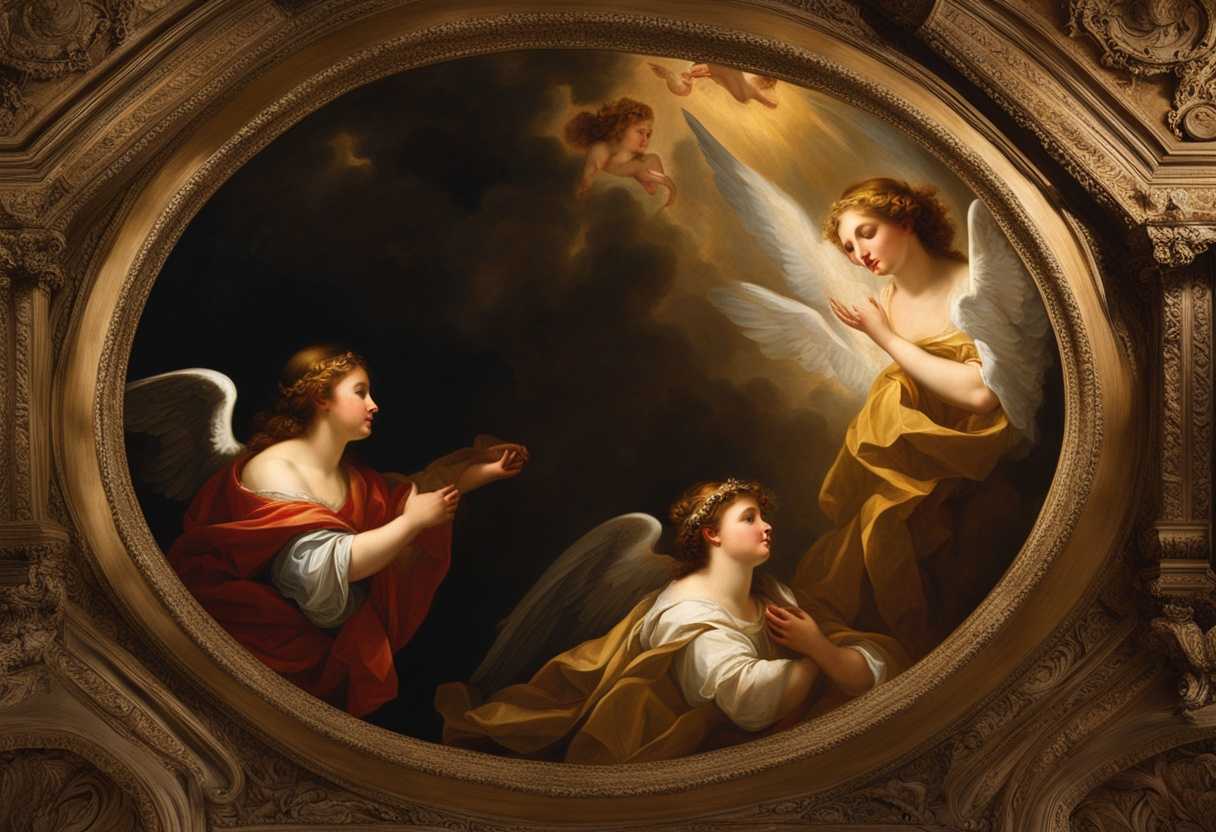
Setting the Scene for Luke 1:35-38
In Luke chapter 1, we find the scene where the angel Gabriel visits Mary to deliver the news that she will conceive and give birth to Jesus, the Son of God. The setting is a humble abode in the town of Nazareth, where Mary resides. The room is simple, with a small table, a few chairs, and a window that lets in the warm sunlight.
Mary, a young Jewish woman of great faith, is in the room when suddenly the angel Gabriel appears before her. Startled and filled with awe, Mary listens as Gabriel tells her that she has found favor with God and will bear a child who will be the Savior of the world. Mary, initially perplexed by the news, humbly accepts her role in God’s plan, saying, “I am the Lord’s servant. May your word to me be fulfilled.”
The atmosphere in the room is charged with a sense of divine presence as Mary’s faith and obedience shine through. The encounter between Mary and the angel Gabriel is a pivotal moment in biblical history, marking the beginning of the fulfillment of God’s promise to send a Messiah to save humanity.
What is Luke 1:35-38 about?
This verse captures Mary’s profound obedience and faith in God’s plan, despite the extraordinary circumstances presented to her. Mary, a young woman living in a society that could judge and persecute her, wholeheartedly accepts the challenge of becoming the mother of Jesus Christ. Her humility shines through as she acknowledges her role in the divine plan and surrenders herself to God’s will.
Can you imagine the courage and trust it must have taken for Mary to accept such a monumental responsibility? Her willingness to embrace a path filled with uncertainty and potential hardships is truly remarkable. Mary’s submission to God’s plan serves as a powerful example of humility and faith for all of us to emulate in a world that often values power and control. Let us reflect on Mary’s unwavering trust in God’s guidance and strive to embody that same sense of humility and obedience in our own lives.
Understanding what Luke 1:35-38 really means
The verses in Luke 1:35-38 capture the profound moment of the Annunciation, where the angel Gabriel reveals to Mary that she will conceive and bear the Son of God, Jesus. This passage is pivotal in understanding the Incarnation, the belief that God took on human form in Jesus Christ.
“The Holy Spirit will come upon you, and the power of the Most High will overshadow you.” This statement signifies the divine intervention and miraculous nature of Jesus’ conception, highlighting the Holy Spirit’s role in Jesus’ origin. In Genesis 1:2, we see the Spirit of God hovering over the waters, showcasing the creative power of the Holy Spirit. Acts 1:8 further emphasizes the empowering presence of the Holy Spirit in believers’ lives.
“So the holy one to be born will be called the Son of God.” This declaration establishes Jesus’ divine identity and his unique relationship with God the Father. John 1:14 underscores the Incarnation, stating that the Word became flesh. Matthew 3:17 affirms Jesus’ divine sonship when God declares, “This is my Son, whom I love.”
“For no word from God will ever fail.” This assurance reminds us of the trustworthiness of God’s promises and His faithfulness in fulfilling them. Isaiah 55:11 emphasizes that God’s word does not return empty, highlighting the reliability of His promises. Numbers 23:19 reinforces God’s faithfulness, stating that He does not lie.
“I am the Lord’s servant,” Mary responded. “May your word to me be fulfilled.” Mary’s humble and obedient response exemplifies faith and submission to God’s will. Luke 1:45 praises those who believe in the fulfillment of God’s promises, emphasizing the blessedness of faith. Philippians 2:8 illustrates the importance of obedience in the Christian life, as Jesus humbled himself to the point of death.
In today’s context, we are called to emulate Mary’s faith, trust in God’s promises, and submit to His will. Just as Mary found strength in obedience, we too can find peace and courage in trusting God’s plan, even in uncertain times. The phrase “For no word from God will ever fail” reminds us that divine possibilities are limitless, urging us to hold onto hope in challenging circumstances.
Consider a personal story where faith and trust in God’s plan brought peace and eventual resolution, such as a family facing a medical crisis finding healing through prayer. This anecdote can illustrate how, like Mary, we can draw strength from trusting in God’s promises and submitting to His will.
As we reflect on Mary’s example, let us examine areas in our lives where we need to trust in God’s promises and submit to His will. May we find encouragement to step out in faith, knowing that God’s word never fails. Let us pray for the faith and courage to follow Mary’s example of trust and obedience, seeking God’s guidance in all aspects of our lives.
What role does surrender play in spiritual growth?
Surrender plays a vital role in spiritual growth as seen in the passage from Luke. Mary demonstrates surrender by fully yielding to God’s plan for her life, despite the challenges and uncertainties she faced in the text. She aligns herself with His purpose by accepting God’s will with humility and faith, allowing Him to work through her for the greater good.
This act of surrender not only deepens Mary’s connection with God but also propels her spiritual growth. Through surrendering her own desires and fears, Mary opens herself to divine guidance and blessing. This willingness to let go of control and trust in God’s plan not only demonstrates her strong faith but also leads to the fulfillment of God’s promises in her life. Surrendering to God’s will and trusting in His plan can lead to immense growth and transformation in our own spiritual journey. When we release our own agendas and submit ourselves to His guidance, we create space for God to work in and through us. Surrender allows us to let go of our own limitations and ego-driven desires, making room for God’s grace and power to shape our lives according to His perfect will.
Application
Let Mary’s faith be your guiding light – trust in the path set before you. Embrace challenges with courage and obedience, just as she did. Your journey is purposeful, don’t shy away. Will you answer your call today?

Reverend Michael Johnson is an experienced Church Minister with a profound expertise in spirituality and guidance. With a serene presence and a compassionate heart, he has faithfully served his congregation for over 20 years, leading them on a spiritual journey towards inner peace and enlightenment. Reverend Johnson’s extensive knowledge of religious philosophies and profound understanding of human nature have made him a trusted confidant and mentor to many, as he seamlessly weaves his profound wisdom into life teachings. Reverend Johnson’s calming demeanor and empathetic nature continue to uplift and heal souls, nurturing a sense of unity and tranquility within his community.