
Luke 1:7-14 is about the miraculous announcement of the birth of John the Baptist to Zechariah by the angel Gabriel, signifying the fulfillment of God’s promise and the beginning of a new era of salvation and redemption for the people of Israel.
7 But they had no child, because Elizabeth was barren, and both were advanced in years.
8 Now while he was serving as priest before God when his division was on duty,
9 according to the custom of the priesthood, he was chosen by lot to enter the temple of the Lord and burn incense.
10 And the whole multitude of the people were praying outside at the hour of incense.
11 And there appeared to him an angel of the Lord standing on the right side of the altar of incense.
12 And Zechariah was troubled when he saw him, and fear fell upon him.
13 But the angel said to him, “Do not be afraid, Zechariah, for your prayer has been heard, and your wife Elizabeth will bear you a son, and you shall call his name John.
14 And you will have joy and gladness, and many will rejoice at his birth.
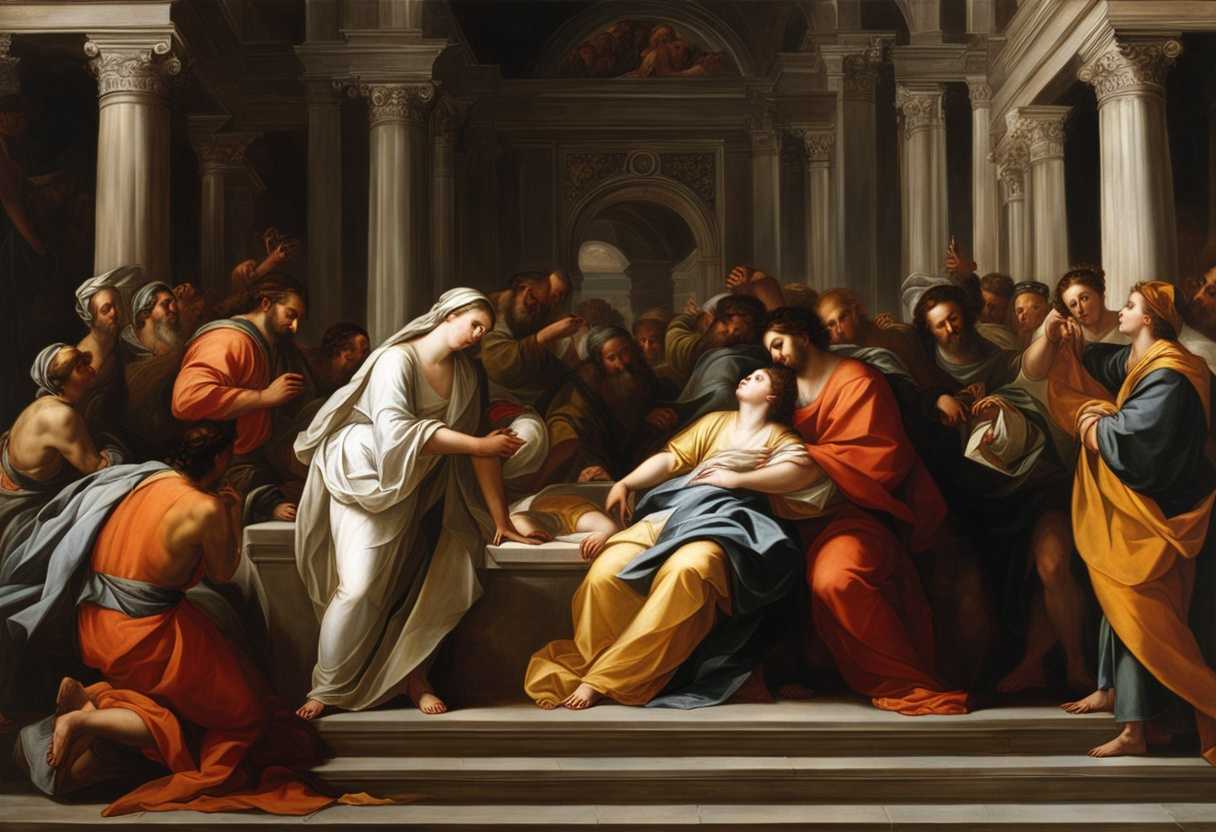
Setting the Scene for Luke 1:7-14
In Luke chapter 1, we find ourselves in the temple in Jerusalem, a place of great significance for the Jewish people. The scene is set with Zechariah, a priest of the division of Abijah, and his wife Elizabeth. They are both righteous before God, walking blamelessly in all the commandments and statutes of the Lord. However, they were childless, and Elizabeth was barren, which was a cause of great sorrow for them.
On this particular day, it was Zechariah’s turn to go into the temple of the Lord to burn incense. As he entered the sanctuary, a holy hush fell over the room, and the scent of the incense filled the air. It was during this sacred moment that an angel of the Lord, named Gabriel, appeared to Zechariah on the right side of the altar of incense. Zechariah was startled and gripped with fear at the sight of the angel.
Gabriel then delivered the incredible news to Zechariah that his prayers had been heard, and Elizabeth would bear him a son, whom they were to name John. This child would bring them joy and gladness, and he would be great before the Lord, filled with the Holy Spirit even from his mother’s womb. The scene in the temple was one of divine intervention and the beginning of a miraculous journey for Zechariah and Elizabeth.
What is Luke 1:7-14 about?
The angel Gabriel appears before Zechariah in this verse to deliver the news of the birth of John the Baptist. This moment is significant as it marks the beginning of a new chapter in the history of salvation. John the Baptist is an important figure in Christianity as he is the one who prepares the way for the coming of Jesus Christ. The announcement of his birth signifies the fulfillment of a divine plan and the continuation of God’s promise to his people.
Just imagine the scene – an angel appearing before Zechariah, a humble servant of God, to share the miraculous news of a child being born to him and his wife Elizabeth. The birth of John the Baptist is a testament to God’s power to bring forth new life and to work through ordinary people to accomplish extraordinary things. It serves as a reminder that God is always at work in our lives, even in the most unexpected ways. Zechariah’s disbelief and subsequent silence highlight the importance of faith and trust in God’s plans, even when they seem impossible or unlikely. This verse invites us to reflect on how we respond to God’s messages in our own lives and to consider the ways in which God might be calling us to participate in His divine plan.
Understanding what Luke 1:7-14 really means
In the Gospel of Luke, we encounter a poignant narrative about Zechariah and Elizabeth, a righteous couple who faced the societal stigma of childlessness in their old age. The mention of their barrenness and advanced years underscores the deep longing and shame associated with their situation. Despite their prayers seemingly going unanswered for years, the angel’s proclamation that “Your prayer has been heard” serves as a powerful reminder of God’s attentiveness to our cries, even when the wait seems prolonged.
The promise of joy and gladness, coupled with the communal rejoicing at the birth of John the Baptist, highlights the far-reaching impact of God’s blessings. This communal celebration echoes the importance of sharing in each other’s joys and sorrows, emphasizing the interconnectedness of our faith journeys. The parallels with other biblical accounts, such as Abraham and Sarah’s miraculous birth and Hannah’s answered prayer, reinforce the theme of God’s ability to bring forth life from barrenness and the power of persistent supplication.
In our contemporary context, where waiting for answers to prayers can be a challenging test of faith, the story of Zechariah and Elizabeth offers a beacon of hope. It reminds us that God’s timing is perfect, and nothing is impossible for Him. Just as their blessing extended beyond personal joy to communal celebration, we are encouraged to find solace in the support and shared rejoicing of our communities.
Consider a modern-day couple in your congregation who, like Zechariah and Elizabeth, struggled with infertility. Despite their efforts and prayers, they faced despair until the miraculous news of their impending parenthood brought immense joy to both them and their church family. This anecdote serves as a tangible reminder that God’s miracles are not confined to ancient times but continue to manifest in our lives today, reinforcing the enduring power of faith and prayer.
As we reflect on this narrative, let us draw encouragement from the assurance that God hears our prayers and is capable of transforming seemingly hopeless situations into displays of His glory. Let us persist in prayer, support one another in our communities, and trust unwaveringly in God’s sovereign plan and timing for our lives. May the story of Zechariah and Elizabeth inspire us to cultivate a deeper faith in the midst of waiting and to find joy in the shared celebrations of God’s blessings in our midst.
What does it mean to have unanswered prayers?
To have unanswered prayers means that one’s requests or supplications have not been granted by God. This could be due to a variety of reasons, such as God having a different plan in mind, the timing not being right, or the request not aligning with God’s will. Zechariah and Elizabeth had prayed for a child in the verse but had not yet been granted one. This period of waiting can test one’s faith and patience, as one wonders why their prayers have not been answered.
Despite the unanswered prayers, it is essential to trust in God’s timing and plan. Zechariah and Elizabeth continued to remain faithful and devoted to God despite their unfulfilled desire for a child. Eventually, God answered their prayers in His perfect timing by blessing them with a son, John the Baptist. This serves as a reminder that God may not always answer our prayers immediately or in the way we expect, but He is always working for our good and the fulfillment of His purpose in our lives.
Application
Just like Zechariah and Elizabeth waited for the miracle of John the Baptist, trust that God is listening to your prayers too. Belief in God’s timing and faithfulness can lead to amazing blessings in your life. Are you willing to have faith in God’s plan for you and trust in His timing to see miracles unfold in your life?

Reverend Michael Johnson is an experienced Church Minister with a profound expertise in spirituality and guidance. With a serene presence and a compassionate heart, he has faithfully served his congregation for over 20 years, leading them on a spiritual journey towards inner peace and enlightenment. Reverend Johnson’s extensive knowledge of religious philosophies and profound understanding of human nature have made him a trusted confidant and mentor to many, as he seamlessly weaves his profound wisdom into life teachings. Reverend Johnson’s calming demeanor and empathetic nature continue to uplift and heal souls, nurturing a sense of unity and tranquility within his community.